









FringeReview Scotland 2026
One Hundred Voices
National Theatre of Scotland

Genre: Installation Theatre
Venue: Rothes Hall, Glenrothes.
Festival: FringeReview Scotland
Low Down
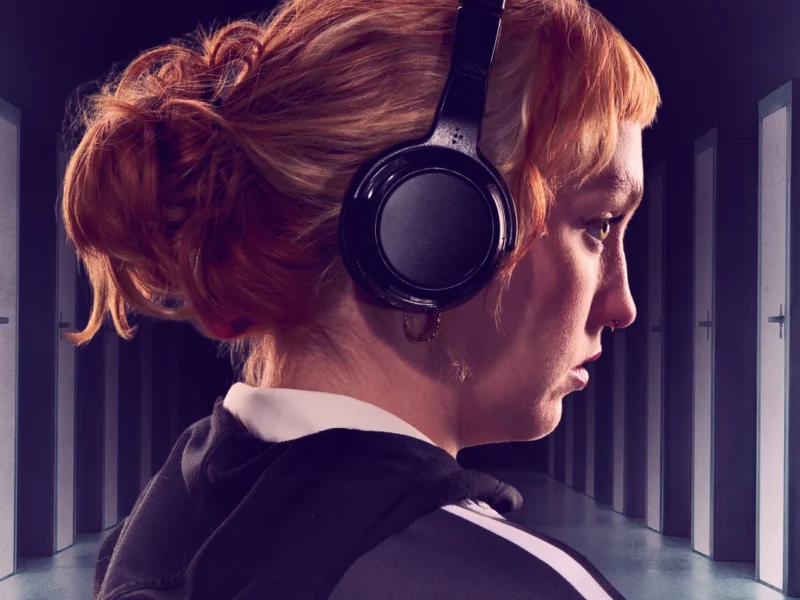
The National Theatre of Scotland and Nicola McCartney have gathered together a hundred interviews of children and young people who are care experienced. Having been taken care of by the state, they reflect upon their experiences, giving insight as to what it is they have had to endure whilst attempting to, as one song puts it towards the end of the audio piece, bring themselves up. This is an audio performance in an installation which takes you through a variety of different rooms as context to the audio you are listening to. We go through a welcome home, an admin room, a waiting room, various bedrooms spaces and eventually to a final room to learn of The Promise made by the Government and the promise we should all make towards those who have less than we do.
Review
The National Theatre of Scotland, delving into the realm of care within Scotland are doing exactly what a National Theatre should be doing. Precisely one of the reasons why the National Theatre has become relevant to Scottish policy, communities and the common weal, this is the start of a conversation. Giving children and young people a voice to express themselves is one thing but to go and listen to a group condemned by many as difficult because they are, is both obvious and bold at the same time.
McCartney having had experience as a foster carer for a long period of time as well as being one of Scotland’s foremost playwrights for decades, has managed to corral together interesting points of view. It takes as its conceit an overbearing chair, Brian who is going to direct us through this installation whilst a young person, around whom this installation is based, is challenging him because it is not telling the story that she wants people to hear. Kayla wishes her view to be heard and by the end of it manages to elbow Brian out of the way.
As lead artist, McCartney has given the two actors, Jenna Allen and Scott Kyle a narrative arc and conflict which is relatively familiar. it’s there where I have an opinion that differs slightly with the one presented, insofar as I wanted more of the kids and less of the concept.
The conceit of the two narrators, a powerful adult and the disenfranchised youth, is an interesting idea. I recognise much because I work in care in my day job. I have a responsibility which means that I attend many meetings for many young people. I wouldn’t suggest I have an insight, but it does bring me to this with a knowledge. Whilst I recognised Brian and the way he behaved, I have seen this less and less because of the impact of things like The Promise – the endpoint of the installation.
The way that the installation was like a LAAC meeting where the young person has been excluded or is on the verge of being excluded is subtle, and for me worked. The interruptions of the audio where Brian was attempting to stop the voices of young people getting in the way as similarly subtle, but less effective. Sending Kayla out of the imaginary room that they were in because he wanted to take control as an adult and as a professional was intriguing, but I felt their disagreement dragged. It went on too long.
I felt that Kyle as the principal narrator was given a difficult job to do. I was looking for some warmth to indicate that we should not be seeing things as black and white because this is a complex issue. As noted in the notes, many in social work are there because they care – I would have liked Brian to be more rounded as a caring chair who may have had that enthusiasm battered out of him over all-too frequent reports, stressful and combative meetings and an overwhelming feeling that they’re getting nowhere because of the caseload piled upon them day after day, week after week. This was more stereotypical.
As Kayla Jenna Allen had a much simpler task. She as always going to win. We were here to listen to children and young people.
By the end, the irony of being told that we could listen to the voices or read the material of children and young people by scanning a QR code was not lost in me. And I know that having 100 voices would mean I’d still be there listening, but I felt that the conceit masked what I really wanted to know about, and that was those 100 people, ironically including Kyle himself, whose portraits were beautifully displayed on the way in.
I found having to go in one room, through the admin room, into a monochrome room, a waiting room and repeat that three times, was more annoying than effective. There were loads of faff – and I know the circular nature of decision making was physically embodied, the confusion of a system not taking account of you whilst ushering you through and the overwhelming feeling of being lost in something that drives you on and drags you down, but I got that early doors. I didn’t need another one to go through to have it cemented.
What I really did like was the way in which Designer, Karen Tennant had imagined those rooms, in particular the waiting room, with the mismatched carpet tiles on the floor which is an absolute triumph.
I really liked the way in which Kayla taught us to find the objects that held a significant meaning to her. I liked the motif of that red jacket, that at each stage seems to be changed, but I wanted more. Kevin P. Gilday’s poetry really did begin us beautifully and well, but again, I wanted more of that. I wanted more of the songs. I wanted more of the authentic voices. The invitation to go and rummaging about things, the black plastic bag reminiscent of so many children in the past telling of turning 16 or 18 and being handed it to disappear, a practice which has not completely disappeared.
And so, I left feeling challenged, not necessarily in the way that I wanted to. I recognised that this should provoke more than explain. This is not the final destination. We should lift each one of those 100 voices and demand that there is more made of what they say, because The Promise has only got four years to run. I am sick and tired of listening to worn out professionals challenged by The Promise in two ways. One because they feel it’s unattainable as the resources required to achieve it have been stripped from them and two because they cynically have got nowhere else to go and when challenged on it are throwing it in a bin reminding those of us, who are dependent upon their fiscal largesse that they can go and place their child elsewhere which might be less suitable. But theatre, as it tells society what to do, reflecting it in it’s mirrors, should now, as Ghandi suggested, be the change you want to see. So, NTS, what are you theatrically going to do with those 100 voices next?