







It’s a play with no performers, just an audience, a screen, and a story they build together. The show is about agency, control, and the colonial origins of computing technology, a show about the hidden structures that shape our lives. if not this then that takes a bold experimental approach to theatre. It will undoubtabley take the Colchester Fringe record for the show with the least number of actors on-stage. Dr.Pants interviews Harry Walker to find out more about how a show with nobody on-stage works. if not this then that is on Fri 23 October 8:30 pm, Sat 24 October 5:30 pm, and Sun 25 October 9:00 pm during Colchester Fringe.
NAP: Hello Harry! Thank you for talking with us today. The pitch sounds crazy. Tell us: what is this show?!
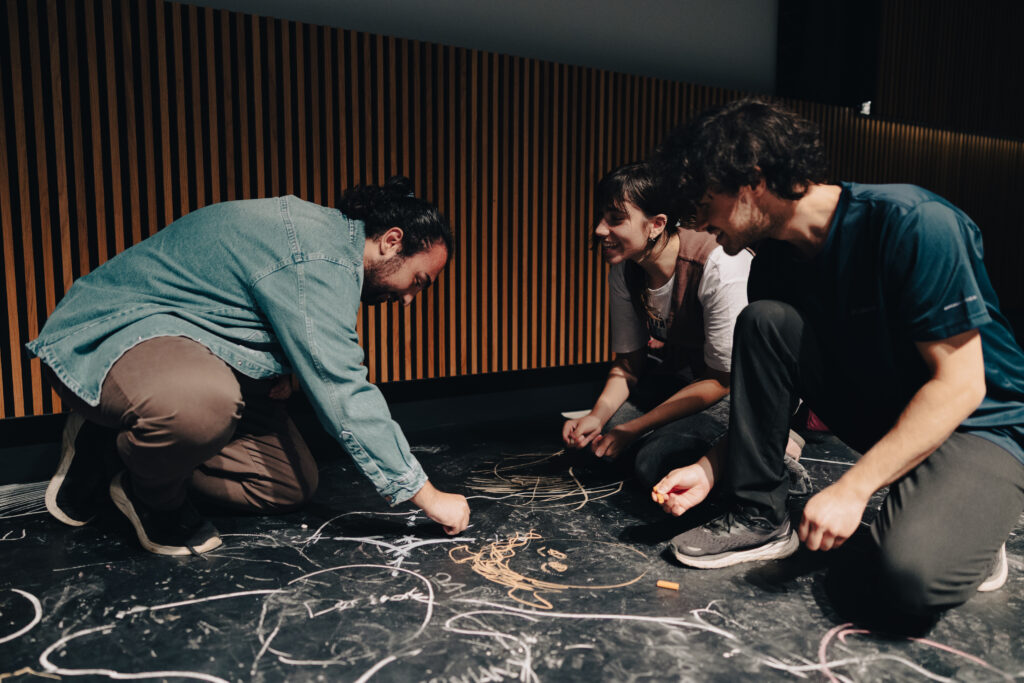
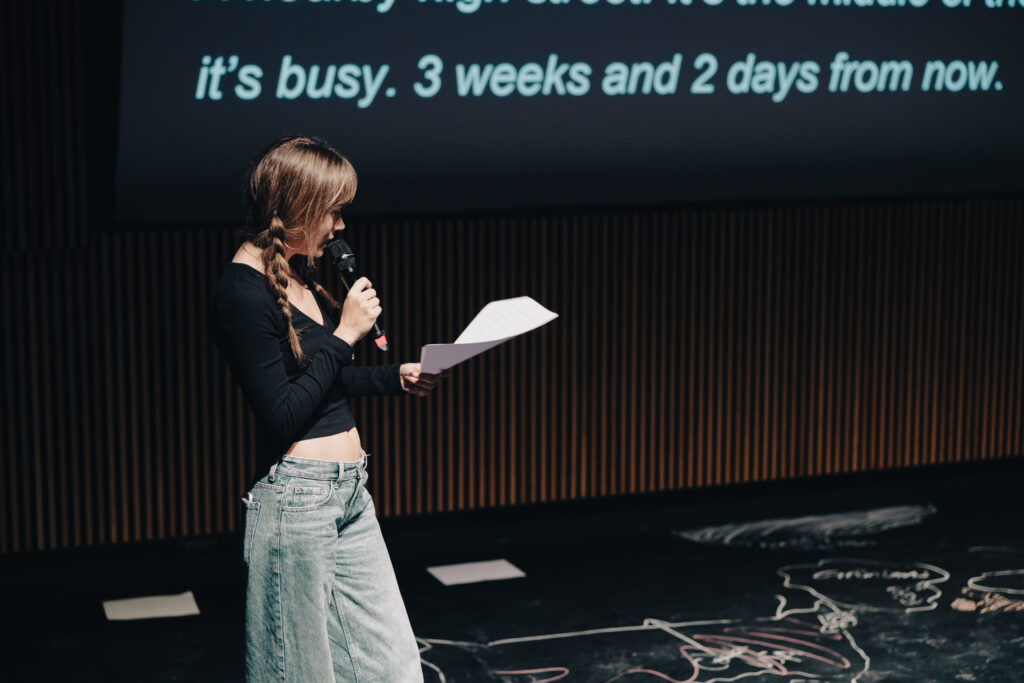
HW: if not this then that is a play performed entirely by the audience. For the show to work, they must decide whether to follow the instructions projected at the back of the stage. Instructions such as drawing a map of the world from memory, reading scenes into microphones, and answering a phone call. There’s a pitch for a tech startup. A debate about viral content. Someone is the victim of deep-faking. Each person in the room chooses whether to follow the instructions…but someone has to for the play to progress.
NAP: Normally, putting NO performers on stage would be an unthinkable idea. Most creators would never even consider it possible. So where did you get this idea?
HW: The idea came from the Adam Curtis BBC documentary Can’t Get You Out Of My Head, specifically the episode about George Boole. Boole developed binary logic, the 0s and 1s underneath literally all modern computing, in the exact same decades the British Empire was at its height, cataloguing, mapping and rationalising the entire world, human consciousness itself. There’s also a personal thread running through it. My great aunt, Dina St Johnston, was an early computing pioneer and one of the leading women in the field, having founded the UK’s first software house in the 1950s. I was eight when she died, so I never got to properly understand her work while she was alive, and making this show has become a way of learning about the important role women played in early coding and software development.
NAP: What has the development of this show been like? I imagine being audience led its quite different between performances?
HW: I developed the show two years ago during my MLitt at Glasgow, after researching audience-performed plays and participatory art. Since then, it’s been tested at Camden People’s Theatre’s SPRINT Festival, FUSE International, and Istanbul Fringe. Every single performance has genuinely been different because every audience is unique and the show depends entirely on who’s in the room, and what they’re willing to do. You won’t see another show quite like this one at the fringe.
NAP: Now, many people are likely terrified to have to be participate, let alone in a show with no performers. How do you convince the more introverted people hesitant to see your show?
HW: I think if you’re at all intrigued by the play’s participatory form, how the play will work and what happens when the audience does/doesn’t do something, you should definitely check it out. There’s also no requirement to participate so even if you’d rather not at any point, you can still watch.
NAP: Why bring this show to Colchester? Are our audiences more charismatic?
HW: It felt like the right next step after Istanbul, somewhere closer to home where the show hasn’t been seen before. I’m always very curious to see how audiences will react and I’m excited to see how people will receive it in Colchester. The other honest answer is that it is far more financially viable than other fringe festivals in the UK.
NAP: Dare I ask: what’s the biggest challenge in presenting this work?
HW: Sitting with my index-finger hovering over the space bar on my laptop and waiting for someone to speak. Trusting that a room full of strangers will be able to get the show to work. That enough people will put themselves out there. It can be quite daunting. The instructions lead the way but ultimately, if nobody decides to participate, then the show doesn’t work.
NAP: This show is all about the audience. What are you hopeful audiences will take away from this work?
HW: I want people to leave questioning whether our digital isolation and seeming inability to use collective power, is actually natural or inevitable, rather than something built, a material construction that dictates the limits of what we think is possible. As David Graeber put it, “the ultimate hidden truth of the world is that it is something we make and could just as easily make differently.” Theatre is one place left to actually sit with that idea together. I don’t think we have as much agency as we think we do, but I do believe we have the power to change the physical systems that largely determine the future.
NAP: So what’s next then for this show?
HW: I’m applying for Scottish Arts funding to take the show into a proper R&D period, testing it with deaf and hard-of-hearing audiences, developing it into a full 80-90 minute piece, and eventually touring it across England and Scotland. Colchester’s very much part of that ongoing journey, so I hope to keep getting the show out there.
If Not This Then That is on Fri 23 October 8:30 pm, Sat 24 October 5:30 pm, and Sun 25 October 9:00 pm during Colchester Fringe. While you’re here, read about the other experimental theatre happening during Fringe including Blip Blarp’s extra-terrestrial visit, a show starring a bag of Free Crisps, or Fringe Review’s Dr.Pants setting (a play in a) DARK ROOM.