










On whether it makes sense, in an ever-increasing conformist world, to be a lone rider and explore uncharted territories, leaving behind the need for recognition.
Writing is like playing music. The more you do it the more effortless it becomes. On the contrary, leave the instrument aside for months and suddenly everything becomes heavy. As I am back on the keyboard after months away from it I want to start from a book I’ve been reading during a couple of weeks away from “the noise” (if that is ever possible) of days spent writing emails, planning, scheduling and overthinking. The title of the book is “The Courage to Be Disliked” by Ichiro Kishimi and Fumitake Koga.
I am currently in Almada, Portugal, participating in the 43rd Festival de Almada, both as an artist and a reviewer of shows for FringeReview. It’s the middle of a horrible heatwave and I am stuck inside a hotel room enjoying what is probably the last weeks of calm before the storm: the Edinburgh Fringe Festival.
In what is probably an unconscious attempt to flog myself in order to redeem my sins, I’ve had the crazy idea of creating and running a new venue at the world’s biggest theatre festival. The thing is I’ve always felt more of a writer than a performer, and the uncomfortable urge to tell stories has always prevailed over what could be a more stable way of going through this thing we call life. The urge basically comes from the stomach, and at times I feel like an empty shell obeying forces greater than me. This internal “split” is probably something that lives inside any storyteller. Writing, and especially writing “stories”, is a form of schizophrenia where all the subpersonalities that live inside our body (I’d rather speak of body than mind) can find some kind of order… at least for a while. The alternative would probably be letting the little monsters that live in my head fester inside, to the point where I’d find myself on the corner of a road speaking to myself or addressing passers-by with incoherent words. Scary picture.
Why, why, why… I tell myself. Why have I chosen such a dreadful course of action? As the emotional tension accumulated, I had the luck of encountering this book. There is a book for every age and stage of life, and the book found me (or did I find the book? I don’t remember).
The book is a voyage into Adlerian psychology carried on the back of the discussion between a young student and an old philosopher who lives in a small house near a Japanese city. The conversation between the two takes place over five nights and is pretty much an excuse to examine Adlerian psychology from a dialectical point of view. The young man is dissatisfied with his life and his own self-image, and he visits the philosopher, challenging his optimistic view of the world.
Although I knew about Freud and Carl Jung, I had never heard of Adler before. Accidentally, while browsing the internet, I read a passage from Adler about how “not to be disliked is an essential element of a whole and independent personality”, and, intrigued, I got hold of the book to find out more about it. I will not go through the content of the book, which is very counterintuitive and literally destroys Freudian psychology. Suffice to quote two simple passages.
‘Freedom is being disliked by other people.’
‘There is no need to be recognised by others. Actually, one must not seek recognition.’
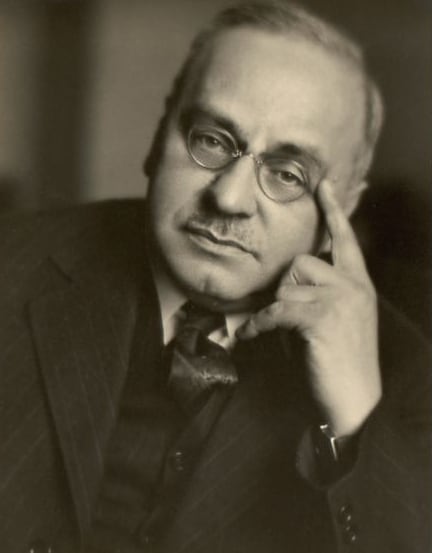
For Adler, happiness does not reside in recognition but rather in the contribution to the community (a community that embraces the whole world and the entire time, including past, present and future).
You may think this is just simple intellectual drivel, but I found the book extremely uplifting, to the point where I’d suggest it to anyone embarking on such a crazy adventure as the Edinburgh Fringe.
To catapult oneself into the whirling chaos of thousands of shows, hoping to be liked or to find recognition, may be a recipe for disaster. While striving for both, you may find yourself drowning in a sea of conformity, never having the courage to explore the winding and narrow road in front of you.
This is a big shift of perspective when being sucked into a machine, the Fringe machine, that at times seems to be following corporate purposes rather than artistic ones. Suddenly the need does not lie in getting the biggest promotional exposure, the biggest poster, the most expensive ad, but rather in putting oneself in the situation where you have the opportunity to experiment, find new voices, risking it all for something that is bigger than you, bigger than the timespan of the three weeks of the Edinburgh Fringe.
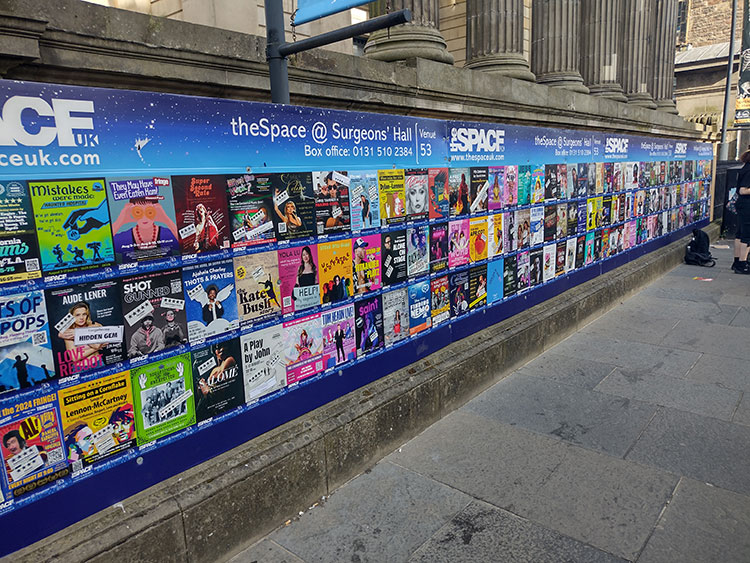
After all, did Socrates look for recognition when he stood trial in Athens? Did Van Gogh look for five-star reviews while secluded in a mental asylum in Saint-Rémy-de-Provence? In a world where the follows, the likes, the hype seem to matter more than anything else, we need the real heroes, in the Greek sense of the word. We need those artists, thinkers, scientists whose journey is animated by their core values rather than the roar of the faceless crowd, willing to find obstacles and pitfalls in their way.
It’s not about the five-star review.
It’s not about the sold-out show.
It is something much bigger. Even bigger than you are.
To be continued….