








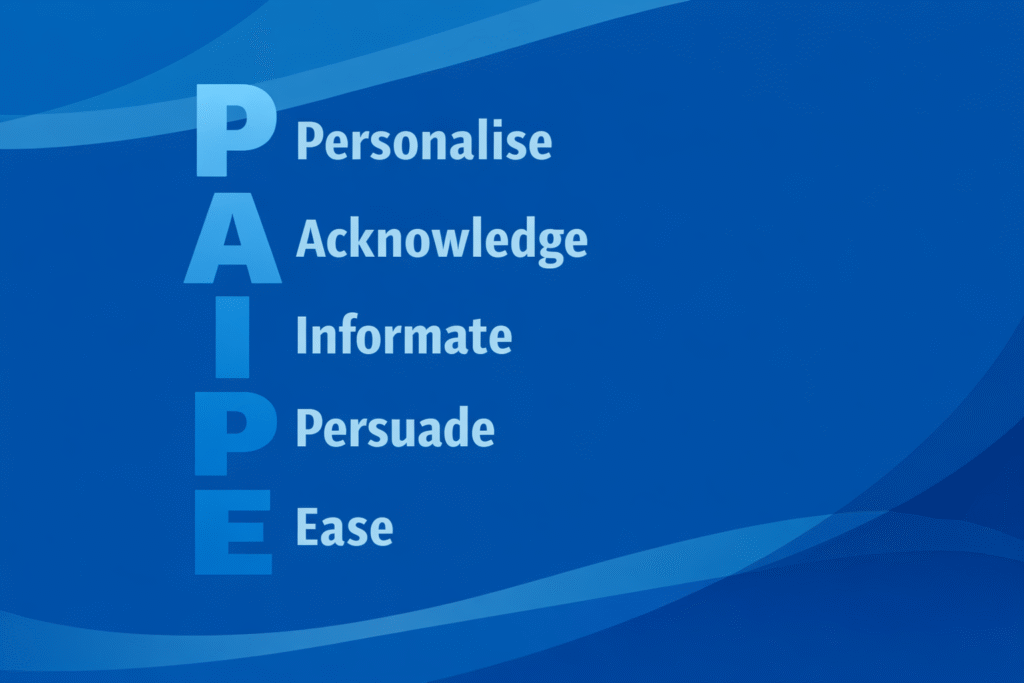
The FringeReview PAIPE approach to getting press attention
Ok, I admit it. I am about to be a hypocrite because I do not like acronyms and I am about to offer you one.
This one is fairly clunky and unmemorable.
But it might just be worth remembering it to maximise the chances of getting press coverage for your fringe show.
At the Edinburgh Festival Fringe, most approaches to journalists fail before they are finished reading the first sentence. The problem is rarely the work itself. It is the assumption that coverage is owed, or that a generic press release will cut through a crowded inbox. Journalists are looking for relevance, clarity, and a reason to pay attention. If you cannot provide those quickly, they will move on.
This framework is a blunt tool to help you avoid being ignored.
I introduce you to …
PAIPE: A Practical Approach to successfully Engaging Reviewers and Journalists
I am not kidding but that is what I’ve come up with. But go with me on this because I think each section is pretty useful and the acronym kind of works…
It goes in sequential steps…
Personalise
Use the reviewer’s name and, if relevant, their job title at the start of the message. This shows that the approach is intended for them and not part of a mass email. A direct opening is enough. It establishes a professional tone and signals respect for their role.
Acknowledge
Show that you understand what they cover. A brief reference to the type of work they review or the section they are responsible for is sufficient. This demonstrates relevance and helps them see why you have contacted them rather than another outlet.
Informate
Provide clear factual details about the show. Include title, venue, dates, times, duration, ticket price, and access information. Add a short description that explains what the work is. Avoid inflated claims. Reviewers need accurate information to decide whether they can attend and whether the show fits their remit.
Persuade
State, in a few lines, why the show may be of interest to their readers. This could relate to the subject, the form, a new piece of writing, or a distinctive collaboration. Keep the tone measured. The purpose is to indicate relevance, not to oversell.
Ease
Make the practical steps simple. Explain how to request a review ticket and provide links to images and press material. Include a clear contact name and email address. When access to tickets and information is straightforward, it is easier for journalists to commit to coverage.
So …
Coverage at the Fringe is not a right and it is not a favour. Journalists are balancing limited space, competing priorities, and the needs of their readers. If you respect that reality and make your approach useful to them, you may start a conversation. If you treat them as a marketing channel, you will be deleted. Yikes.
See you on the fringe circuit somewhere soon, but in the meantime, drop us an email.
Paul Levy, Editor, FringeReview.
Brighton, UK, 2026