


ACTION THEATRE (ITALY) AT THE EDINBURGH FRINGE
Guest Blogger: Rupert Raison, Director
We are an English Teaching Theatre Company based in Turin who have performed shows using half-mask and puppetry to nearly 1 million Italian students.
For the last four summers, a team of 10 company actors have joined director Rupert Raison in Turin to take part in a unique four-year project to discover the roots of Commedia dell’Arte.
We are delighted to be able to share with you daily news about our rehearsals of The Italians in England and our Commedia dell’ Arte tour that takes us from our studio in Turin to a stately home in Suffolk, the Edinburgh Fringe and Stratford-upon-Avon, where we will be performing a two-hour show in the grounds of Ettington Park.

As the blog progresses, Lecoq-trained mask expert and director of Action Theatre, Rupert Raison, will share with you his empirical insights into the art of the mask.
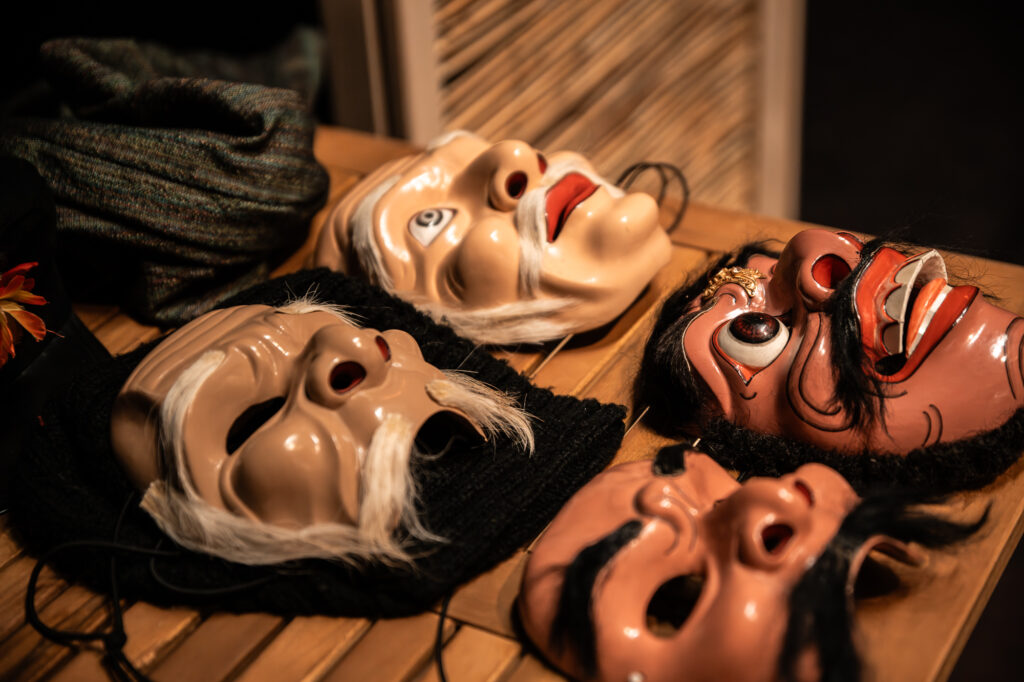
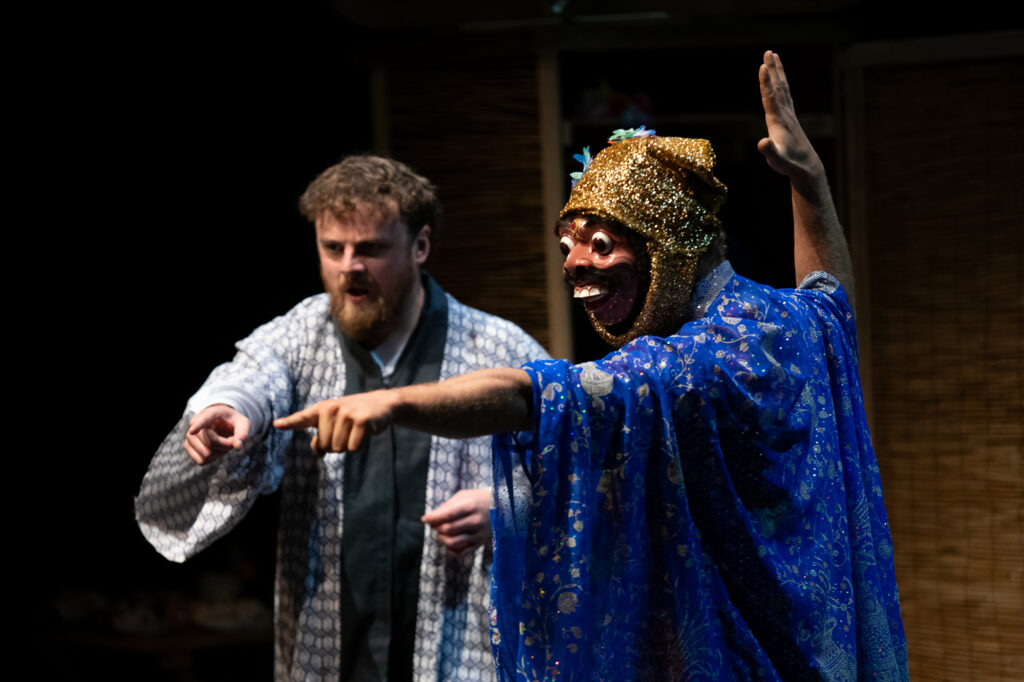
Uniquely, Rupert will talk not only about the leather masks of Commedia dell’ Arte, but also the wooden masks of Bali, as the company will also be performing a second show Democrazy in a co-production with theSpaceUK.
DAY 1: Monday 27th of July
Over the weekend, the cast assemble in Turin from the UK, Ireland, Lithuania, Cyprus and, of course, Italy, ready for 6 days of rehearsals.
Sam Wright and Aimee Hislop are the last to arrive in Turin on Monday morning. Sam arrives at 3.30am and Aimee at 7.30am!
Since we last saw Sam, he has appeared in the film Wicked: For Good as well as being a larger than life Dame Betty Bon Bon in The Pantomime Beauty and the Beast in Corby last Christmas. He has also presented an Elton John Tribute show at the piano.
Sam is our musical director and Aimee is our choreographer. They have perfected the art of last minute arrivals!
Rehearsals start and we introduce the two new members of the cast: Denis Haugh who will be playing Burattino, and Dovilé Kraske who will be playing Isabella as Ina Lark and Kuluk Helms can’t make it this year.
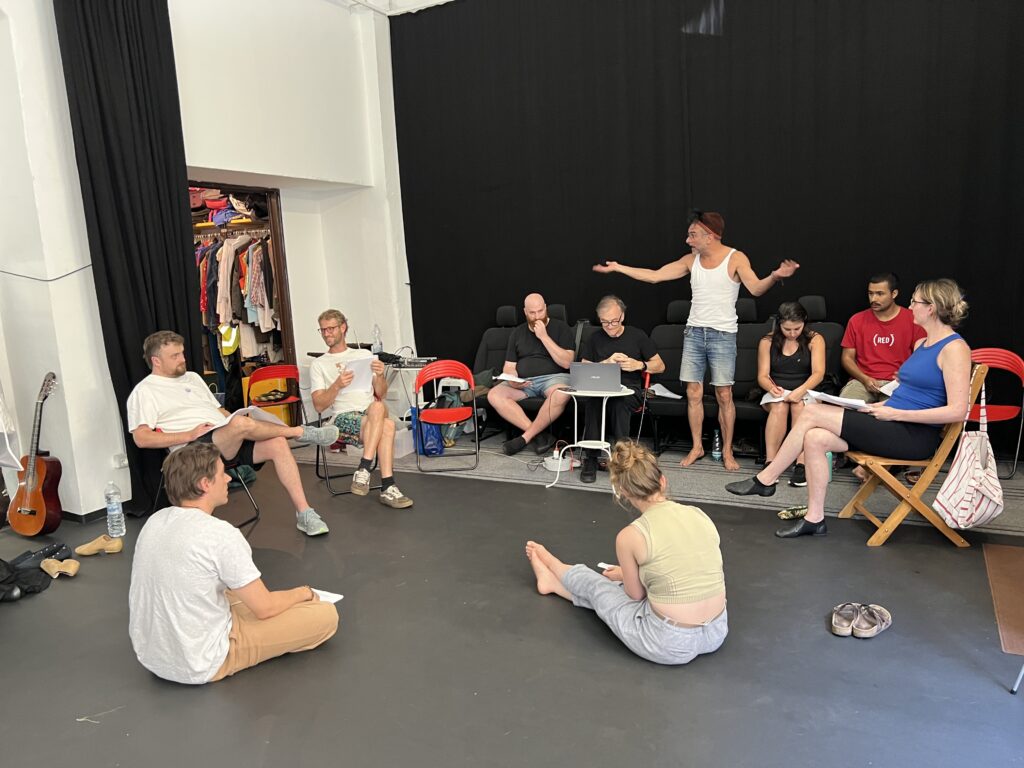
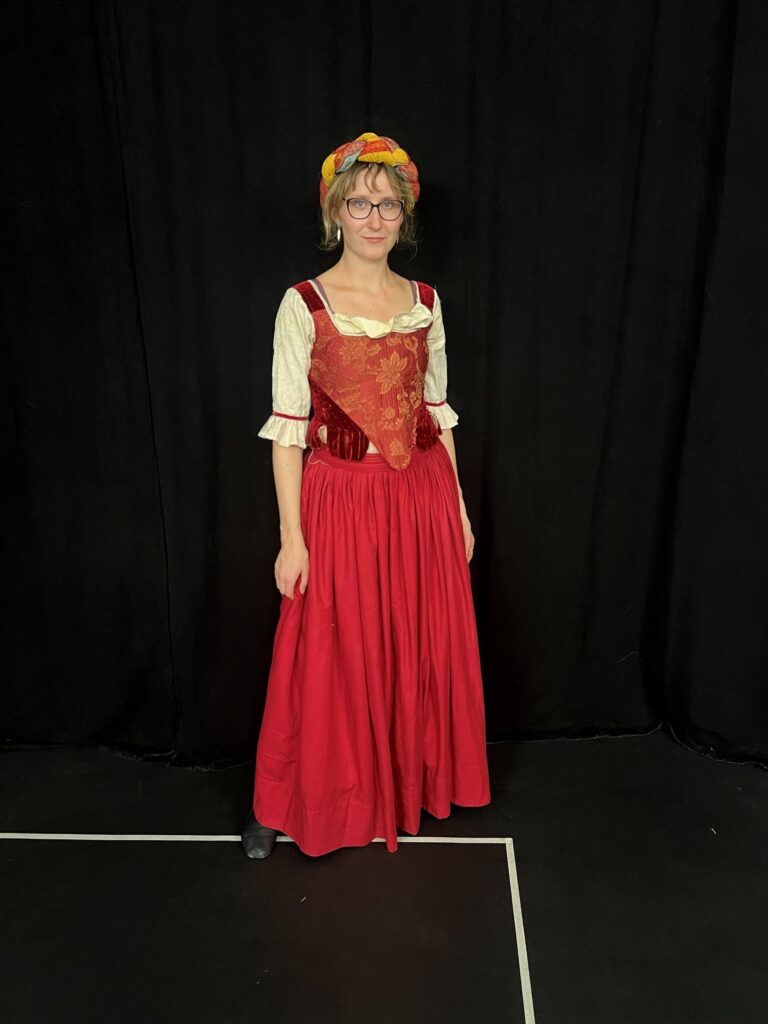
In the morning we play games, work on mask technique and all the actors have their costumes fitted by Laura Busatta. After lunch we read through a new canovaccio I have written for the last show of our UK tour in Stratford-upon-Avon on 17th August. The organisers want a two hour show with an interval and we need to work on this as well as our Fringe Show.
The actors are in fine form and we race through the new canovaccio. To finish the day the cast rehearse the final song with Sam. It is always a good idea to make sure the end and the beginning of a play are strong!
At 4.30pm we finish an hour early. Italian bureaucracy demands that Rupert get his signature witnessed at the local council office as we will be driving two Renault Trafic vans to the UK from Italy and we need to have a special permit for this.
Juliet Turnbull is very happy to finish early. She has a prestigious singing gig at 7pm in the Royal Hunting Lodge nearby during a prize-giving for the best horse riders in Italy!
Day 1 has flown by. Six days is not very long to rehearse what are in effect two shows but the actors are professional, they know their roles, and we work fast just like the early Commedia dell’ arte companies would have done…..and we haven’t yet touched a mask!
ART OF THE MASK 1 : Working Fast
In 1621, I Fedeli perform 13 different shows in just over three weeks between April 6th and April 30th before King Louis XIII at Fontainebleu – that is a lot of shows!
The secret lies in how Commedia companies work. Each actor has a fixed role and is responsible for writing their lines and for finding much of their stage business. The director’s job is to ensure that the canovaccio (plot outline) they are using is clear to everyone and to work on set pieces and steer the play in the right direction.
We work in the same way, although this year Rupert has enhanced some of the actors’ lines. In 2024 we got great critical feedback at the Fringe but the one negative comment we received was that some of the lines were weak! This is just a reminder really that true Commedia dell’ Arte is not scripted theatre and that each actor has a lot of freedom in writing his own material. This means that the dialogue may not be sparkling but it will have an energy and naturalness that scripted theatre can rarely match.
DAY 2: Tuesday 28th of July
From now on actors must rehearse with their mask and a hat or whatever it takes to cover the elastic. A half-mask is the actor’s new face and your face does not have elastic to keep your nose on!
There are two new mask characters to sort out. Denis Haugh will be playing Burattino for the first time and Aimee Hislop will be playing Pasquella in mask to differentiate her from Queen Elizabeth 1st. Playing Pasquella in mask means that Aimee is clearly two very different characters. Without mask, the audience will see that it is the same actress playing both roles. Aimee has played Pasquella without mask for three years now and she brings a balletic energy, attractiveness and elan that are something special. By playing Pasquella in mask she will become unelegant, more ugly and crazy – like the male servant masks.
Aimee’s mask hurts her nose and Denis’s mask is a bit big and covers his upper lip. We glue foam rubber in the first mask and teach Denis to keep his upper lip curled up. In an ideal world the company would have a mask-maker on hand to make the mask to the dimensions of the actor’s face.
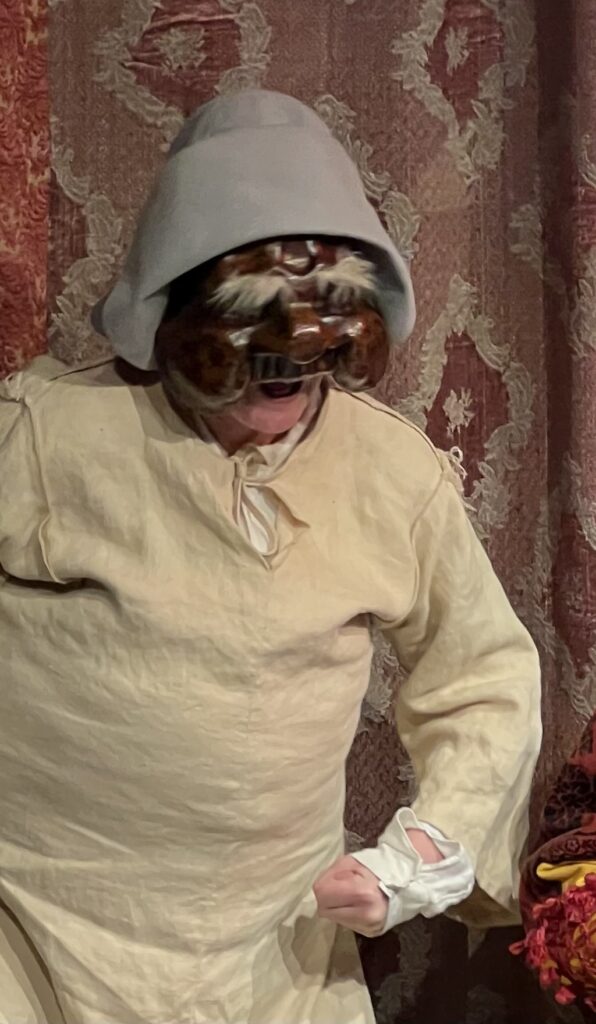
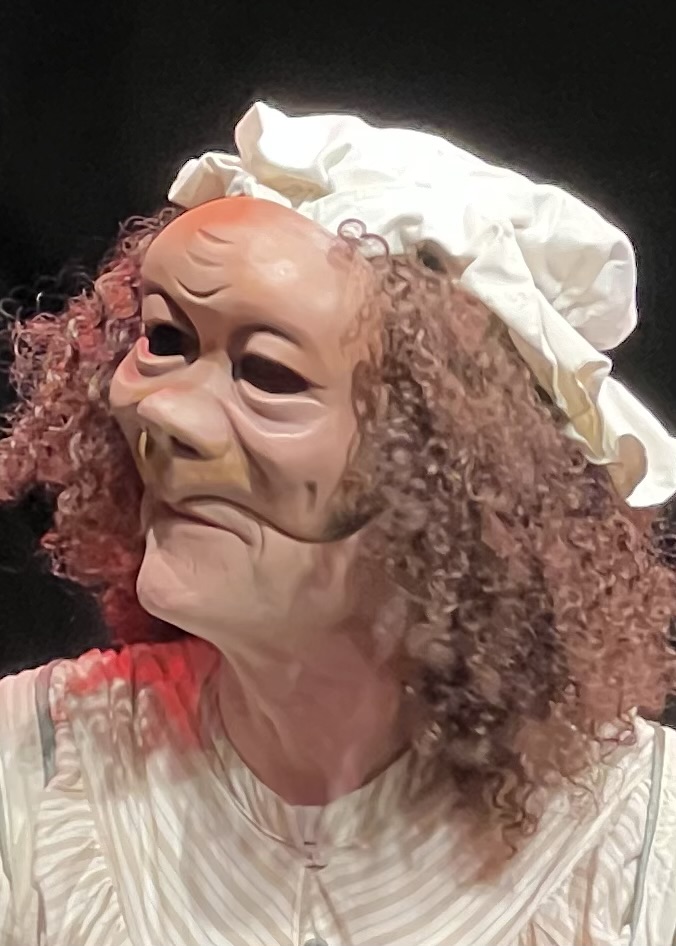
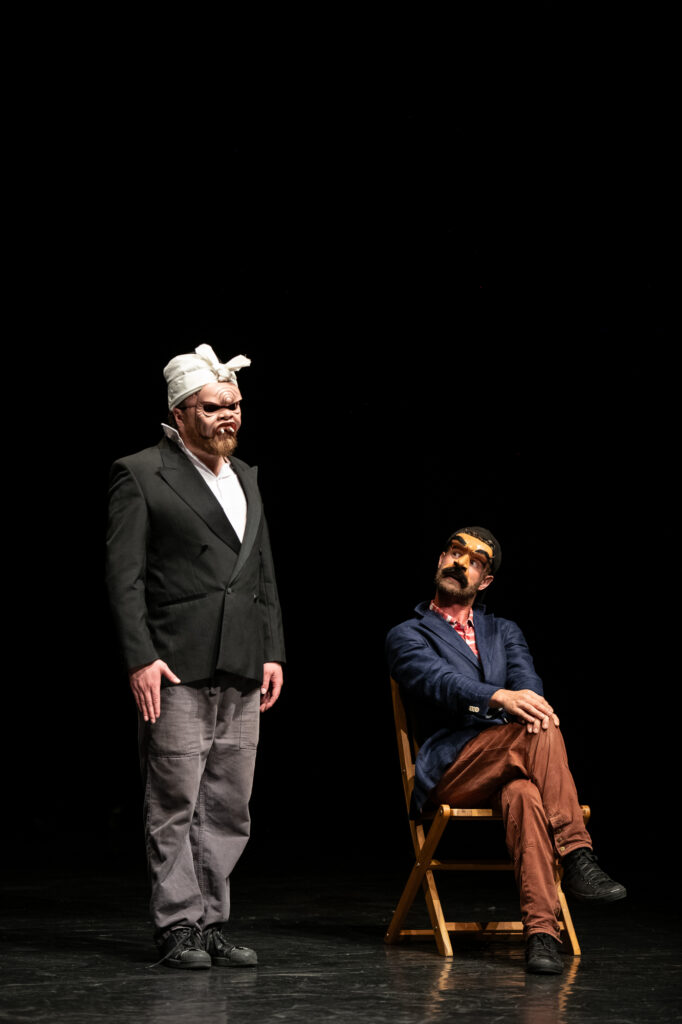
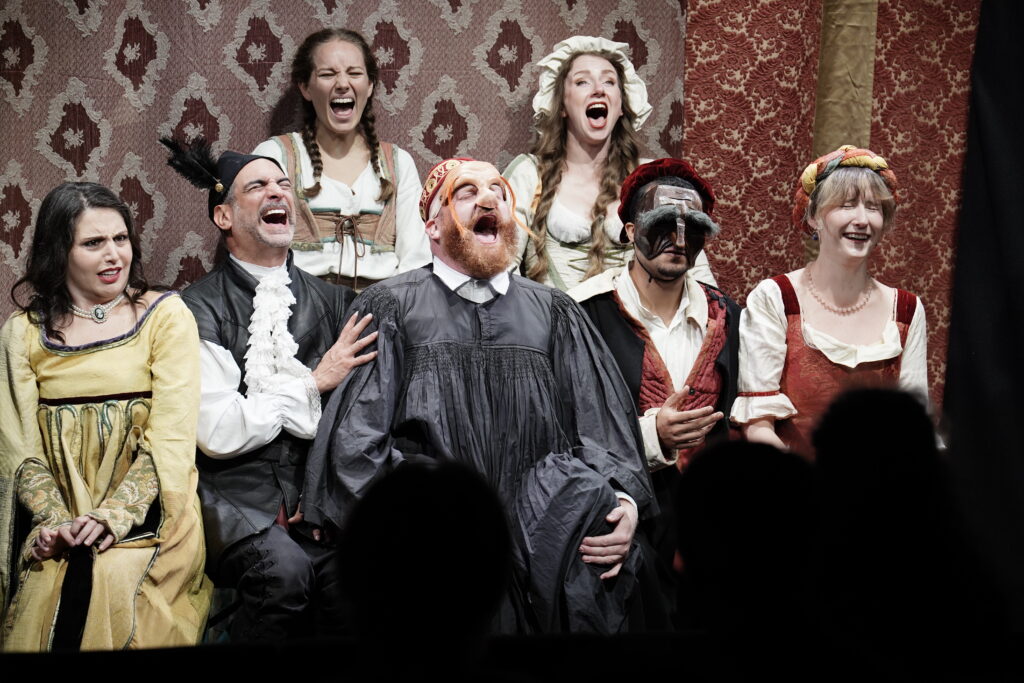
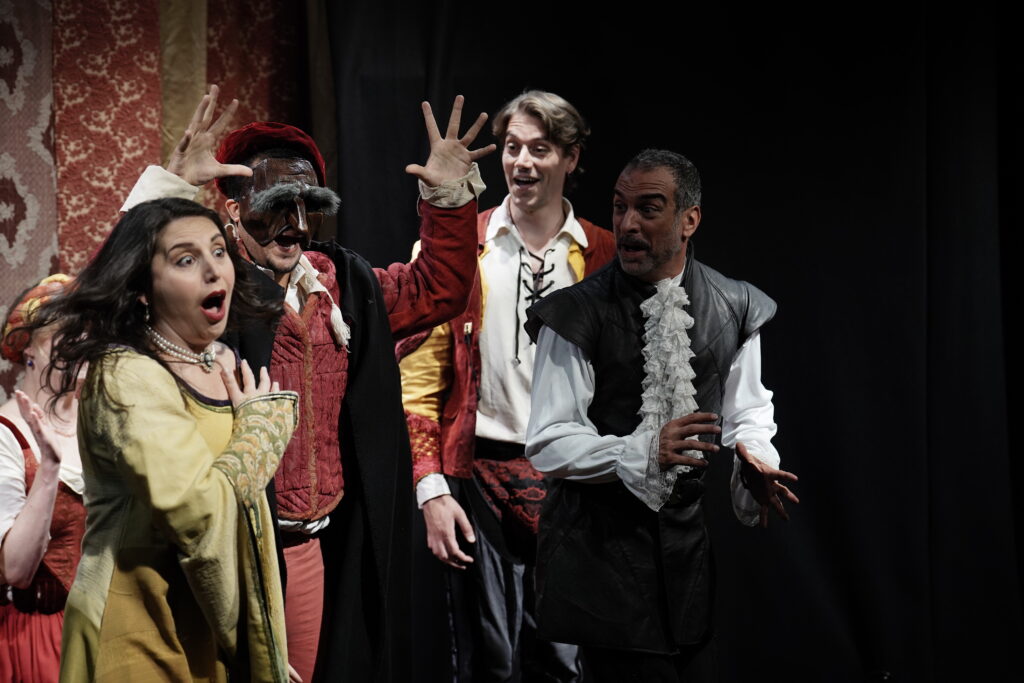
We did have two masks custom made with a Venetian mask-maker, Davide Belloni, for the Doctor and Pedrolino. The actor playing the Doctor has a large face and an orange beard and the mask had to be orange to look right with a pink elastic to match his skin colour. Pedrolino was a new mask not usually represented in the Commedia repertory so I asked mask-maker Michael Chase if we could use one of his modern half-masks as a model. It works brilliantly.
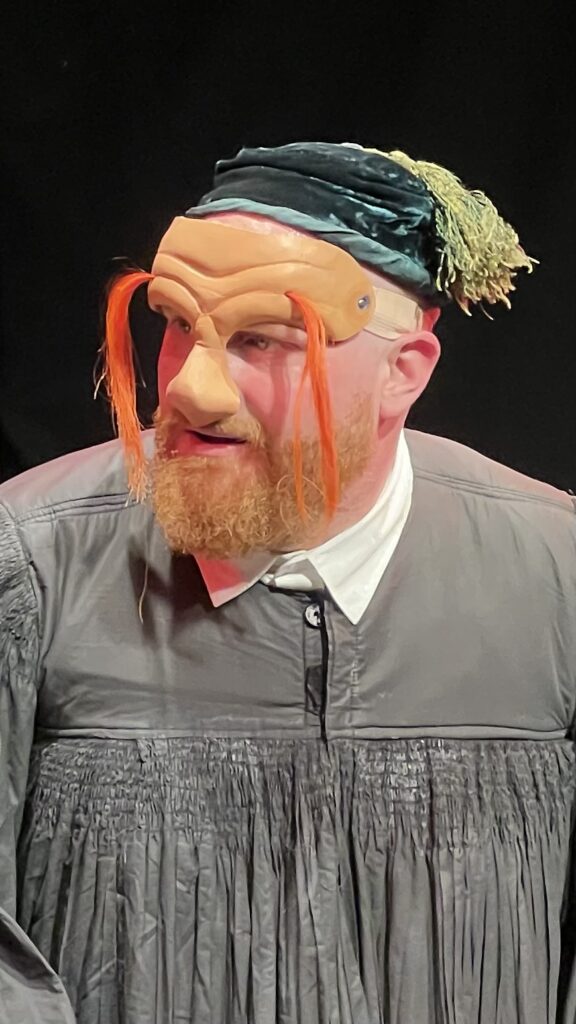
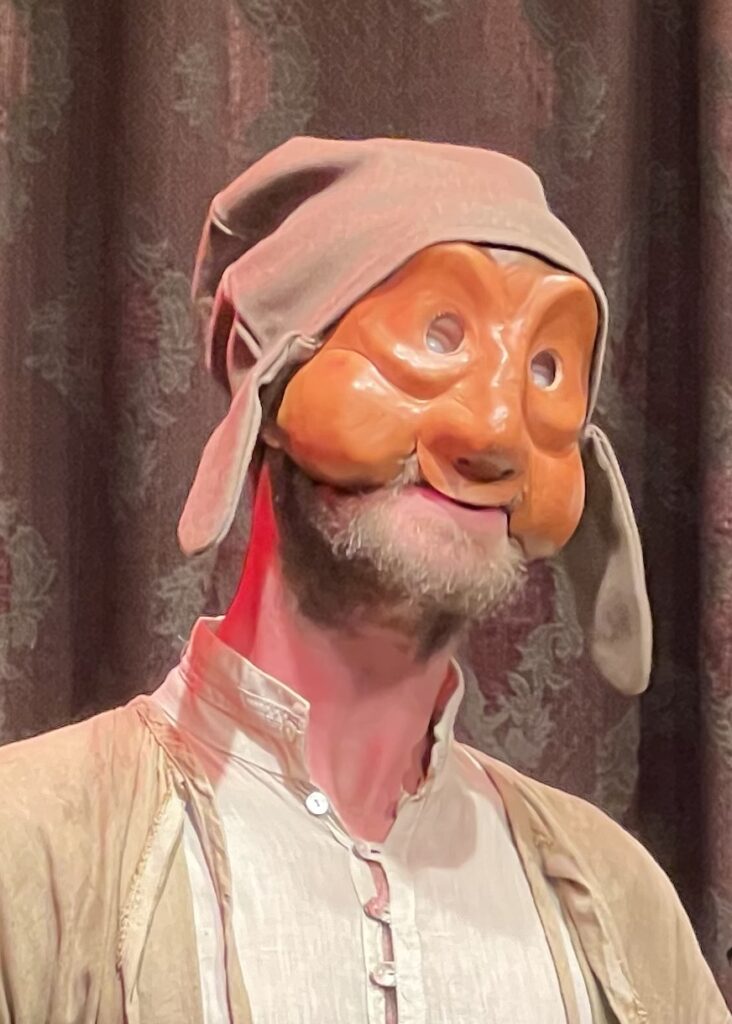
It will take a while before a new mask actor manages to find the right body, gestures and rhythm and you need an outside eye to see the most effective way to use the mask. As regards Pasquella one possibility is to alternate shows with and without mask to gauge audience reaction and see which is stronger.
Once again we rehearse well and very fast. We finish Act 1 (all early Commedia is written in three acts) and in the afternoon Sam Wright works on the four-part harmonies in our songs .
After rehearsals Sam invites me to his flat to eat a delicious asparagus risotto. He is not the only one who cooks well. We have a company of first-class cooks!
ART OF THE MASK 2: Women in mask
One of the special features of Commedia dell’Arte is the mask. In Italian the word “maschera” actually does not refer to a mask as we think of it today but as a character in costume. All the Commedia characters are “maschere” even if they do not have a mask on their face and they should all play with the same heightened tension.
However women in Commedia never played characters in mask. Masks were the domain of men who often learnt their trade on the street. Women represented the sophisticated culture of the court, often being first class dancers, poets, singers, musicians, beautiful, sexy and gracious.
Eleanor Fuser of TAG theatre company from Venice wanted to find a Commedia mask for women so she invented the mask of the Witch at the end of the 20th century. This mask is obviously a much later addition outside of the Commedia dell’Arte canon.
In 25 years of half-mask theatre with my company Action Theatre (Italy) I have seen at first hand that women’s masks work just as well as men’s. It is just that for many centuries women in Italy were not allowed to wear mask. The same is true of Balinese mask which we will talk about tomorrow.
I believe that there is no reason why women should not play some Commedia roles (particularly of the servants) in mask – if they work.
DAY 3: Wednesday 30th of July
We now start at 10am instead of 9am so we all have a bit more time to rest. It is very hot here in Turin – 36°C during the day and 26° at night – which can make it difficult to sleep. The best investment the company ever made was to have an air-conditioned studio.
We practise our get-ins and get-outs with a timer as for both shows we have just 10 minutes. Under Juliet Turnbull’s guidance the Democrazy team are pleased to be down to 6 minutes whilst The Italians in England team under Simona Bisconti’s team come in at 5.
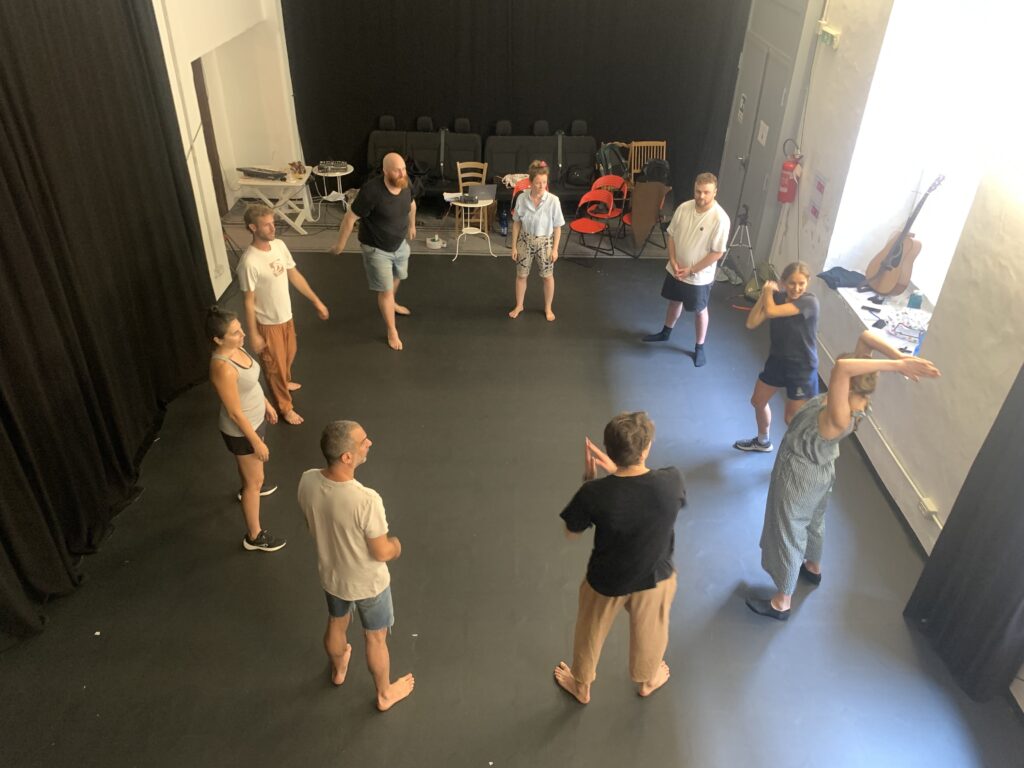
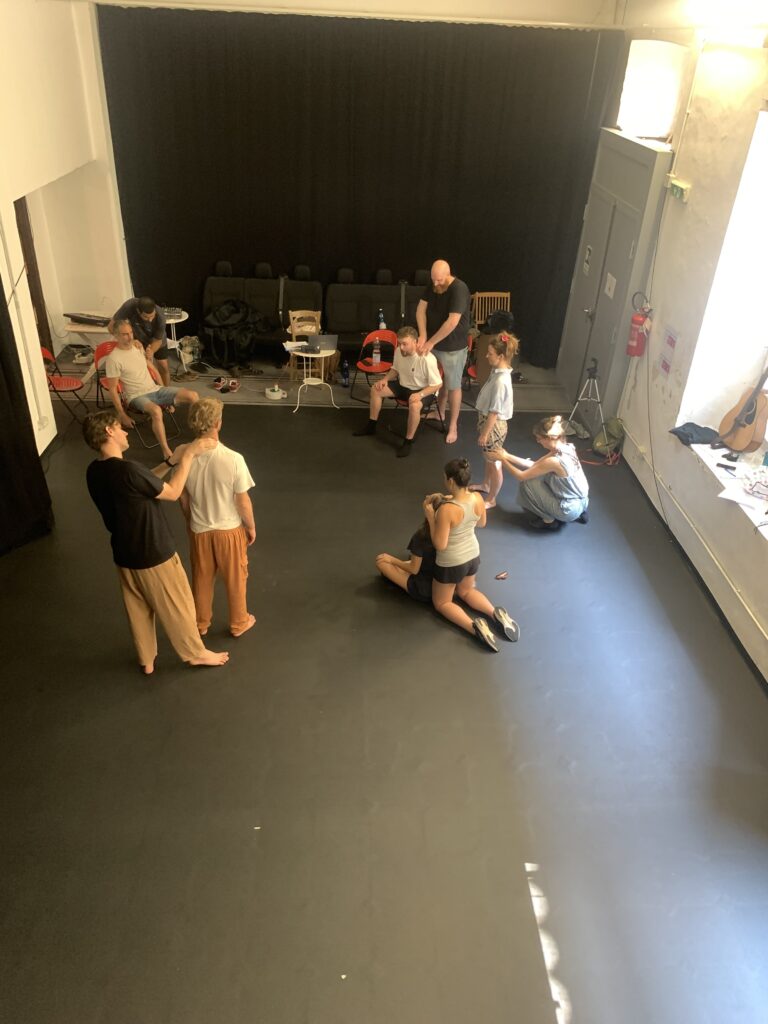
Following this Aimee Hislop does the warm up which includes lots of gentle stretching and massaging which is very necessary after two intensive days of rehearsal. Mask work is hard on the body and there are stiff shoulders and necks that get welcome massages.
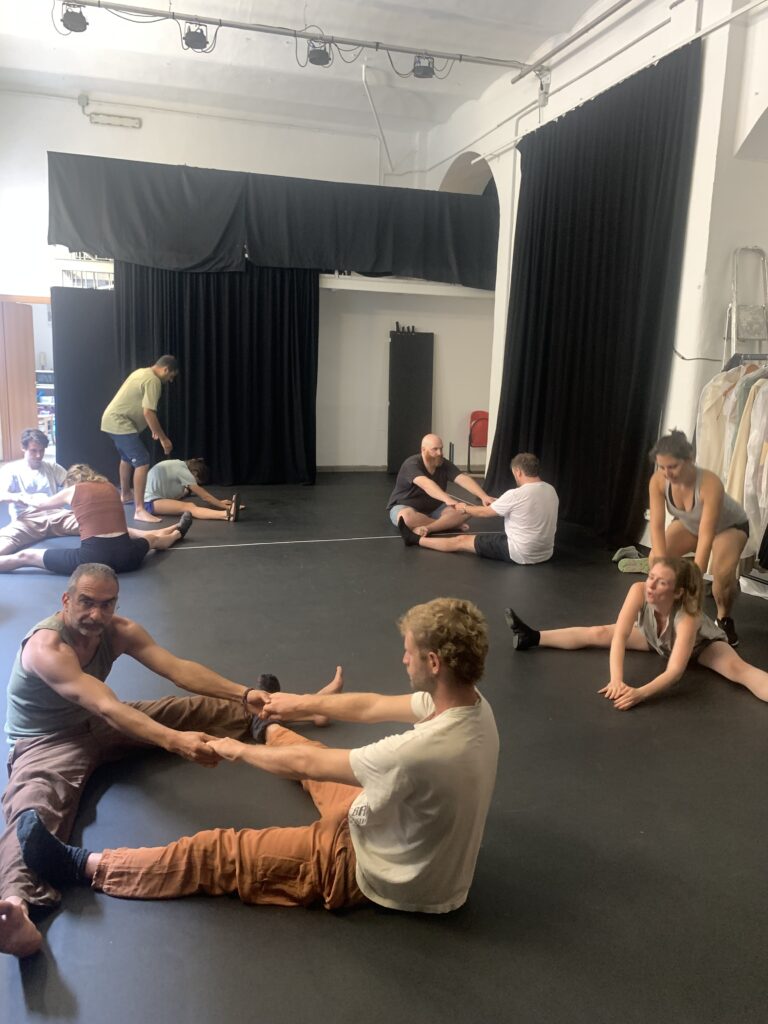
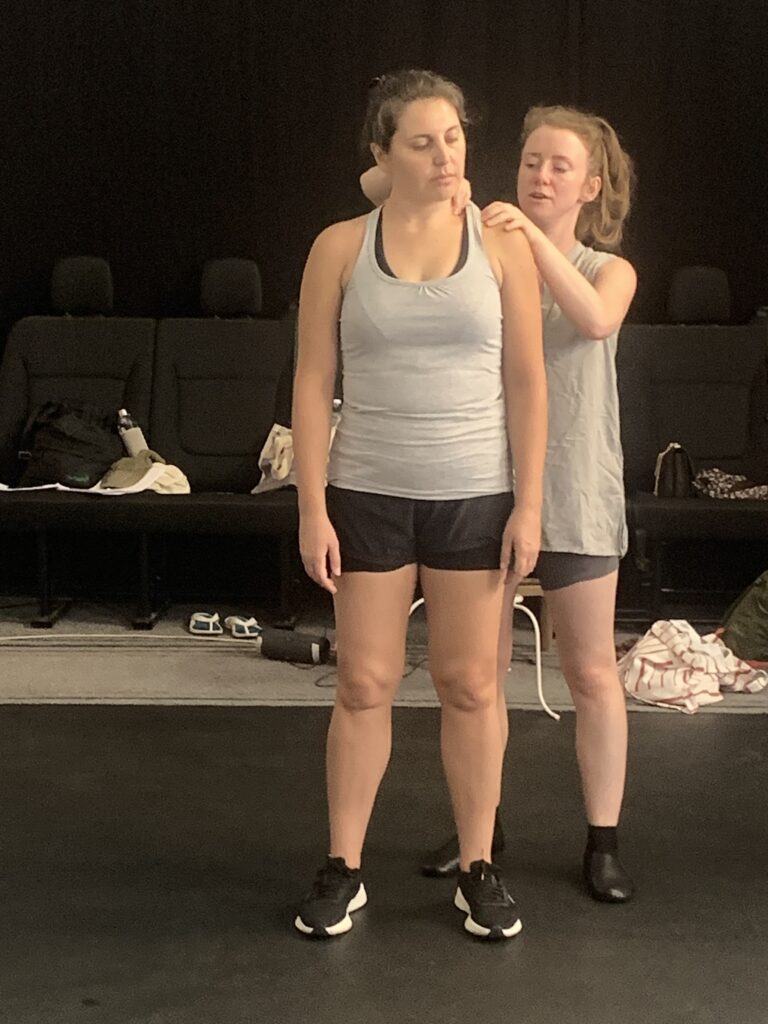
For the rest of the morning we continue work on the play. At a certain point the whole cast stop and spontaneously give our new actress Dovilé Kraske a round of applause for her interpretation in a key moment of a scene.
After the usual four part harmony work we stop at 4.30pm and prepare the room for tonight’s studio performance of the Balinese mask show, Democrazy, with Denis Haugh and Edoardo Vanoni.
The show is received with great enthusiasm. None of the cast have seen the show before and they are fascinated by the Balinese masks which are so different from the leather commedia ones.
ART OF THE MASK 3: Mask materials
For a long time people did not know what material Commedia masks were made from. The Paris Opera House museum provided the clue. In their collection is a leather Harlequin mask with its wooden mould dating from the 18th century.
On the basis of this information after much trial and error Jacques Lecoq worked with the mask-maker Amleto Sartori from 1948 to design leather Commedia dell’Arte masks of each of the main characters.
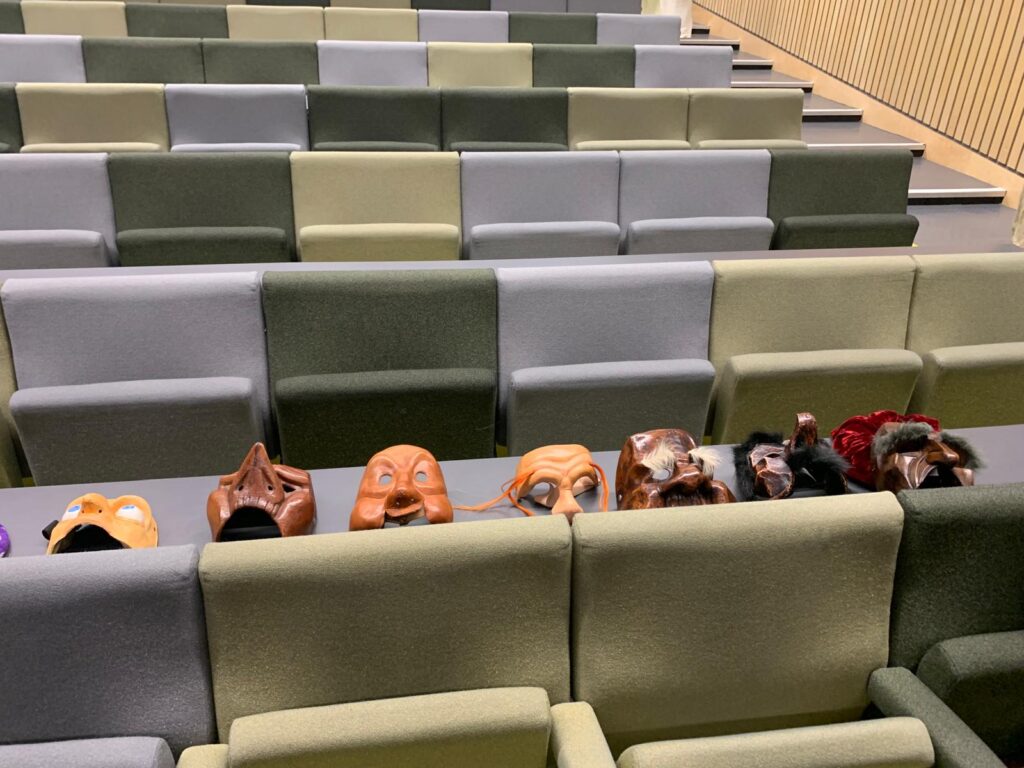
The leather masks are stretched when wet over a carved wooden mould. Once the leather is dry, the mask-maker then refines the mask, makes it stable and adds eyebrows and facial hair as necessary. The eyes are also cut out. The more stupid characters can have small eyes that make seeing difficult but on the whole in most of these masks visibility is not a problem.
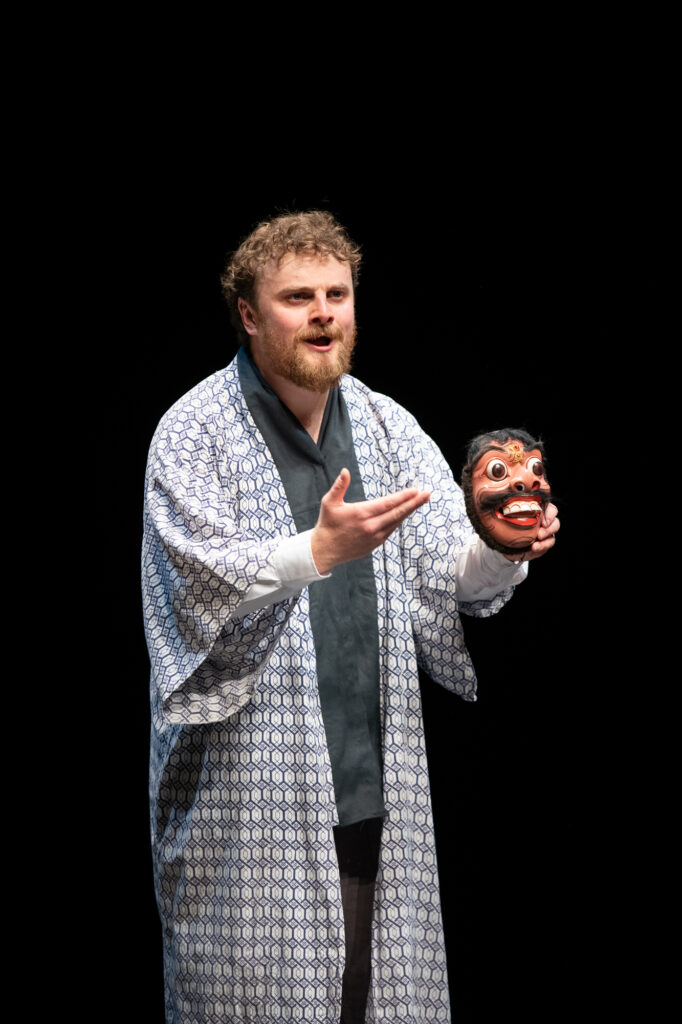
Balinese masks on the other hand are sculpted from a soft easily carvable tree called Pule. These masks are beautifully painted in bright colours. Whilst an actor can see well in the Bondres half-masks, in the full masks the eyes will be painted on the mask and the eye slits are ingeniously placed and invisible to the audience. It can be very difficult for the actor to see.
Leather masks need looking after as they can develop mould in time. They get very sweaty and need airing and cleaning regularly but on the plus side they are hard to break.
Balinese masks won’t develop mould and they don’t get so sweaty but they are delicate and can break easily. Last season we toured a show with Balinese masks in sub zero temperatures in January. The actors came to the van one morning and three of the masks had split in half. A disaster which we fixed with glue. The damp Scottish August weather should suit them much better!!
DAY 4: Thursday 30th of July
An actress is not happy with some of the action in her romantic scenes and asks me to choreograph them closely. I step into the role of intimacy coordinator. We set boundaries and we work out a new choreography which both actors are happy with. Commedia dell’Arte can be raunchy but the actors should never feel uncomfortable.
Juliet Turnbull does the warm up today with vocal exercises, more massage and relaxation and some fun games.
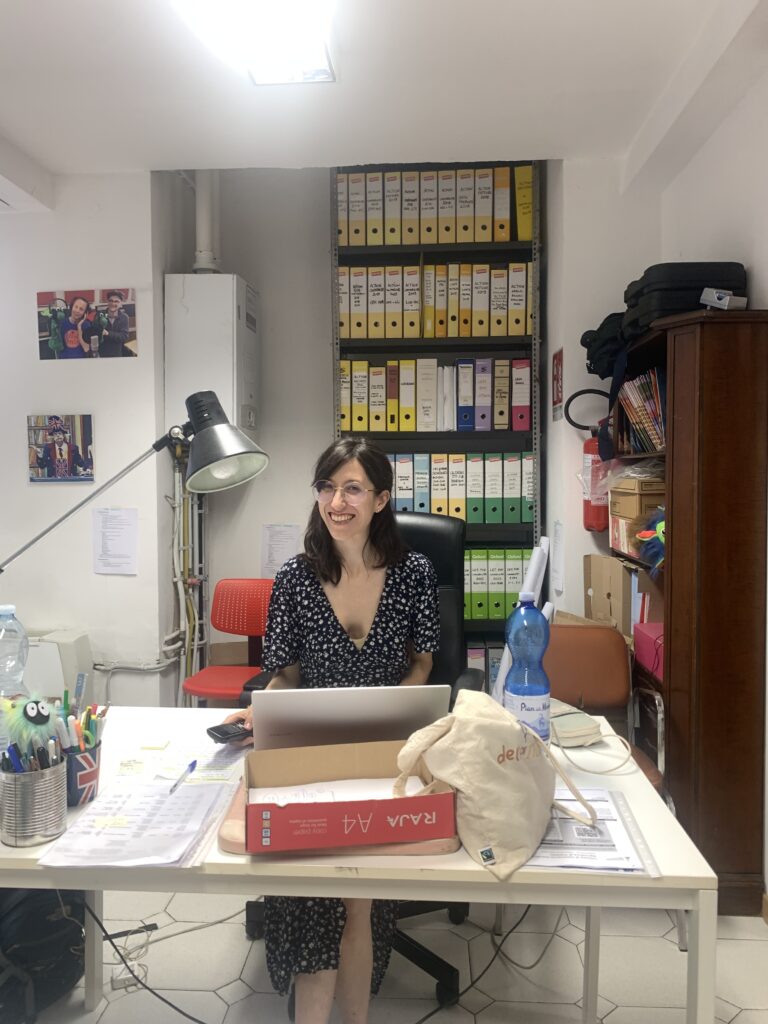
Sara Corbelletto, our delightful tour manager, takes us through our busy schedule over the next two weeks.
As our costume designer is on holiday Sara also takes on the role of seamstress and spends a lot of time repairing damaged costumes.
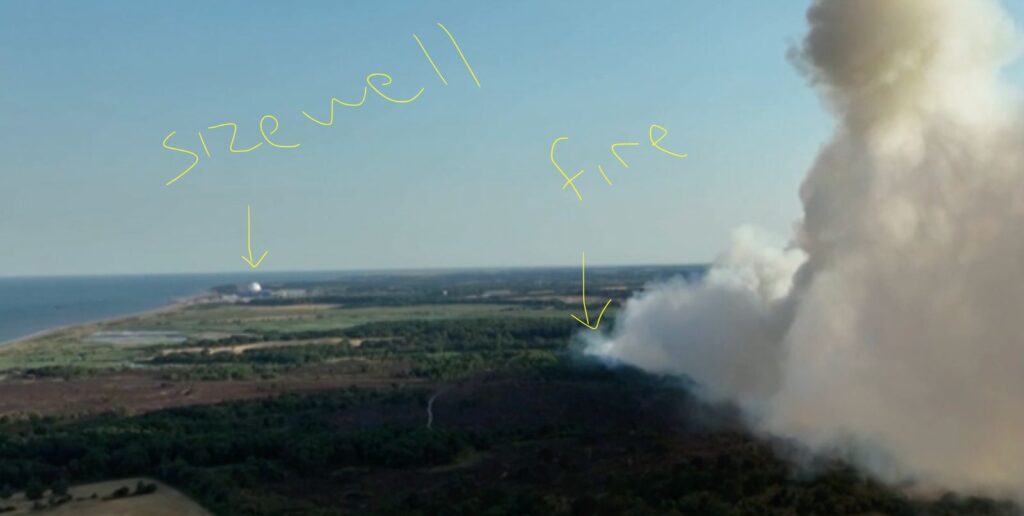
I find out that there are big forest fires at the moment in Suffolk on Dunwich Heath just a couple of miles from where we are going to be spending Monday and Tuesday night and just a couple of miles also from Sizewell Nuclear Power Station. I ring my sister in Leiston just to check that she is not affected and she sends me a dramatic photo from her house.
We take it easy today. We just rehearse the last Act of the play and in the afternoon Sam works on the music, Aimee on the choreography and we finish early. This is our last chance to relax before our hectic schedule of shows and touring. All the actors are professional and most of them have come straight out of other acting work without a break.
ART OF THE MASK 4: Commedia dell’Arte
Commedia dell’Arte was professional theatre. It lasted over 200 years from the registration of the first company in Padova in 1545 until its banishment from Venice in 1797.
The actors needed to have professional status to distinguish themselves from vagrants and beggars. Acting was not considered a profession and the actors wanted to remedy this by showing that theirs was a profession like any other.
“Arte” means “guild” and these actors who registered their companies before a notary wanted to be considered on the same level as the leather worker, the baker or the hostel owner. Acting became a recognised profession in Italy some years before the advent of professional theatre in England.
DAY 5: Friday 31st of July
Today sees the first run of The Italians in England before an invited audience at 6pm in our studio. I do a gentle warm-up before we launch into our dress rehearsal.
The Dress rehearsal is not good. There is too much shrieking and shouting and clucking like chickens. When performing physical theatre this is a common trap to fall into. The energy must be measured correctly. I tell the cast that they are not working as an ensemble and some actors are “pushing” and not listening to what is happening around them.
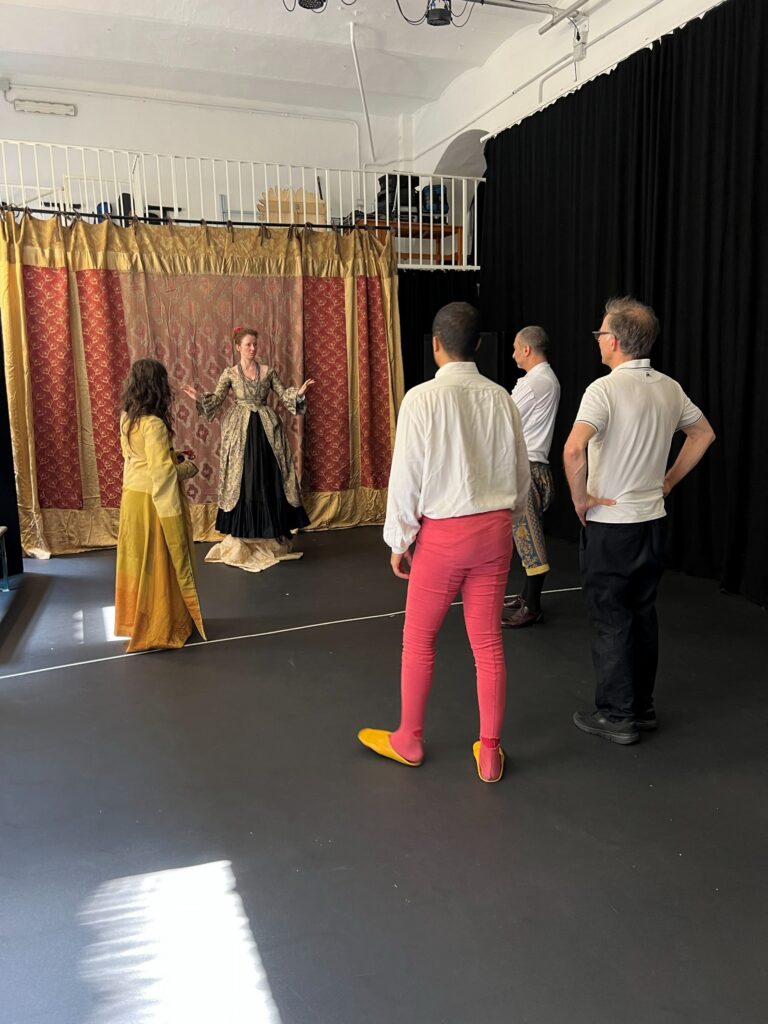
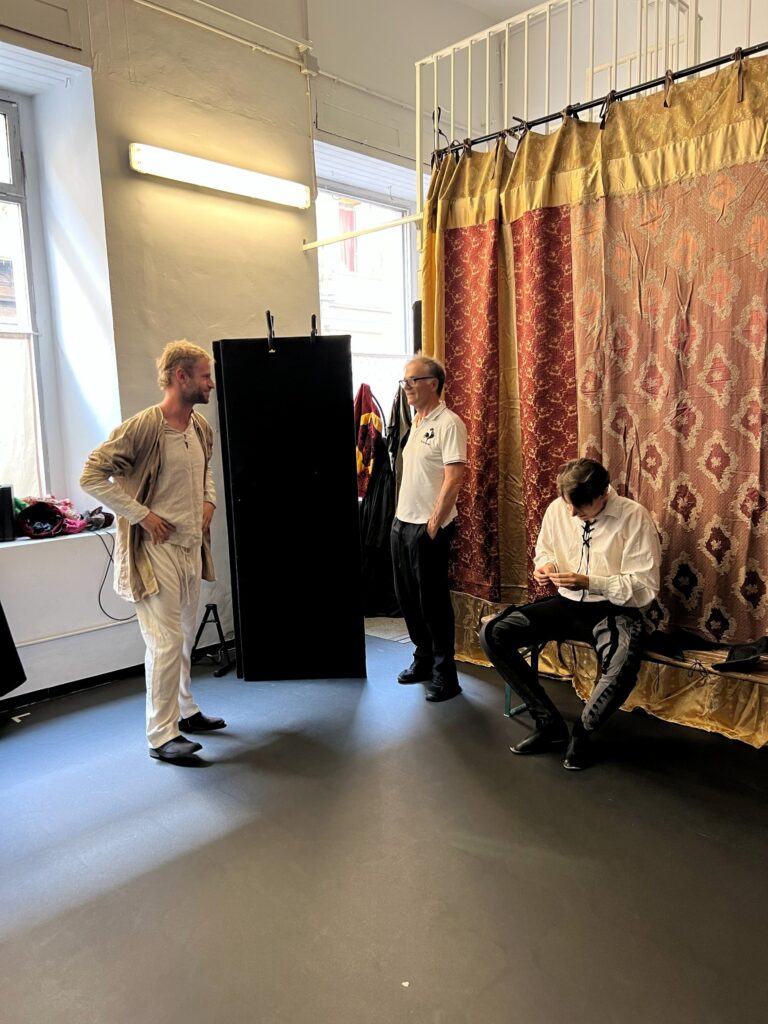
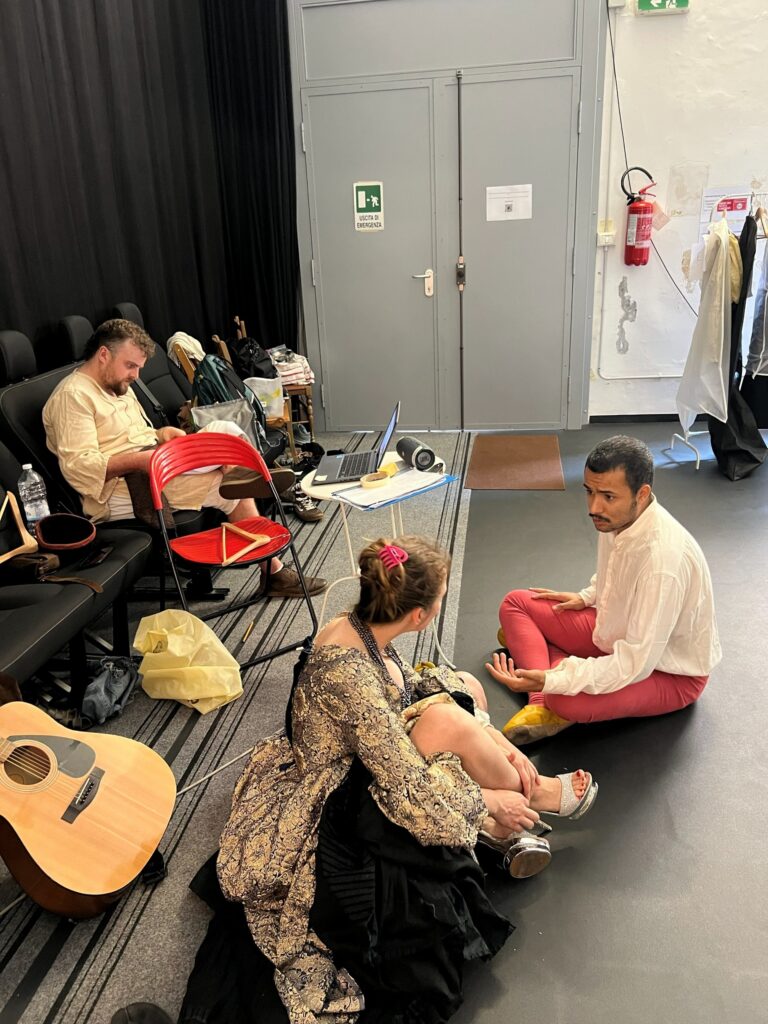
In any case I can see that everyone is exhausted by the intensive rehearsals. Unlike normal rehearsals where actors get a break, in Commedia actors are always on call, dividing into groups and working on their individual scenes if necessary so they never have a spare moment during the day.
The result is that after lunch we abandon plans to rehearse our new show for Stratford. The cast find places to sleep around the studio and in our flats nearby. The rehearsal space resembles a late-night airport lounge.
At 6pm we have our first performance before an audience. Before the show I say how honoured I feel to have worked with the same company for three years now. We have watched the show grow from a workshop performance to one of the most entertaining Commedia Shows in recent years.
The show goes well although in places it lacks rhythm, there is sometimes a lack of energy and just about every actor forgets a line or bit of comic business. It is also 3 minutes too long.
In the end we decided not to perform Pasquella as a zanni (servant character) in mask. After some days of rehearsal it soon became evident that to maintain the balance of the show we needed the beauty, the grace and the comic energy of the serving woman so brilliantly performed by Aimee Hislop. As we want to differentiate Pasquella from the Queen, which Aimee also plays, we give the Queen 10 cm high heels under her skirt to make her taller.
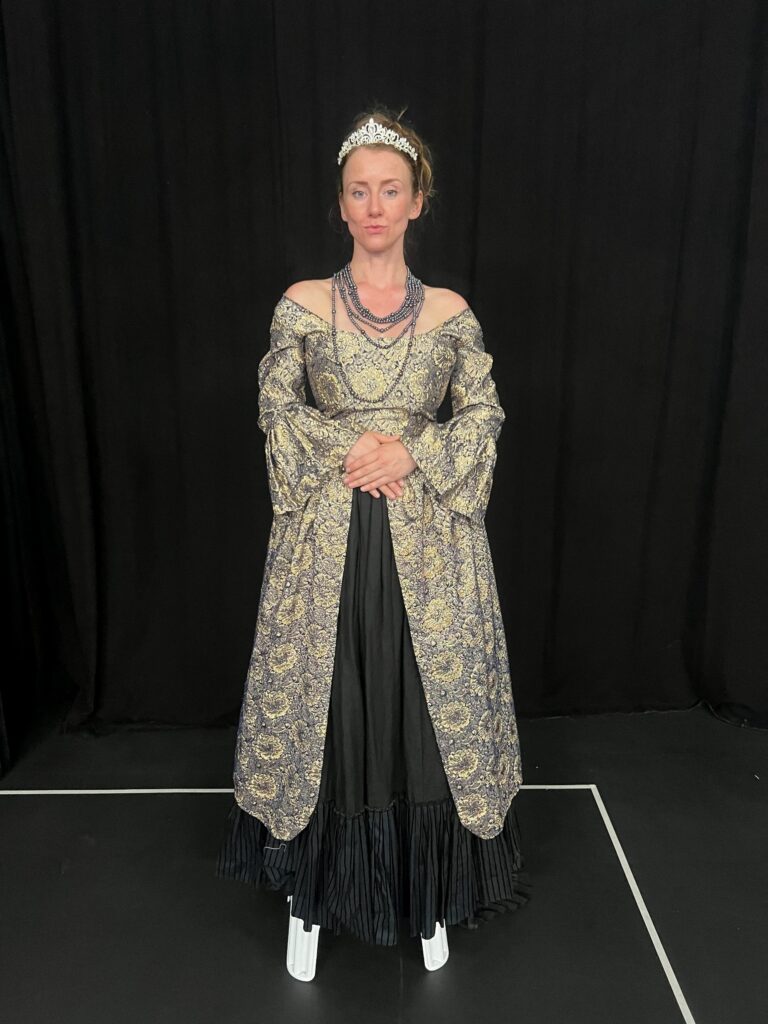
ART OF THE MASK 5: The Women in Commedia
In the second half of the sixteenth century in Italy a woman had practically no freedom and was the property of the man. The only way for a woman to have any standing in society was to obtain a husband from a high social background. Ambitious families would push their daughters to learn to sing, dance, improvise poetry and play a musical instrument in order to have the skills necessary to enter a noble household. Some of these young girls became virtuoso musicians and performers from a very early age.
A selection of these extremely talented women play a major role in early Italian professional theatre, even becoming leaders of some of the most important companies.
Their beauty, grace, energy, sexuality and talent are an essential part of Commedia dell’Arte and they form a necessary contrast to the crazy antics of the masks. One of the defining features of Commedia dell’Arte is the interplay between the sophistication and refinement embodied by the female characters, rooted in courtly culture, and the exuberant physical comedy of the male masked characters, whose origins lie in the tradition of street performance.
Shakespeare of course had to make do with all-male casts. In England women were not allowed to perform until 1660.
DAY 6: Saturday 1st of August
This is our last day in Turin before we set off for England in our two vans.
We are looking forward to escaping the heat and we are happy to hear that they have successfully extinguished the huge forest fires in Dunwich where we are staying on Monday night.
The company have a morning off to rest and rehearsals start at 1pm.
Sara takes us over our schedule for the next few days in more detail. We rehearse some of the scenes for our full-length two-hour show in Stratford which Aimee and Sam, our musical director and choreographer, have been working on. They have done a great job!
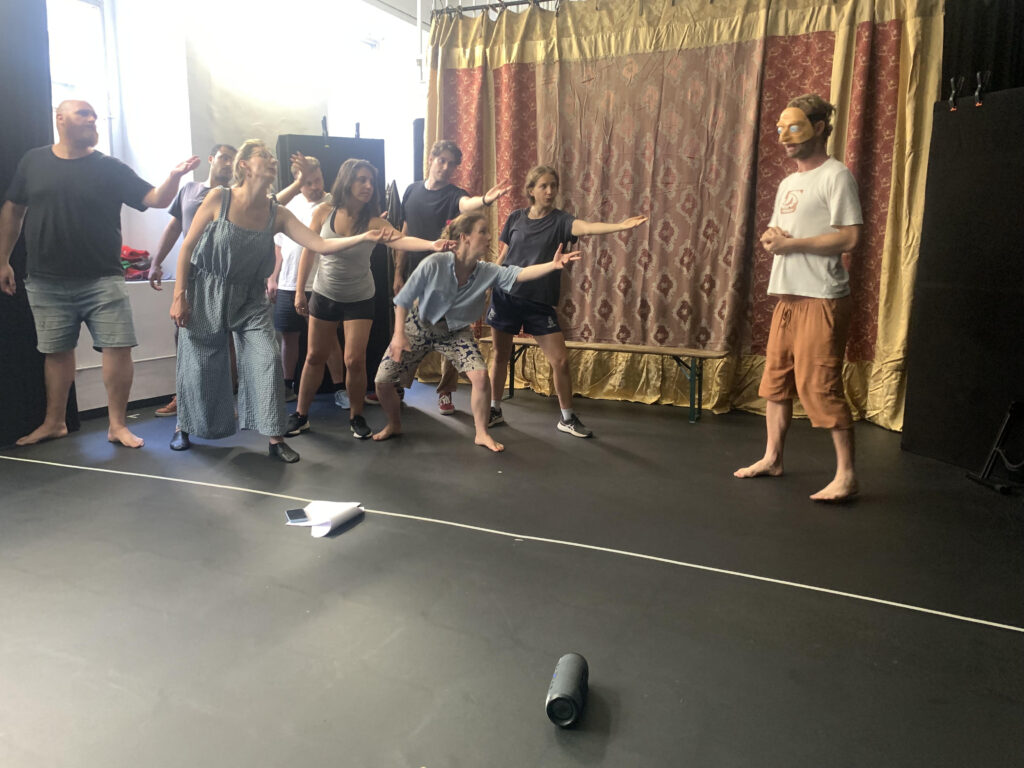
We are all so looking forward to performing in the open air near Stratford-upon-Avon at the end of our UK tour, filling in this year for the usual Gilbert and Sullivan at the Ettington Park Opera now in its 11th year which is having a one year break.
At 6pm we perform our second studio show. At a certain point we realise that some of the audience don’t understand what we are saying which is fair enough seeing as we are performing in English to an Italian audience! The show goes well despite this.


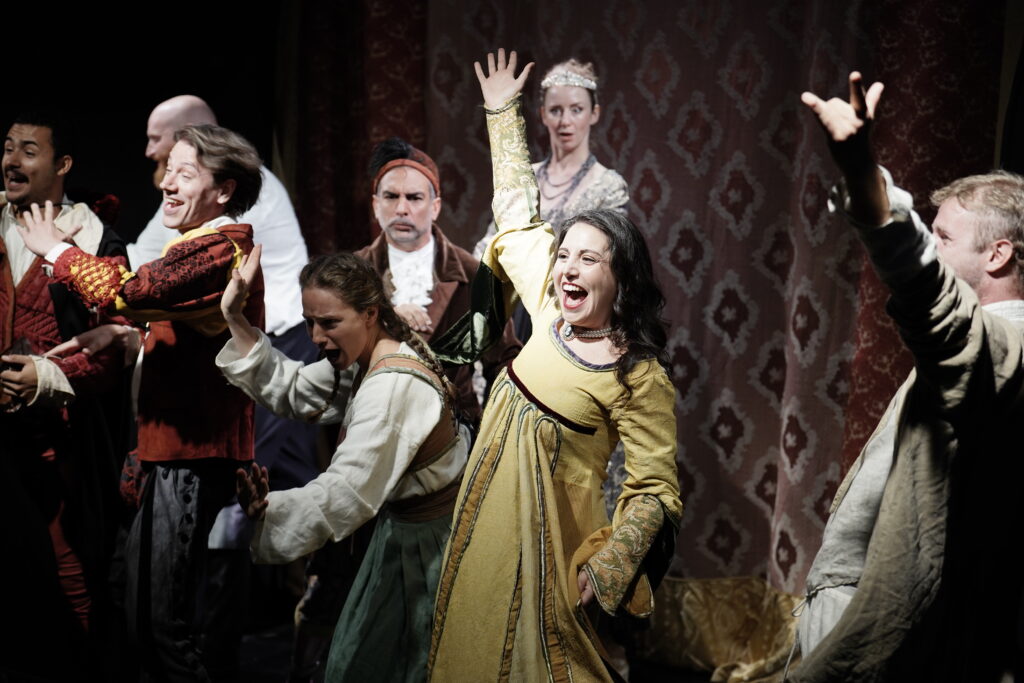
The cast are dressed in superb period costumes designed by Roberta Vacchetta. Originally part of Eugenio Allegri’s collection, these costumes have been generously made available to us, and we have been incredibly fortunate to use them over the past three years.
They are finely made but are often difficult to put on both for the women with their bodices and sleeves and for the men with their codpieces and hose.
ART OF THE MASK 6: Costumes and Mask
For our first workshop show three years ago we couldn’t get the masks to work for some of the characters. In the end we decided not to wear them and the beautiful costumes and the acting were enough to create the spirit of Commedia.
One of the finest Commedia dell’Arte performances in recent years was One Man, Two Guvnors performed by the National Theatre and directed by Nicolas Hytner and Cal McCrystal, based on The Servant of Two Masters by Carlo Goldoni published in 1753.
They decided not to use mask at all but the show worked absolutely superbly all the same.
You can perform shows in Commedia dell’Arte style without mask as long as the actors are well costumed, have heightened energy and very clear characters.
However masks do add an extra dimension and I will look at what a Commedia mask brings to the stage at a later date.
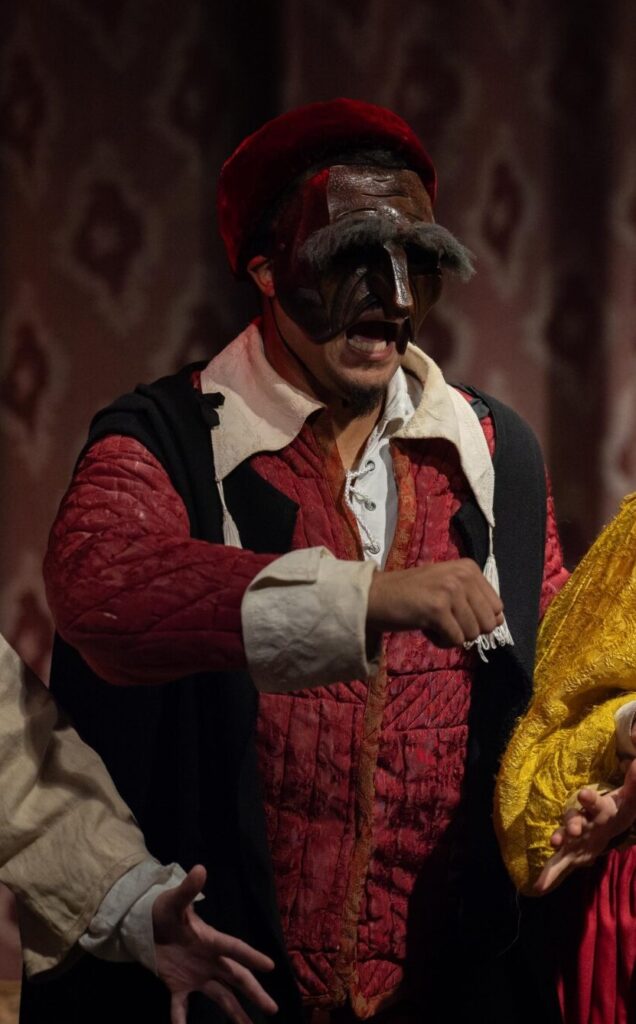
DAY 7: Sunday 2nd of August
Journey through France.
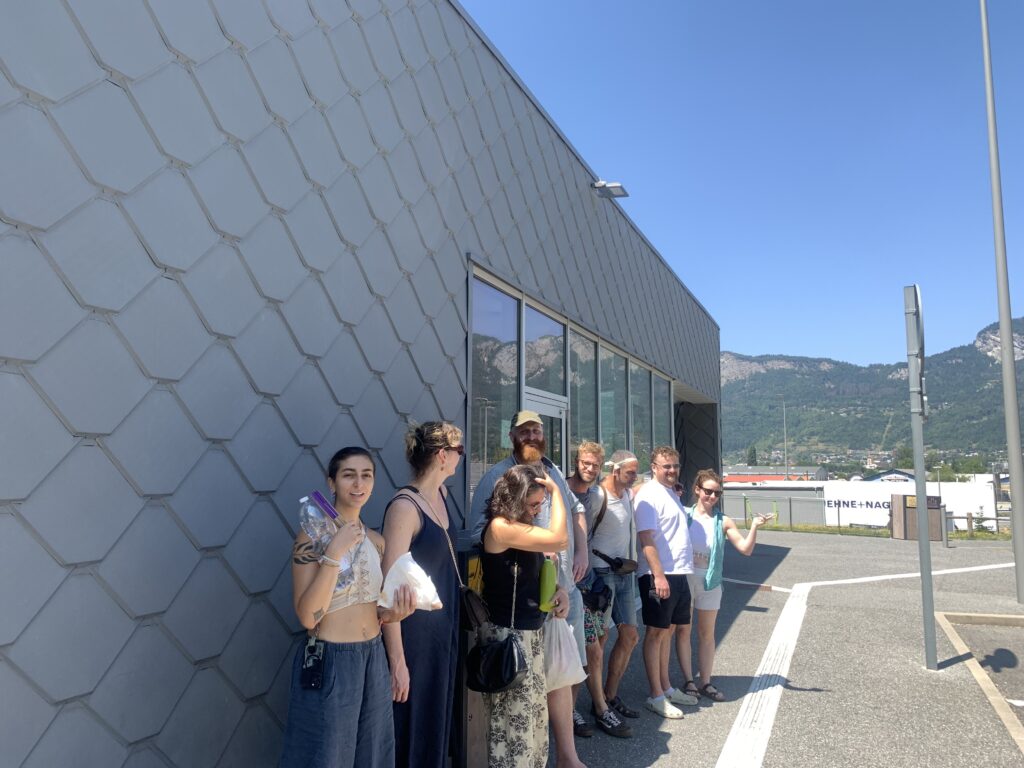
The two Renault Trafic vans are packed to the brim – one with nine of us and the other three travel with the sets.
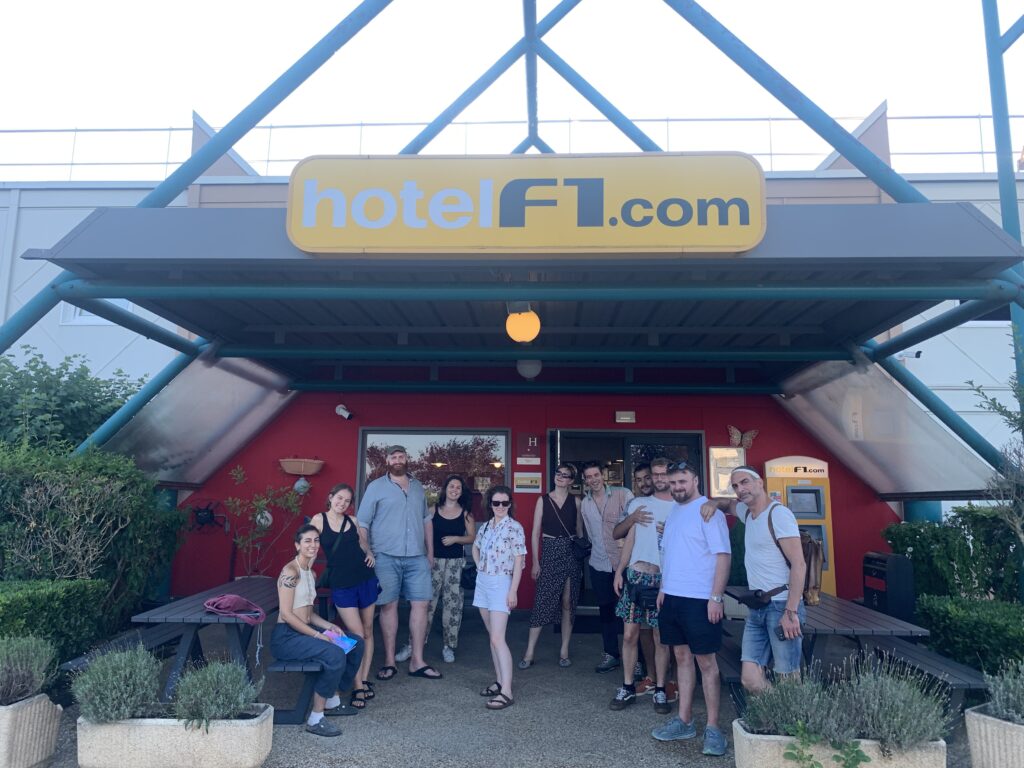
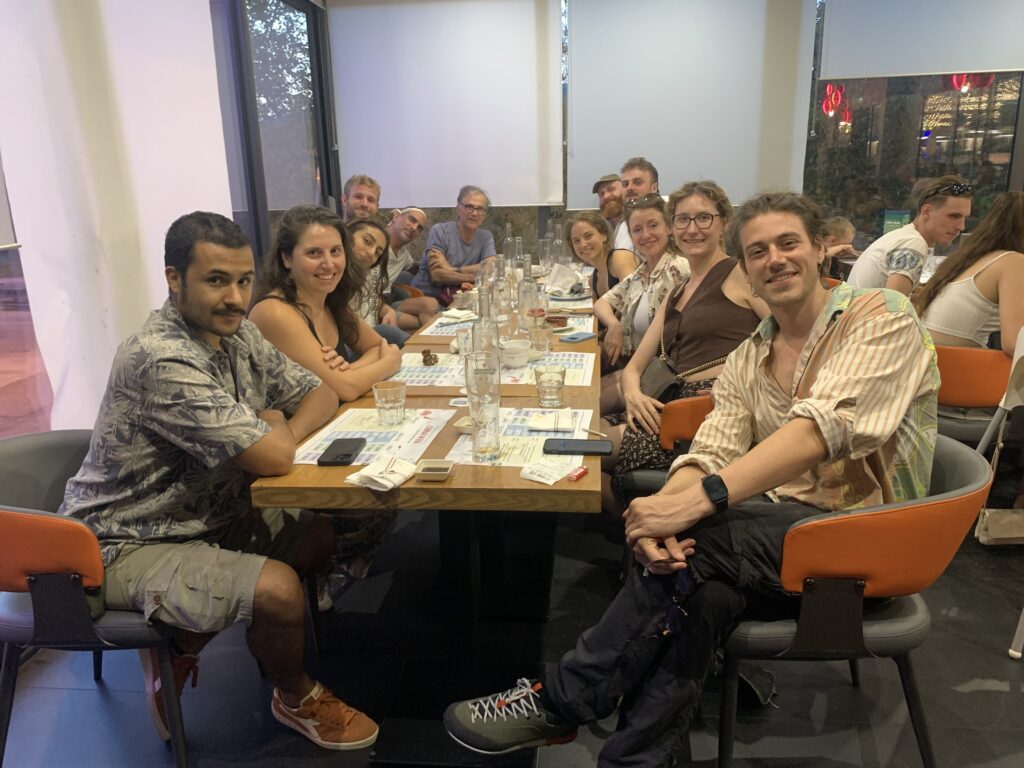
We set off through the Mont Blanc tunnel and head through France on our way to a hostel in Chaumont. Nearby is an all-you-can eat Chinese restaurant: the Chinese Wok with the largest and best selection of food you can imagine! We are all very happy and eat far too much.
Half way to Suffolk!




ART OF THE MASK 7: On the Road
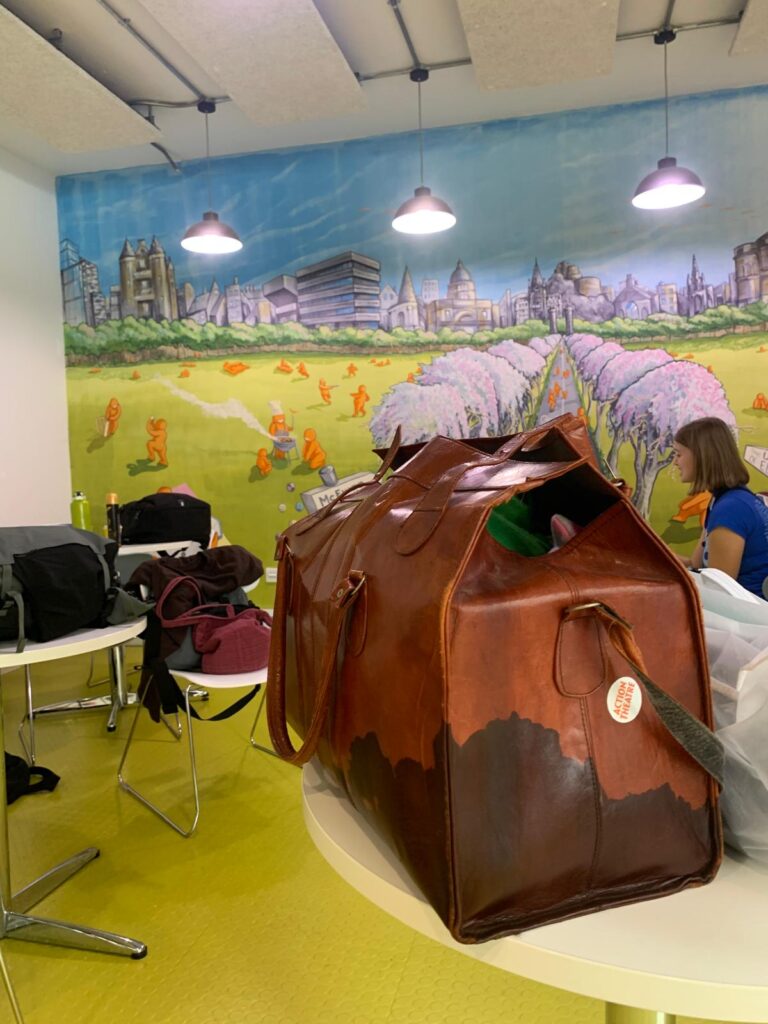
Our most valuable props are our masks. Each fragile Balinese mask travels in its own protected box whilst the Commedia masks each have their own bag which we place together in a leather suitcase.
It is astonishing to think that the Italian Comici dell’Arte travelled all over Europe in the second half of the sixteenth century in an era in which travel was extremely slow and often dangerous. A letter of safe passage issued by the authorities in each country through which you passed was desirable to avoid being arrested as a vagrant.
The Italians in our company (Giacomo, Edoardo, Simona, Martina and Amerigo) all have their passports and ETAs ready for tomorrow’s channel crossing.
DAY 8: Monday 3rd of August
Journey to Suffolk.
Everyone is looking forward to the cooler Edinburgh climate! The heat has been unbearable.
We have two hair-raising moments just before catching the ferry.


Dovilé realises she will be refused permission to enter the UK if she does not have the ETA document which can take up to three days to process. She goes online and we wait with baited breath.
George meanwhile can’t find his passport and is convinced he left it in Turin. He dives into the boot of the van to search for it in his main suitcase.


Finally we make it to the Calais Ferry terminal which is the first time on our journey that we present our passports. There are long queues but everything is fine. The Italians have made it to England.
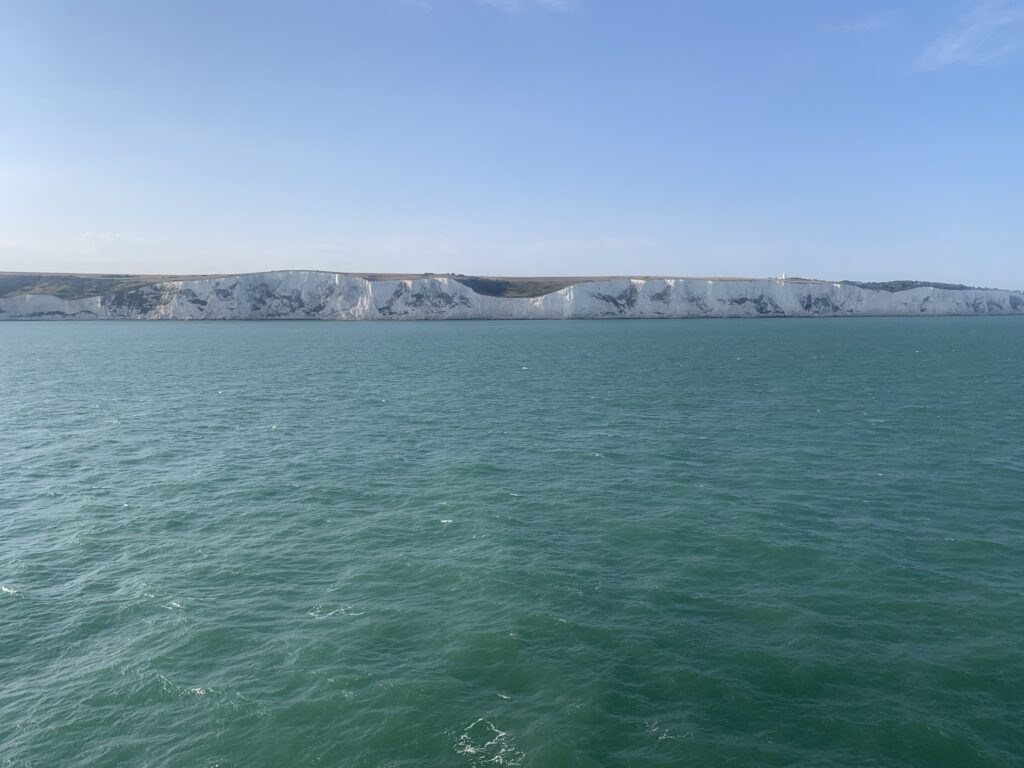


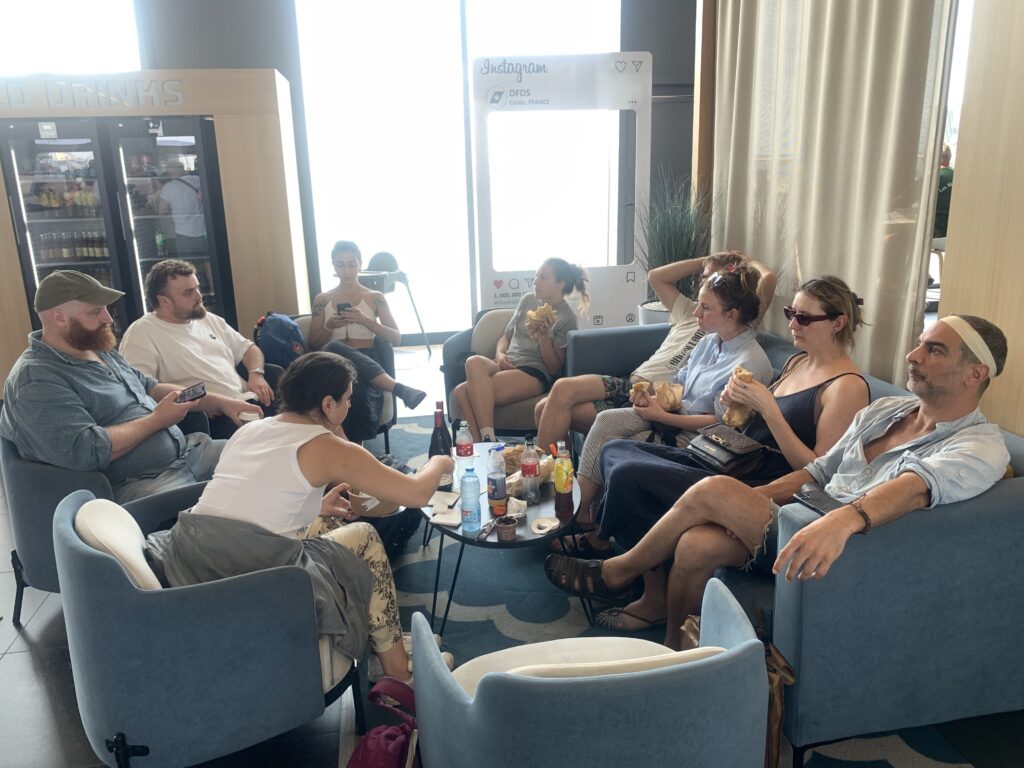
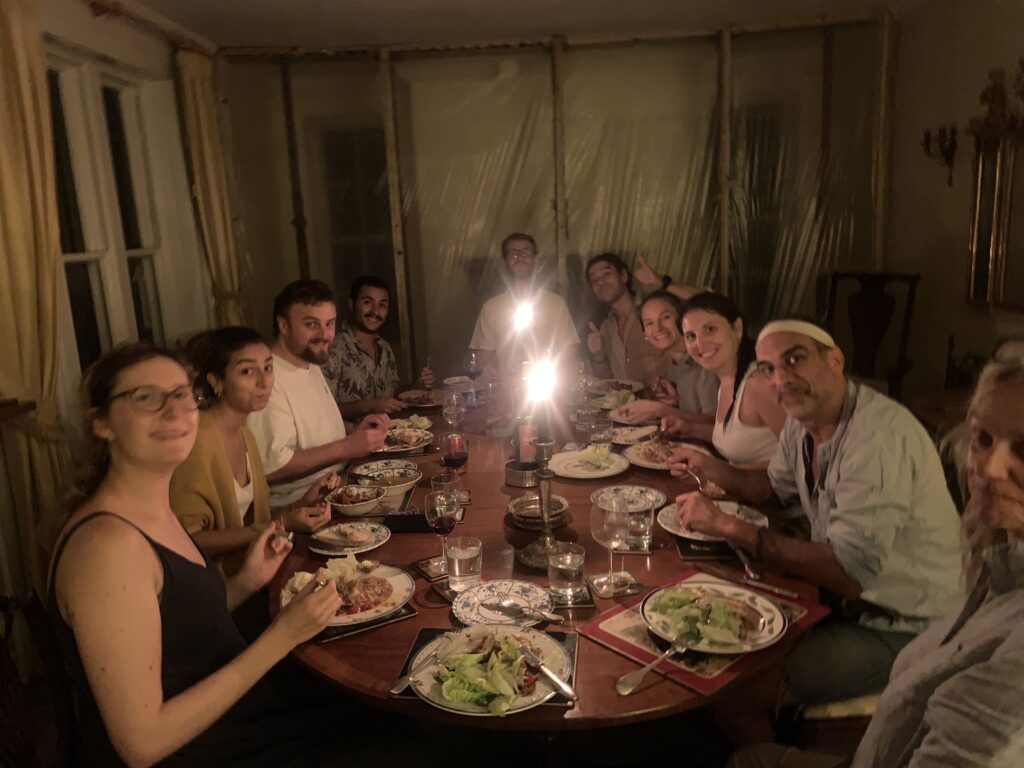
At 10pm we arrive at our destinations in Suffolk.
ART OF THE MASK 8: Private Performances
New discoveries continue to reshape our understanding of the early travels of the Italian players. As recently as 2022, theatre historian Matteo A. Pangallo uncovered a remarkable letter of safe passage in the Rye Archive. Issued by the English ambassador to the French Court, Valentine Dale, in 1574, the document granted a group of Italian players permission to travel in England, along with legal protection from arrest.
It is widely believed that these were the same actors who later performed before Queen Elizabeth I at Windsor and Reading. If so, this represents the earliest known record of a Commedia dell’Arte troupe performing before the English Queen.
Historical records place Commedia dell’Arte companies in England between 1572 and 1578. During one of their earliest recorded visits, an Italian troupe performed before the Earl of Lincoln.
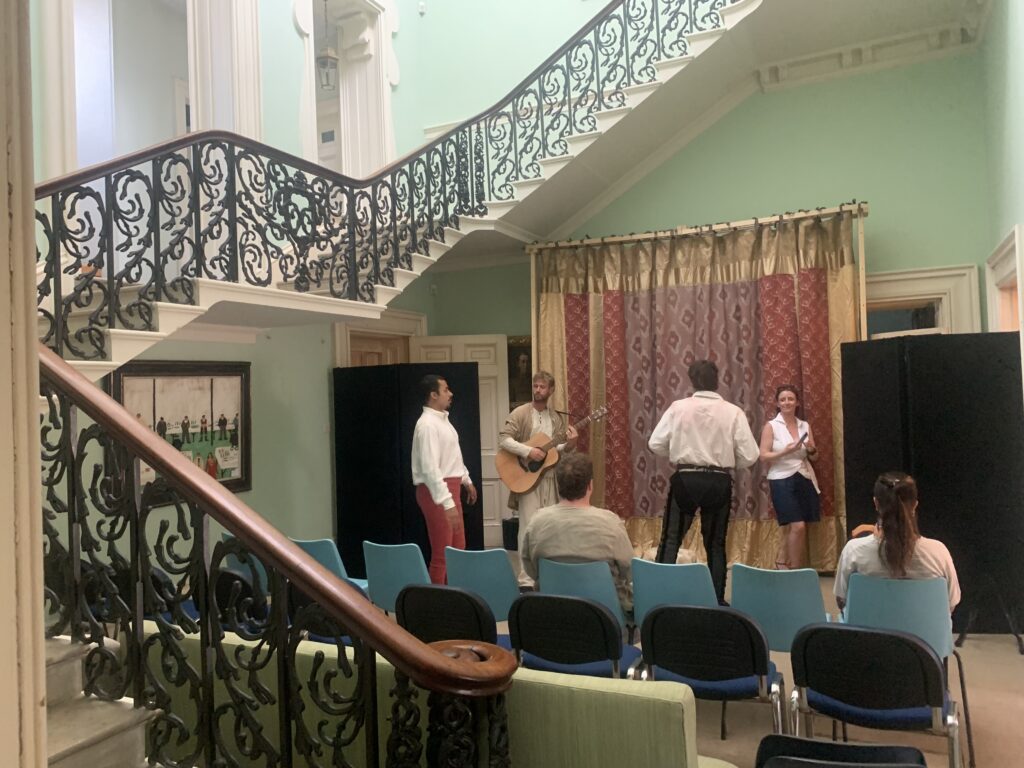
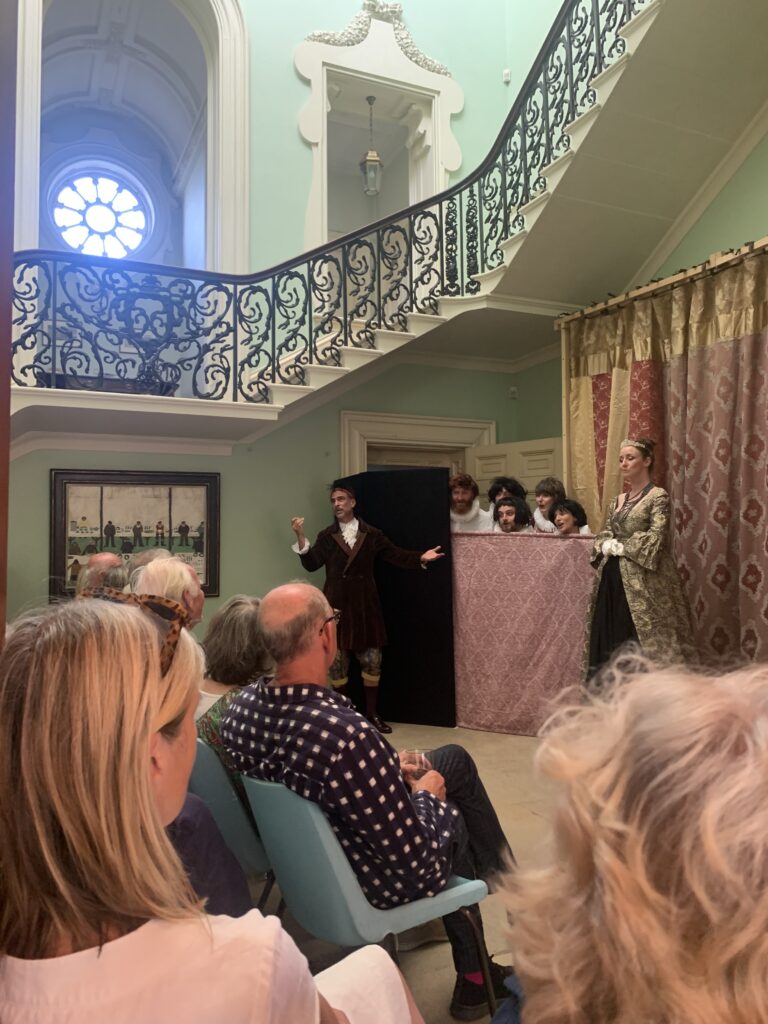
Tomorrow, we have the privilege of recreating something of that history. Our first performance will take place in the entrance hall of a Grade II-listed country house, echoing the kind of intimate, aristocratic setting in which these first travelling players would have entertained. It also marks the UK debut of The Italians in England.
DAY 9: Tuesday 4th of August
Wow! What a day!
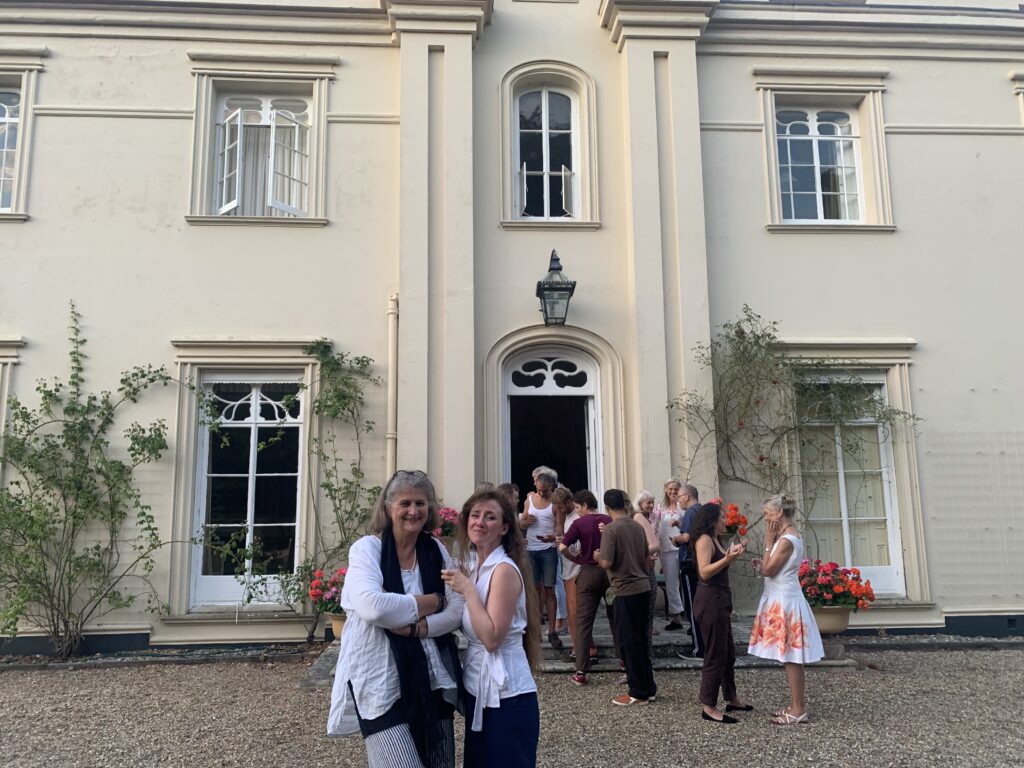
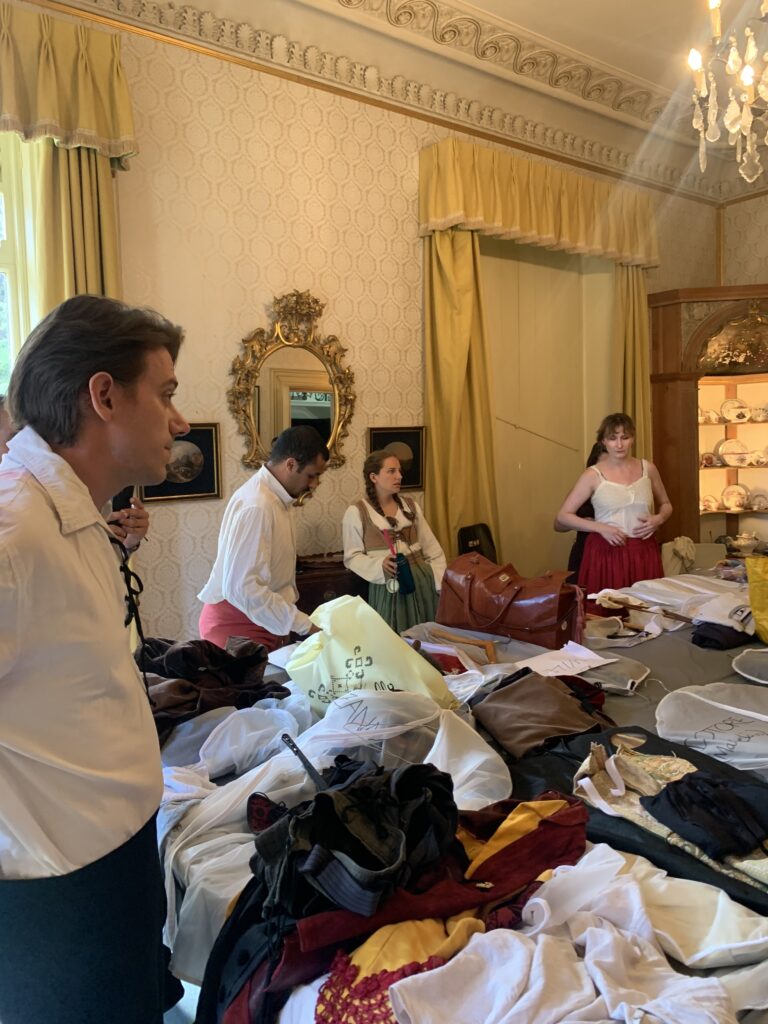
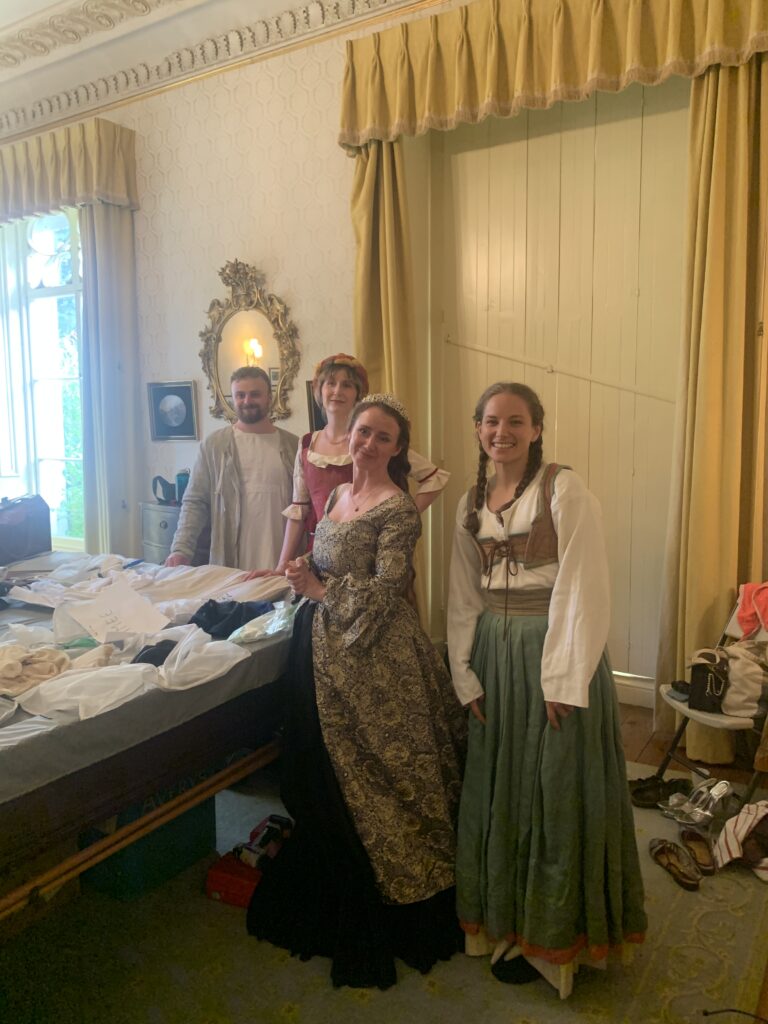
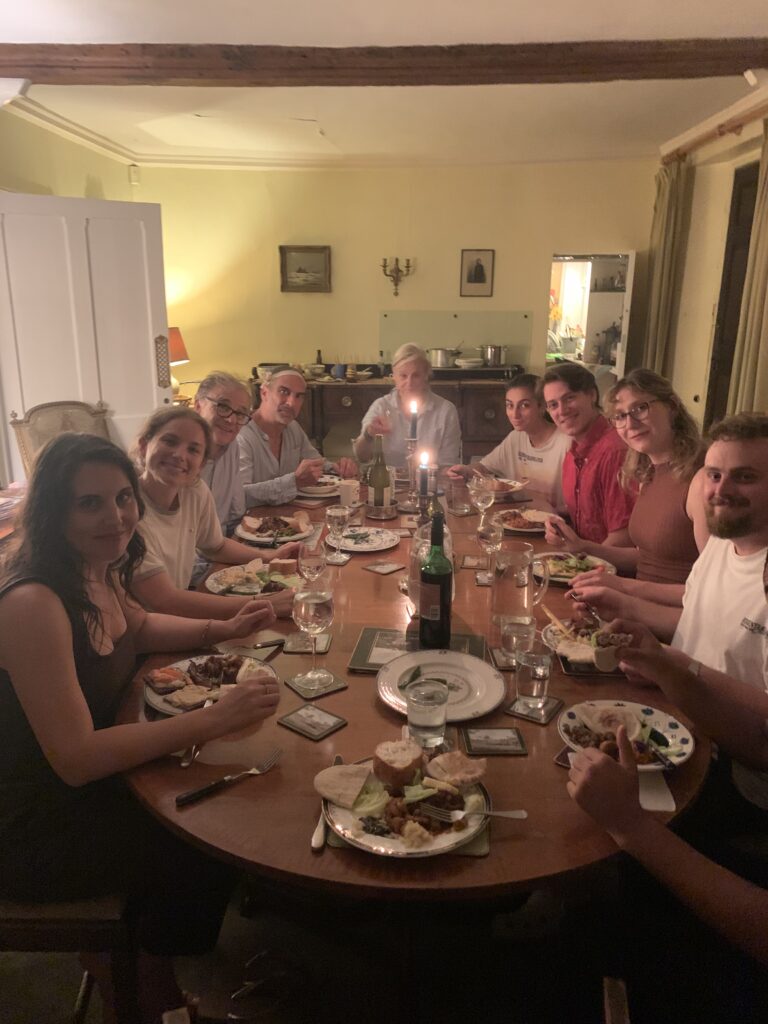
Thanks to the kindness of our hosts Justin and Emma we recreate the kind of intimate performance the Italian players in the 16th Century may have experienced in the private dwellings of the aristocracy.
We perform before 40 invited guests and family and it is a lot of fun for all.



ART OF THE MASK 9: Commedia Performance Spaces
Modern theatre historians have been writing for a long time now that the top commedia troupes would rarely have performed on an outdoor stage in a piazza with all the noise, bustle and distractions.
They much preferred performing in indoor or at least enclosed spaces that they could hire or were offered free by the aristocracy. These spaces varied enormously but at court they could sometimes be surprisingly intimate if the head of the royal household wanted to watch the show with just a few members of his entourage.
The Italian players of the 16th Century were professionals and entrepreneurs. The money they could make in the right royal household was the best on offer. Some actors became very rich.
As our adventure started on Eugenio Allegri’s 5mx3m trestle stage we are used to performing in small spaces and tonight we performed for the first time in an intimate private setting. It really worked. The connection between the audience and the actors was incredible even if you have to be very careful with the sight-lines.
We will have a very different experience at the end of our tour when we perform outdoors near Stratford-upon-Avon.
DAY 10: Wednesday 5th of August
The two blue vans set off at nine o’clock to Edinburgh.


The first few days will be messy with the actors staying with friends and family and in hostels.
ART OF THE MASK 10: Why is half-mask so rarely seen today? Part One.
At school I remember Jacques Lecoq saying he considered half-mask the most difficult form of theatre.
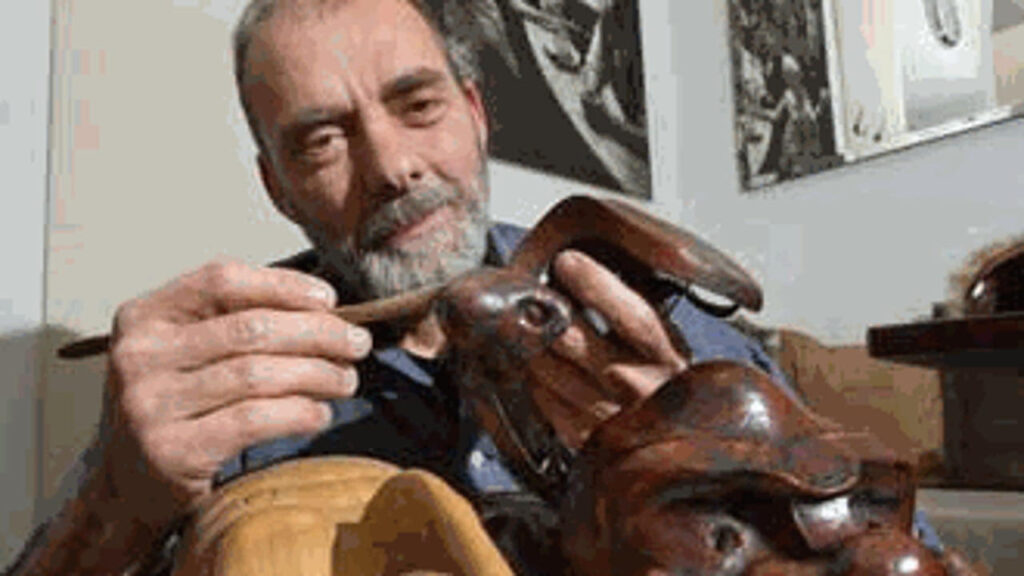
I am lucky to have worked 25 years now using half-mask in English Teaching Theatre to entertain Italian students so I have learnt from trial and error what works and what doesn’t work. I have also had the good fortune to work with the mask-maker, Franco Leita, who was also a great friend.
We performed two mask shows this year and it is incredible the engagement and fun you can have with the students when students interact with the masks on stage. One of my most vivid moments this year was observing a group of 14 year olds screaming their heads off when two masks have their first kiss!
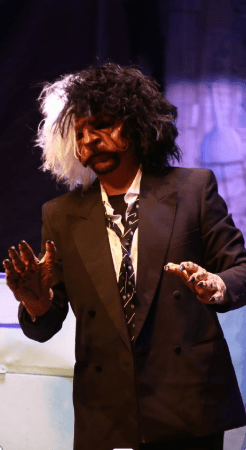
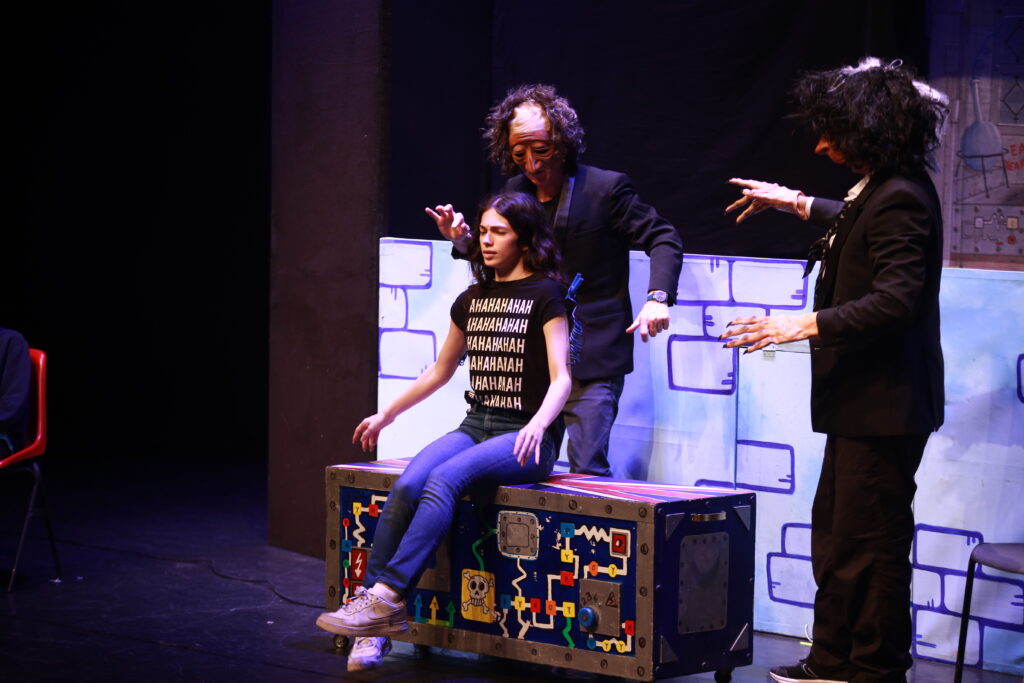
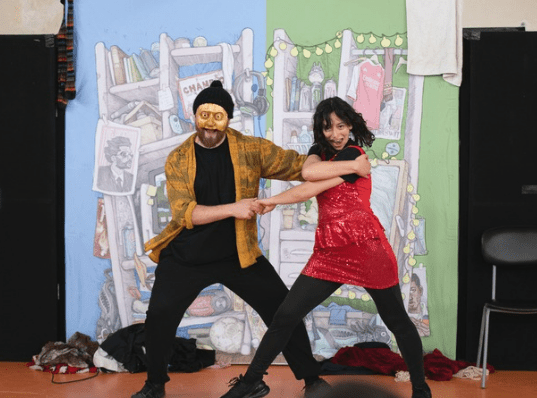
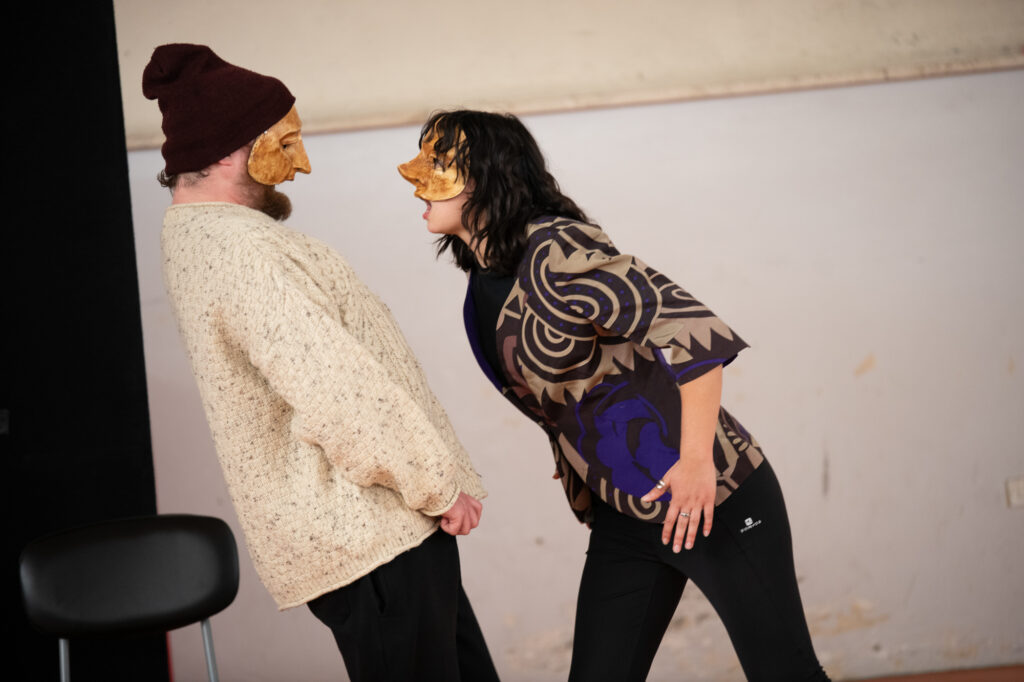
To perform in mask you need a mask that works.
You can work with a mask-maker whether in leather, wood or papier-maché to create a mask that has the characteristics you want but this is very difficult and takes a lot of experience to get right. It is easier to pick a mask already made by an established mask-maker (I am a great fan of Michael Chase in England) which you then develop with the actors starting with costume and wig or hat of sorts.
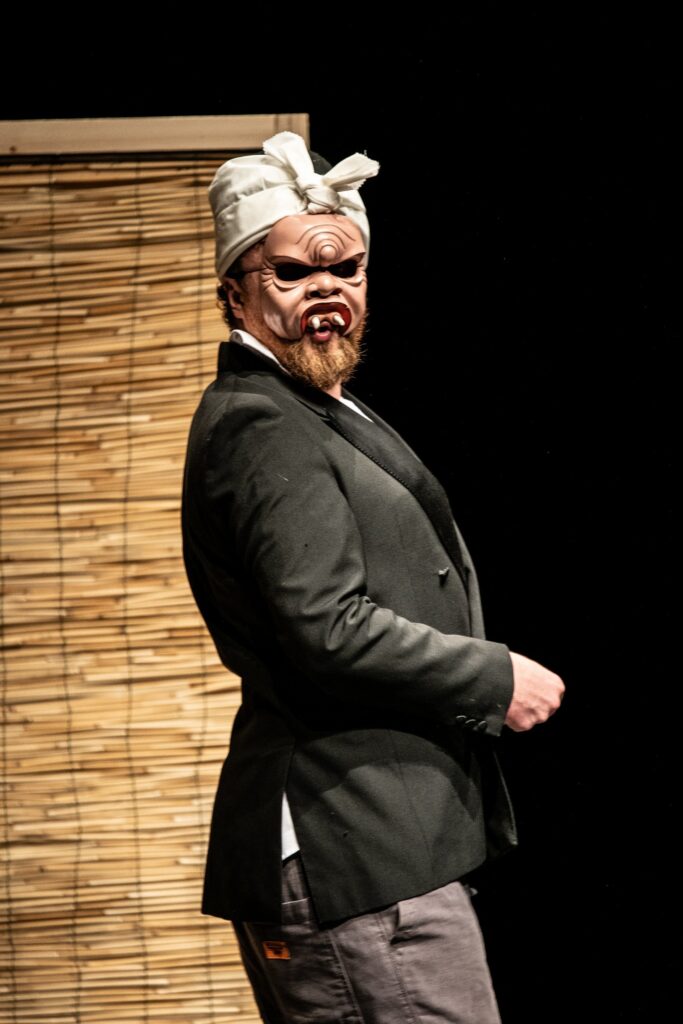
A good mask must be able to play mask and counter-mask. The mask must fit the actor. The mask should preferably have the same colour hair as the actor. A costume that works with the mask is essential. Usually you should try to hide the elastic. The mask should become the actor’s face.
So the first barrier to half-mask work is finding a mask that works!



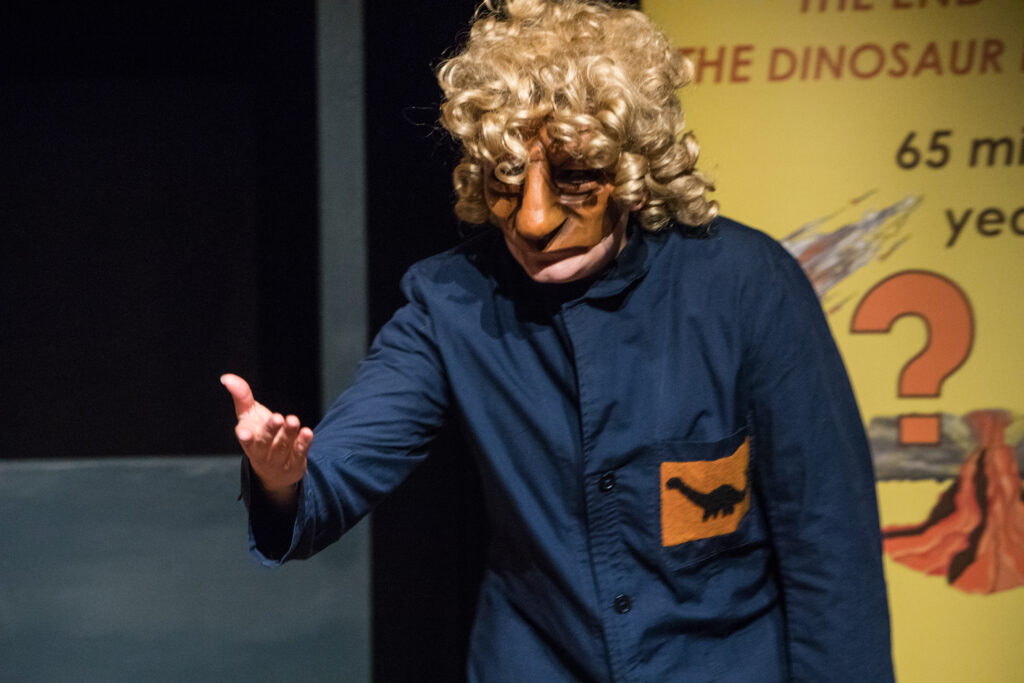
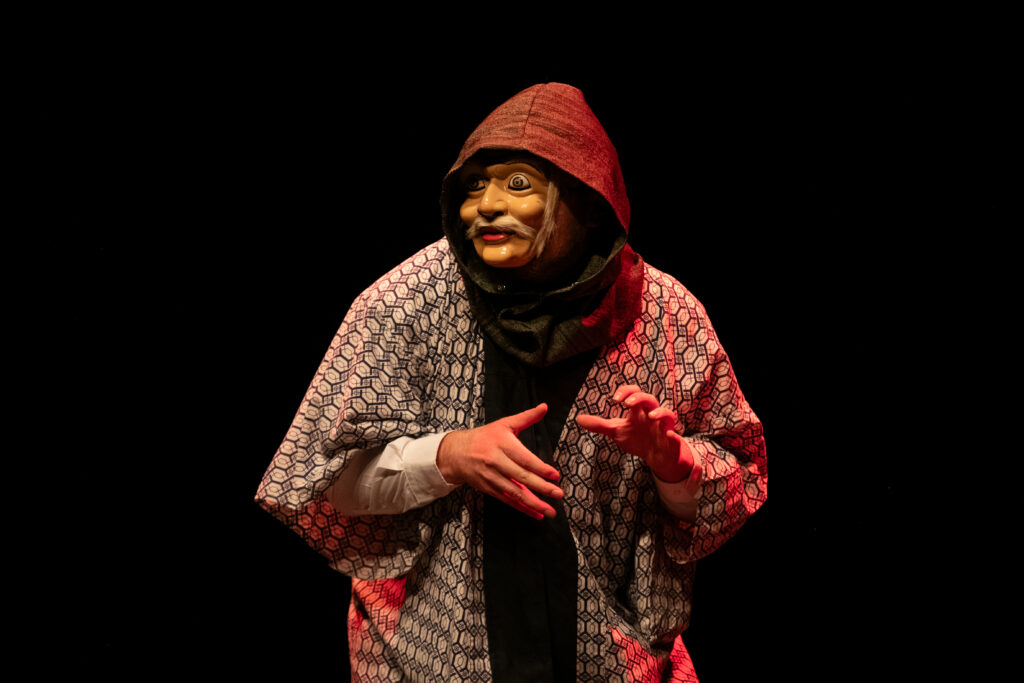
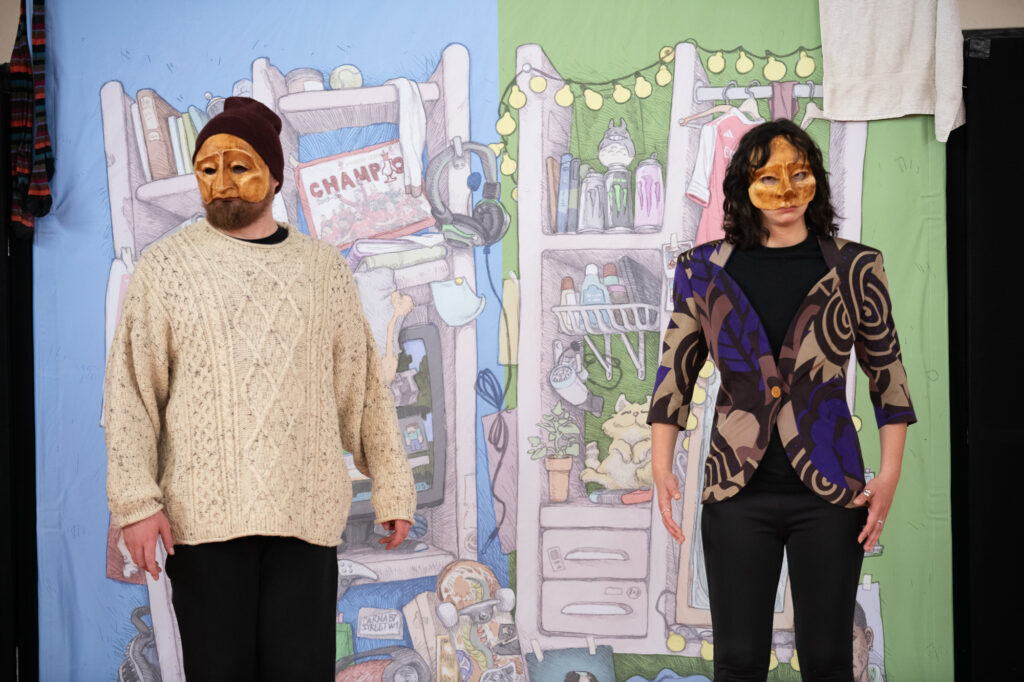
DAY 11: Thursday 6th of August
We love the cooler climate. It is lucky we reminded the Italians that they needed a jumper!
Everyone is very excited to be in Edinburgh and the vibe is incredible.
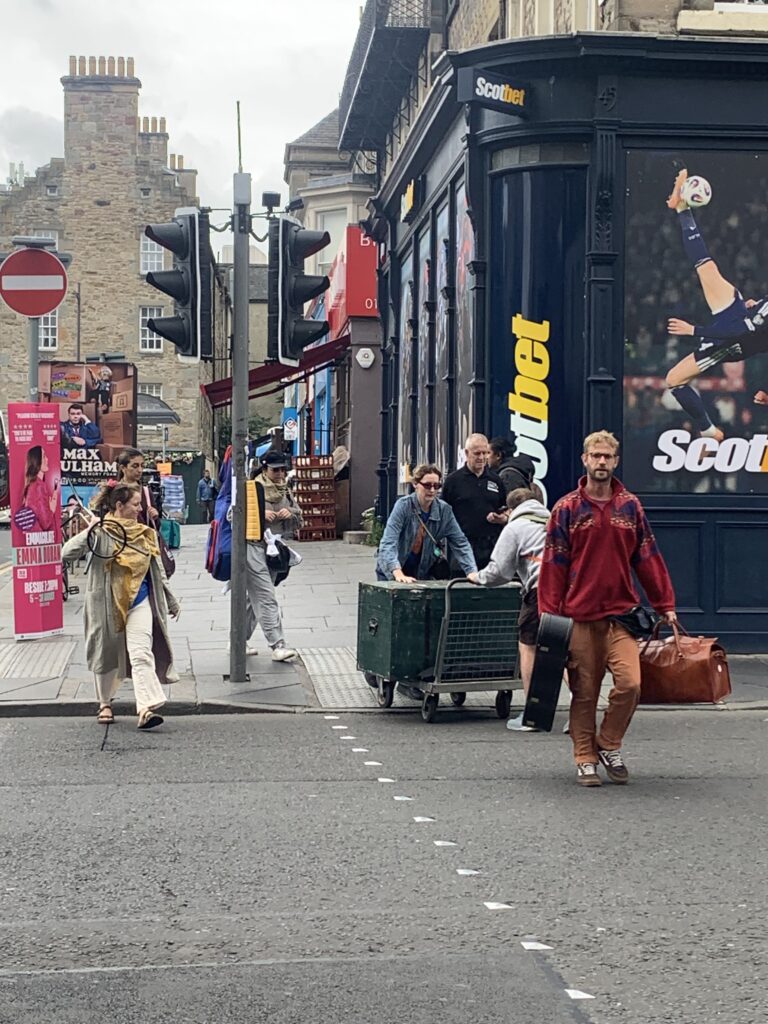
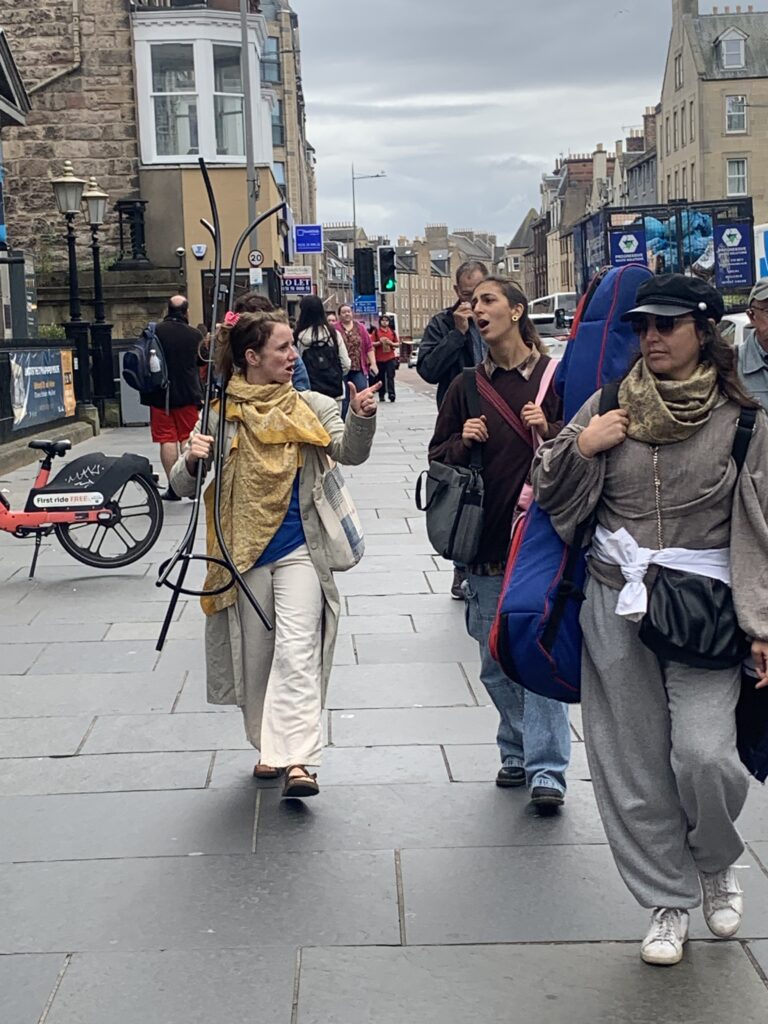
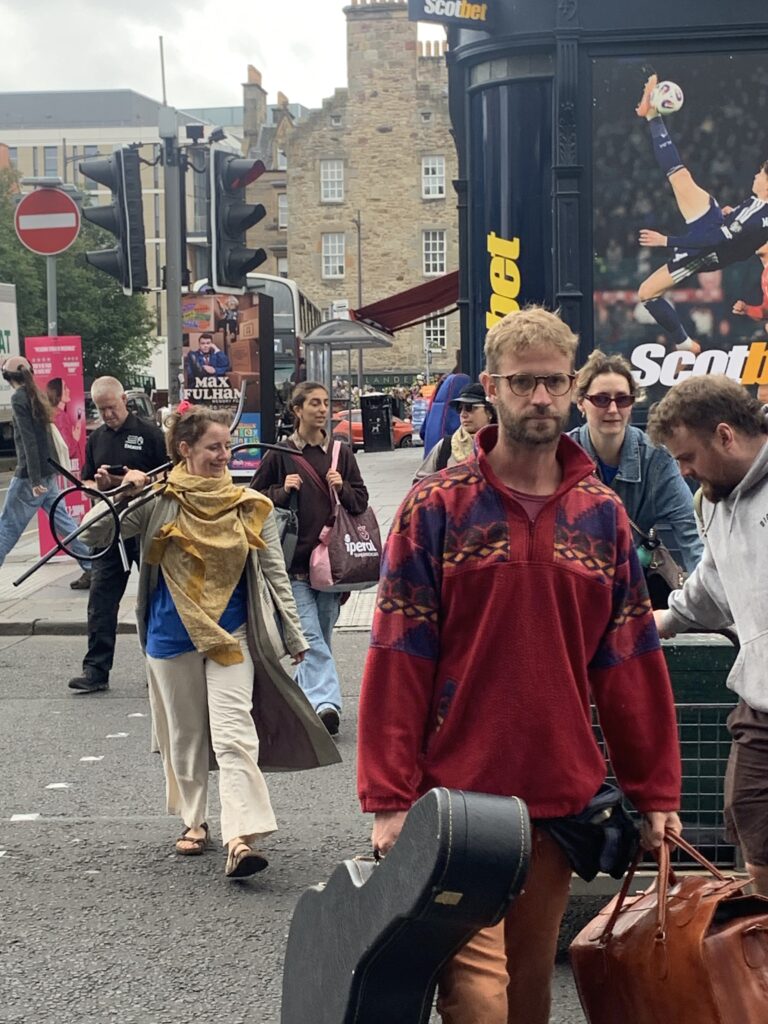
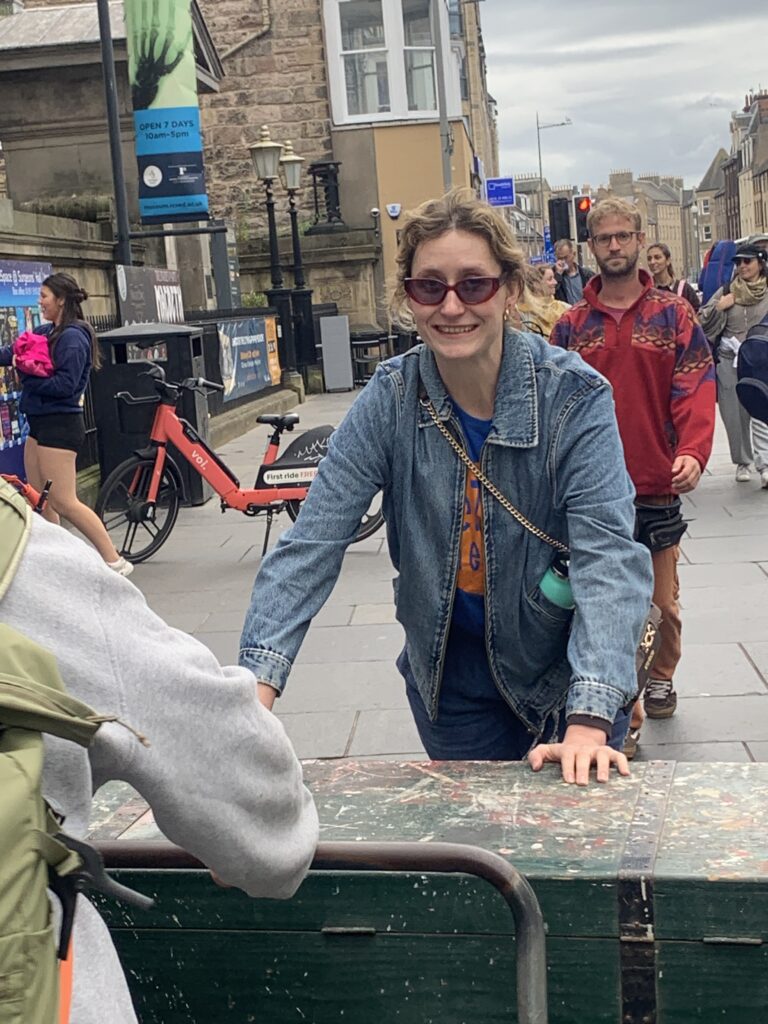
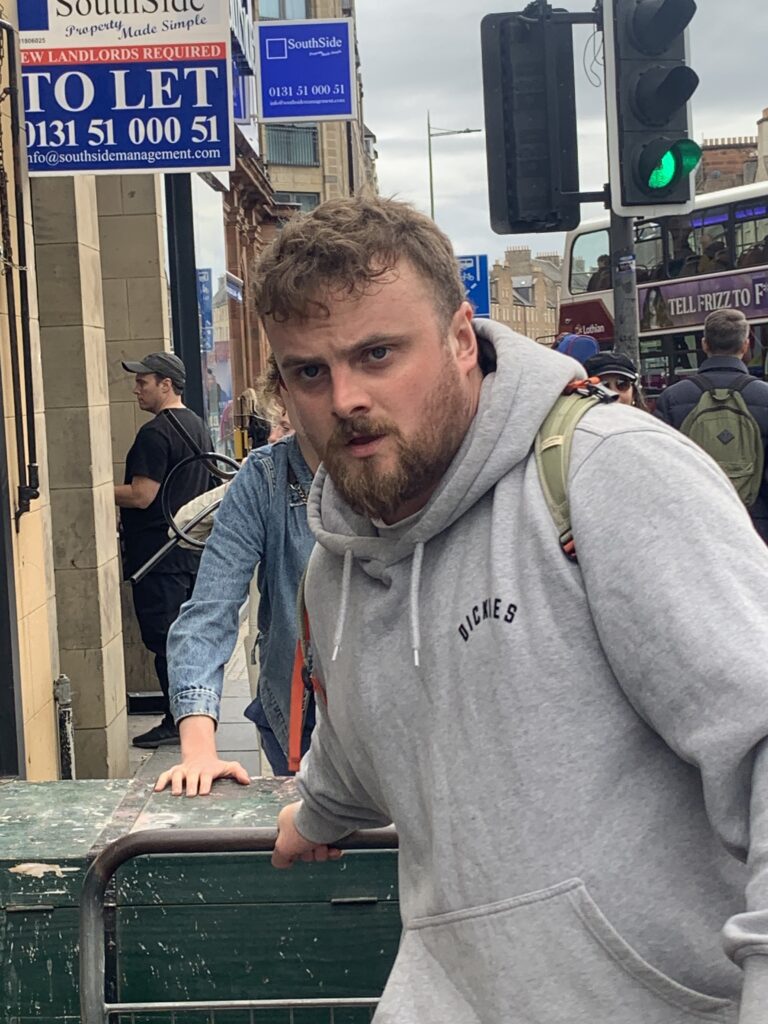
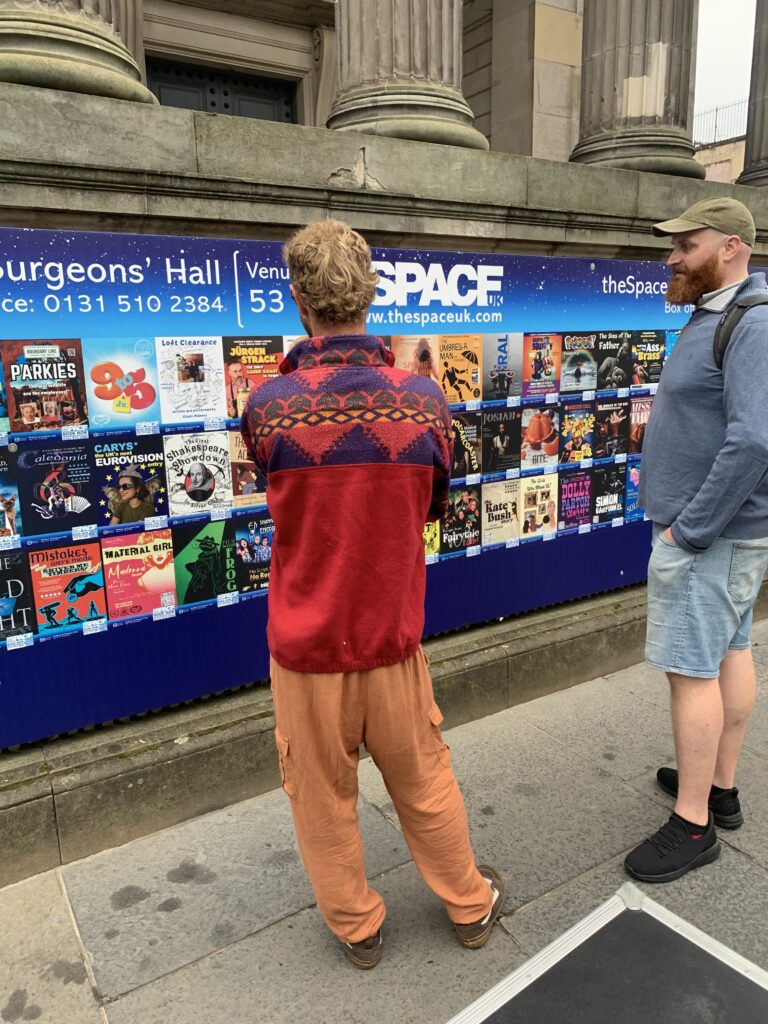
We unload our backdrop, masks and props and set off to Surgeons’ Hall from the Nicolson Street Car Park.
Our technical rehearsals go well and in the afternoon most of the cast go to see Gary Starr.
ART OF THE MASK 11: The Commedia dell’Arte Set
In the extensive iconography dedicated to the Italian actors of the 16th Century it is difficult to understand exactly what their sets consisted of.
As travelling companies they would have travelled as light as possible and whilst their costumes would have been elaborate, we know from Flaminio Scala that they used few props.
For their more well-known comedies the action usually takes place between houses with windows and doors. How they achieved this is not clear.
The windows were necessary for the lovers. We must not forget that in 16th-century Italy, many respectable upper-class women were expected to be accompanied in public, although women of lower social classes routinely moved about the streets for work and daily life. Having windows meant that they could act alone onstage even if they were indoors.
In some of the performances there seems to be just a curtain behind them whilst, if necessary, in a royal performance they could ask for an elaborate set to be created for them by the court craftsmen. This was more common when the actors turned their hand to tragedies, pastoral works and elaborate court fantasies
For The Italians in England we have just a backdrop, two small flats backstage, a bench and a small selection of props. We don’t have doors or windows (yet!). This makes it very easy to move around, quick to set up and we can adapt to the smallest of spaces.
DAY 12: Friday 7th of August
Today both our shows open. We are very excited.
During our ten minute get-in of Democrazy we set everything up and then realise to our horror that we haven’t got the Balinese masks. We think they must have been left in the van parked in a car park nearby.
There follow frantic telephone calls to find out who has the van keys, hoping that the masks are actually in the van. George has them but he has gone off to Fringe Central with Dovilé. I hurtle out of the theatre down the street to meet Dovilé who is hurtling in the opposite direction with the keys. I run to the carpark and yes, thank goodness, the masks are in the van. As the audience comes in we set up our masks on the table and manage to start just one minute late. Phew! Denis and Edo do a great show.
Afterwards we join the rest of the cast outside the Fleming Theatre for The Italians in England. We set up and Aimee leads some ensemble and relaxation work and we sing the company song. We are nearly ready to go.
Like all Italian companies we then do a routine that had its origins when theatre goers arrived at theatres in horse drawn coaches. All the actors put their left hand into the circle, move them up and down three times and say “merda merda merda” (shit shit shit). Following this you say “culi culi culi” (bottoms bottoms bottoms) and you must touch everyone’s behinds! This has to do with the number of horse drawn carriages outside a theatre. The more horse manure on the road the bigger the audience.
The Space technical staff are always encouraged to join us in this ritual and at each performance the more brave amongst them join the circle. Today Esme had the pleasure of joining us!
Audience response is very positive.
What is interesting is that many of the audience have never seen Commedia half-mask or Bali Topeng mask before.




ART OF THE MASK 12: Codified Movement
Actors are often taught that mask characters move in a particular way. The movements of Arlecchino, Brighella, Pantalone and the Doctor etc. have all been codified, largely on the basis of what Jacques Lecoq discovered and developed in his work with masks shortly after the second world war.
But is it possible that the Commedia mask you are wearing today is exactly the same as the one Jacques Lecoq worked with all those years ago?
And what happens when tradition becomes fixed? In Balinese Topeng, for example, highly complex dance sequences have been handed down through generations. But why should a Balinese mask necessarily be played through dance? Why can’t the mask itself dictate something different?
Following tradition, or learning a predetermined set of movements for a character—whether in Commedia dell’Arte or Balinese Topeng—can mean that we lose sight of the mask we are actually wearing.
All mask work should begin with an analysis of the mask on your face.
The great Arlecchino, Marcello Moretti of the Piccolo Teatro di Milano, would spend hours studying his mask in order to understand it. He was not simply imposing a familiar vocabulary of movement upon it; he was discovering what that particular mask demanded of him.
A good test of whether an actor has truly inhabited a mask is remarkably simple: turn around and present the mask, in costume, to the audience.
If the actor turns and the audience immediately recognises the authenticity of the posture, the movement and the breath, it can be an exhilarating moment. And with a comedy mask, the audience will often laugh before the actor has done anything at all.
The mask has already spoken.
Beware, therefore, of codifying a mask’s movements. Every mask is a unique individual object, just as we are all unique individual human beings. Its shape, features and relationship to the body will create its own physical language.
The task of the actor is not to reproduce a prescribed way of moving, but to discover what each particular mask wants to do.
DAY 13: Saturday 8th of August
We meet every morning for a briefing before the shows and for feedback afterwards.
Today after changing accommodation continuously since we started our UK tour, the company will move to Hermit’s Croft student accommodation for a whole week. We can finally settle down for a bit.
Reports come in from Italy that the heat is insufferable. We are happy to be in Edinburgh.
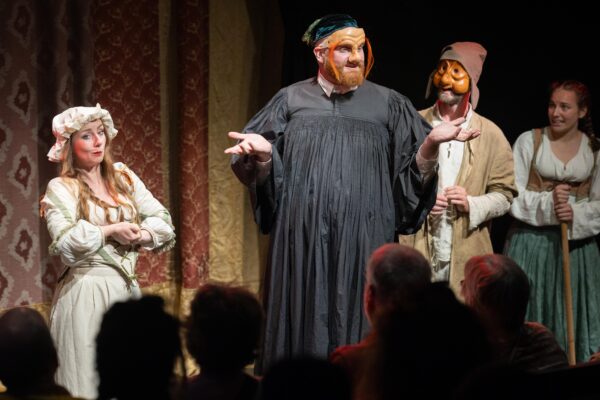
We perform our two shows in the morning and the company is on top form with a brilliant Pantalone. Some of the mask work, after three years together, is outstanding. However all the actors are exciting to watch, with or without mask, in this heightened style of acting.


ART OF THE MASK 13: Finding a Balance Between Masked and Unmasked Characters
The half-masks of the Commedia love craziness. If you write a comedy show with all the characters in half-masks, the action will quickly degenerate into chaos. The half-masks are larger than life characters from another planet that love mayhem and mischief.
The Zanni (servant characters) and the older men (The Doctor and Pantalone) are played in mask. The lovers, the captain and the serving women would be played without.
I like the analogy with the Marx Brothers. In their films there was always a love story interrupted by their hilarious antics. The audience needs this contrast to avoid saturation and to carry the plot forward.
There is also another reason. From my work in schools I know that a young audience needs to identify with the lead actors whether they are called Ulysses, Petronella, Brian or Natalie. A half-mask lacks the complexity and simmering passion that only an unmasked actor can create.
The audience can identify with the lovers in the Commedia dell’Arte in a much more profound way than with a mask. We recognise that these lovers are part of our world. The half-masks are not made of the same stuff as we are.
One of the secrets of the early Italian players was this effective mix of masked and unmasked characters.
DAY 14: Sunday 9th of August
During our morning meeting we were thrilled to receive a text offering us complimentary tickets to see one of our favourite companies Theatre Movement Bazaar’s new show Delphi at Bedlam this afternoon! A good start to the day.
A great plus to performing at theSpace is that we are able to get in free to most of the shows here if they are not sold out. Some members of the company are seeing up to 5 shows a day.
A delightful Italian photographer, Giulia, spends the morning taking photographs of our performances and back stage antics.
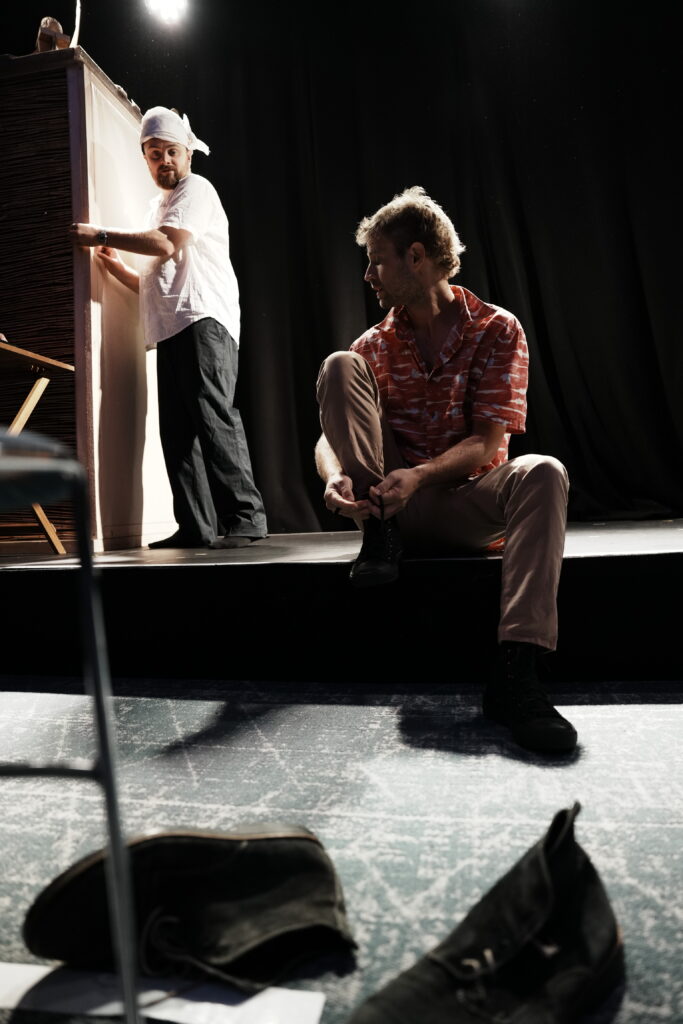
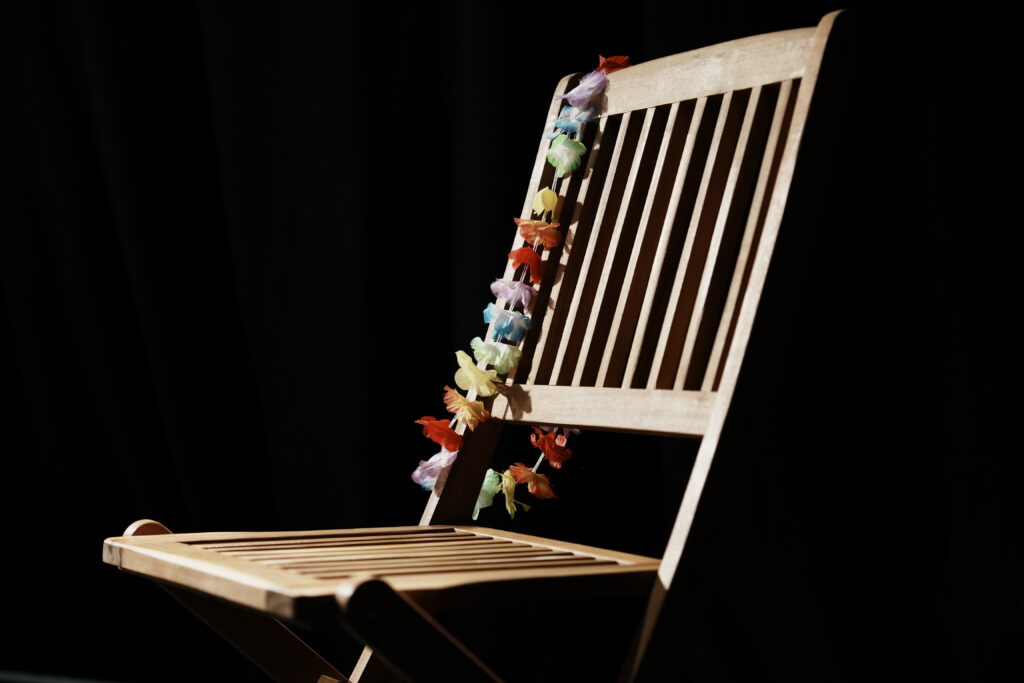
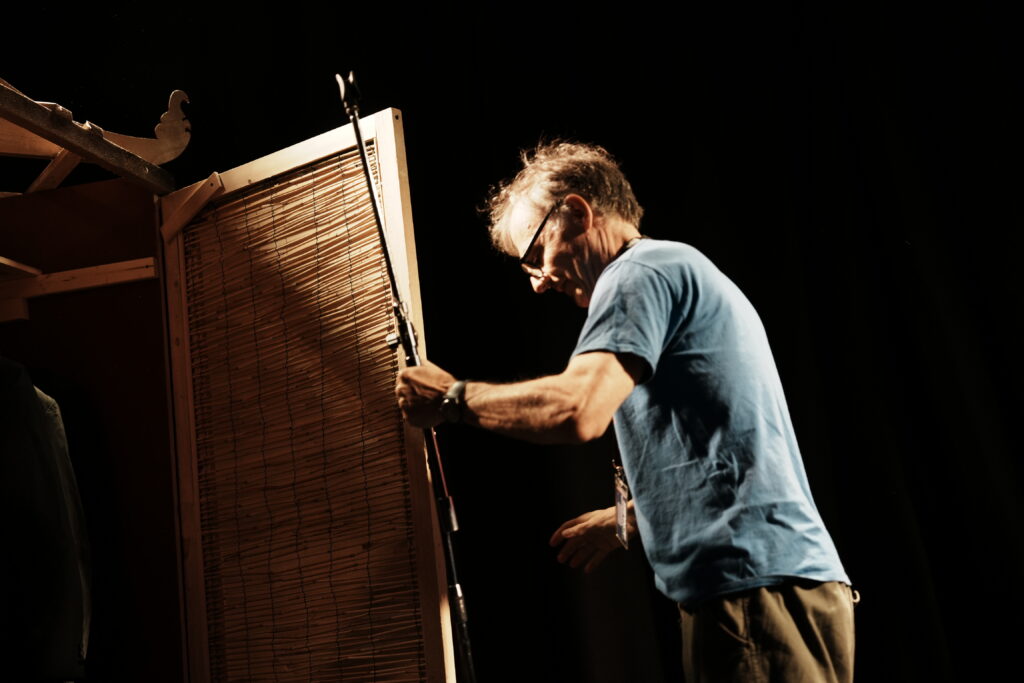
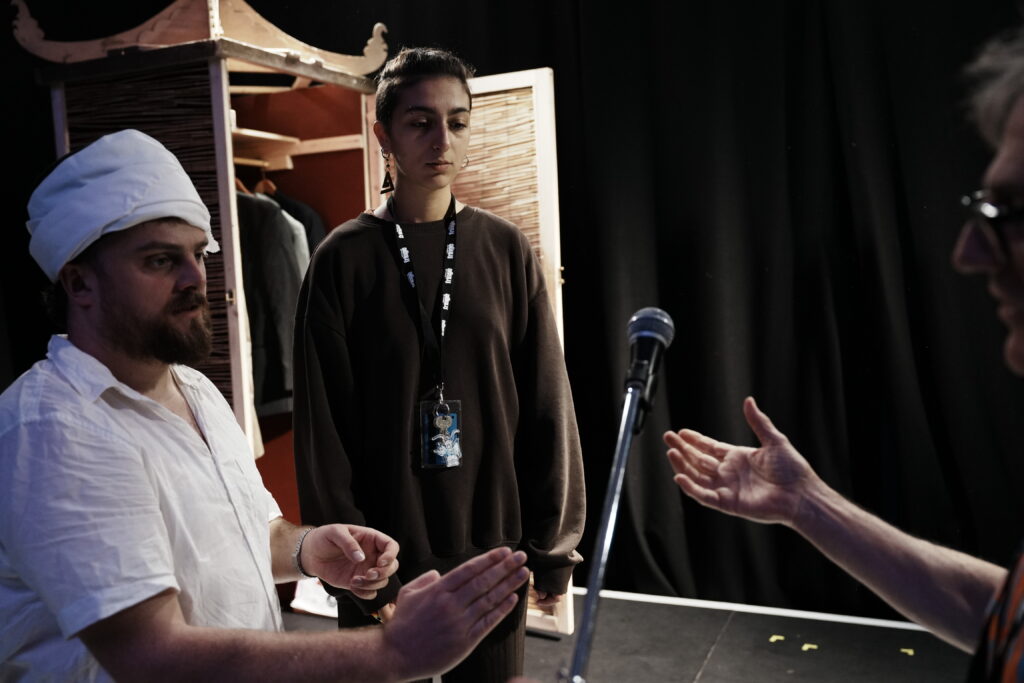
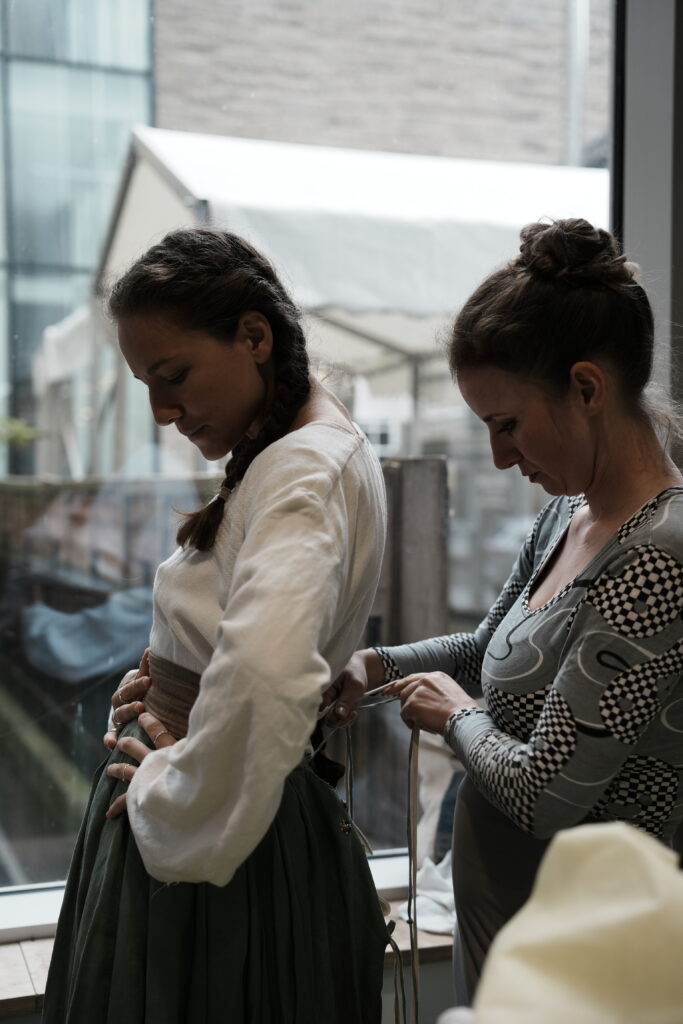
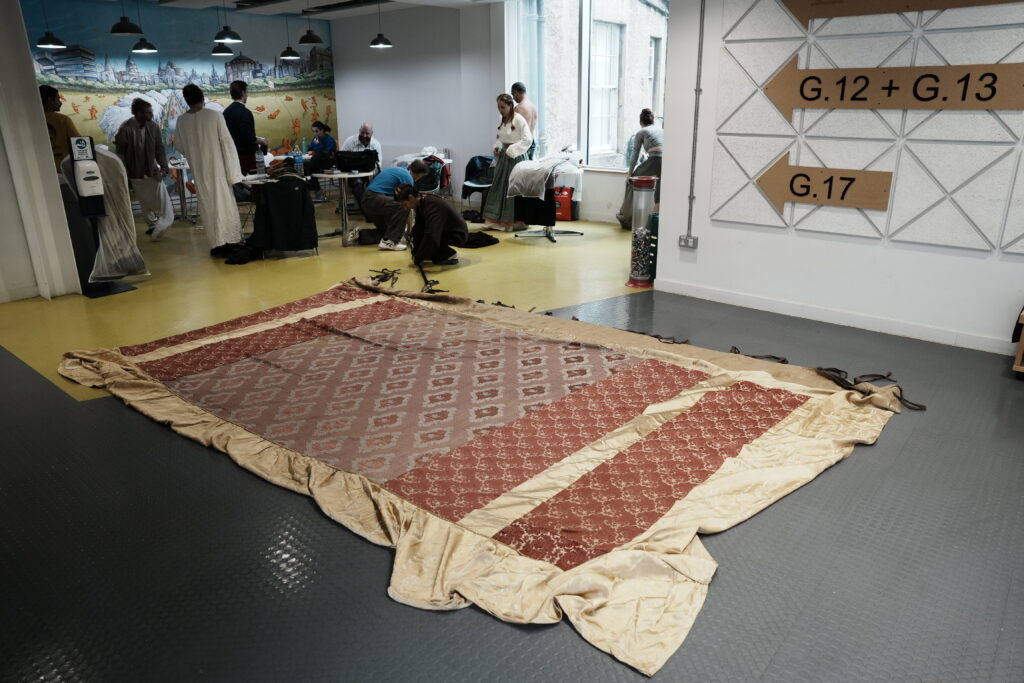
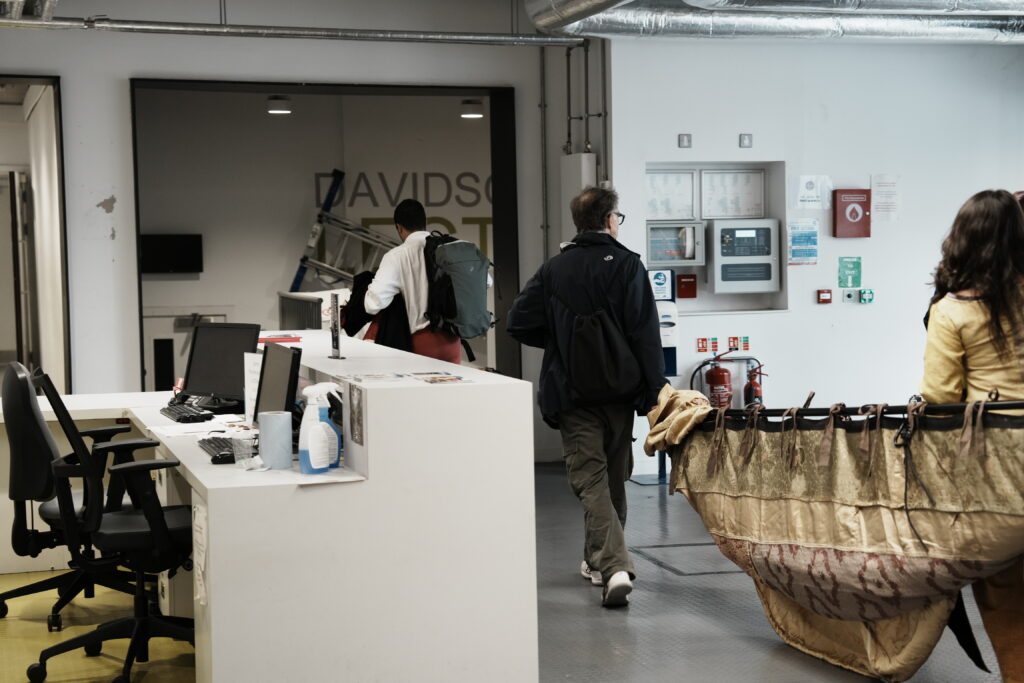
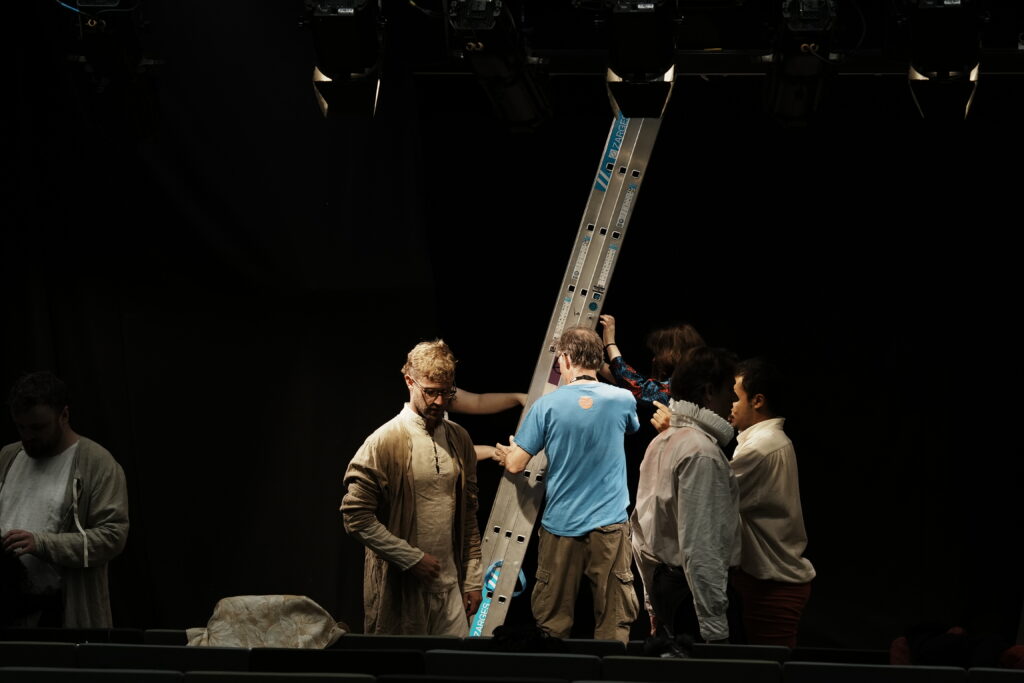
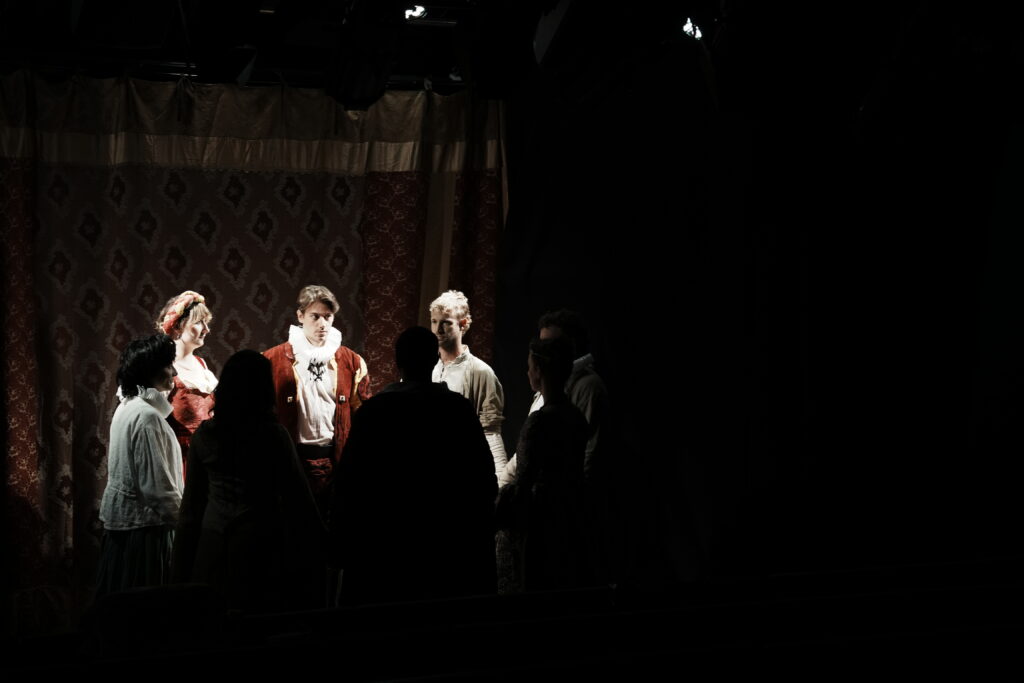
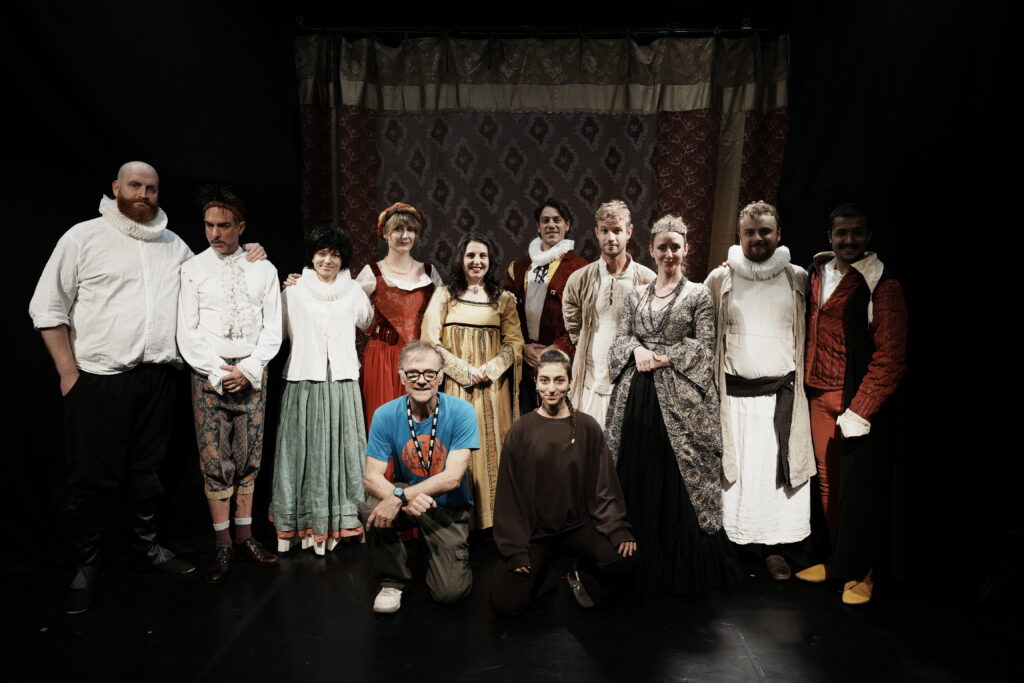
Both shows go well and every day the masks are more interesting to watch as the actors find their unique individual way of representing their roles.
We get our first review from Bingefest for The Italians in England. It is very positive. The critic writes “what a pleasure to catch Action Theatre’s traditional, irreverent Commedia play that serves as a wonderful example of the form – a must-watch for fans of the old Commedia style”.
However I am not interested in traditional Commedia dell’Arte (if it exists at all). I am trying to discover what made this form of theatre so special in its heyday in the late 16th Century and a lot of what we do is original, including some of the masks.
ART OF THE MASK 14: Finding the Roots of Commedia
While we were learning the movements of the various characters at school, Jacques Lecoq turned to the students and said “I am teaching you these movements and characters but to understand Commedia you must return to the roots, to the early days”.
Current Commedia dell’Arte practice is heavily influenced by one surviving scripted play written by Carlo Goldoni in 1753: Il Servitore di due Padroni (A Servant of Two Masters). After the second world war this play was renamed Arlecchino, Servitore di due Padroni in a brilliant marketing ploy by the famous Milanese director Giorgio Strehler. The main character is actually called Truffaldino.
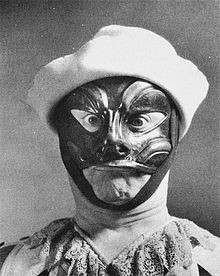
Strehler enlisted the help of a young Jacques Lecoq and the mask-maker Amleto Sartori to create the movements and the features of the leather masks.
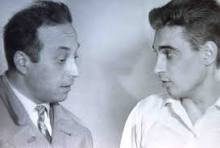
Strehler’s 10 different versions of Goldoni’s play performed between 1946- 1996 won international acclaim and is still considered one of Italian Theatre’s finest moments.
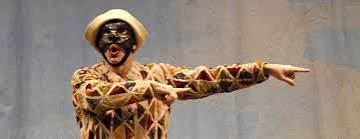
Some of the actors who worked with Strehler went on to become the first disciples of this new Commedia, teaching Lecoq’s movements and use of the mask to thousands of eager students.
However, Goldoni’s play was written in the 18th Century for a particular actor, Antonio Sacchi which is why Arlecchino/Truffaldino has such an important role in the play.
One of the strengths of Commedia dell’Arte in its most successful period in the second half of the 16th Century was the importance given to the ensemble. In many companies profits were divided equally among the company and every role was equally important. Commedia was not a vehicle for one actor to showcase his talents!
There are many other differences too and over the next few days I will share with you the ingredients that made the Italian players so incredibly successful.
Commedia is considered one of the greatest forms of comedy theatre that has ever taken the stage and yet there is only this one play: One Man, Two Guv’nors that has been an international success.
Tomorrow I will look at some other plays.
DAY 15: Monday 10th of August
The cast are tired but happy. Now they have settled into accommodation for the week, they are hitting the town in a big way and I remind them that they must also find time to rest!


The audience reviews are fantastic for both shows on the Edfringe.com website and in the live interviews after the show with George
Today is 2 for 1 day so we have two good houses and a world-class director and producer is in the audience.
In the evening the producer sends me a text saying “Well done for your lovely show” and invites me for a drink in the Blue Blazer pub at eleven pm. This is exactly why we are at the Fringe.
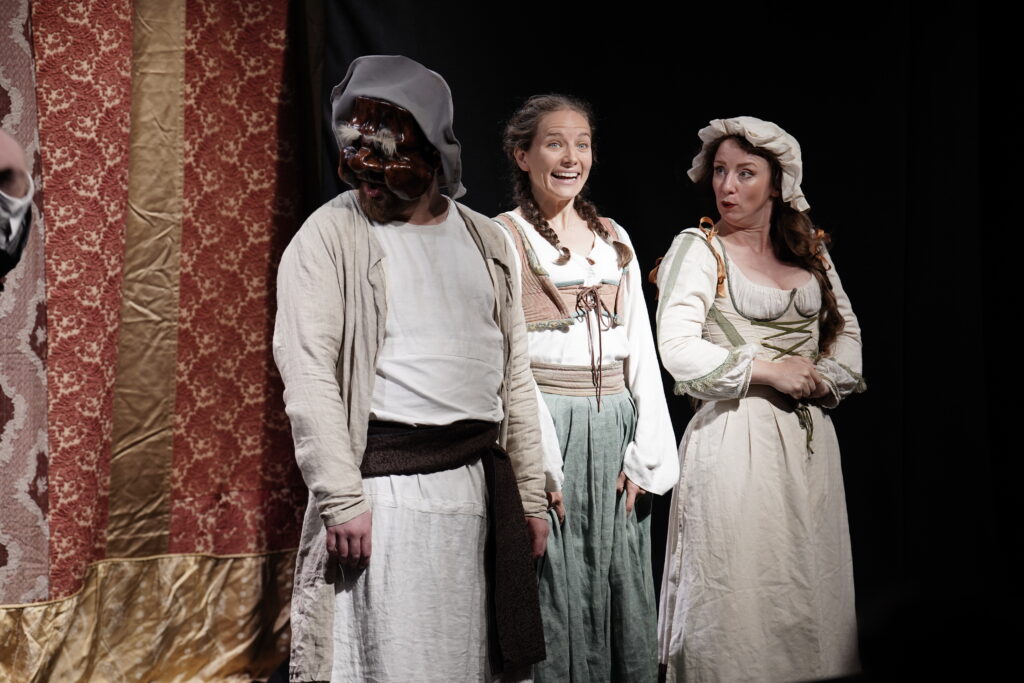
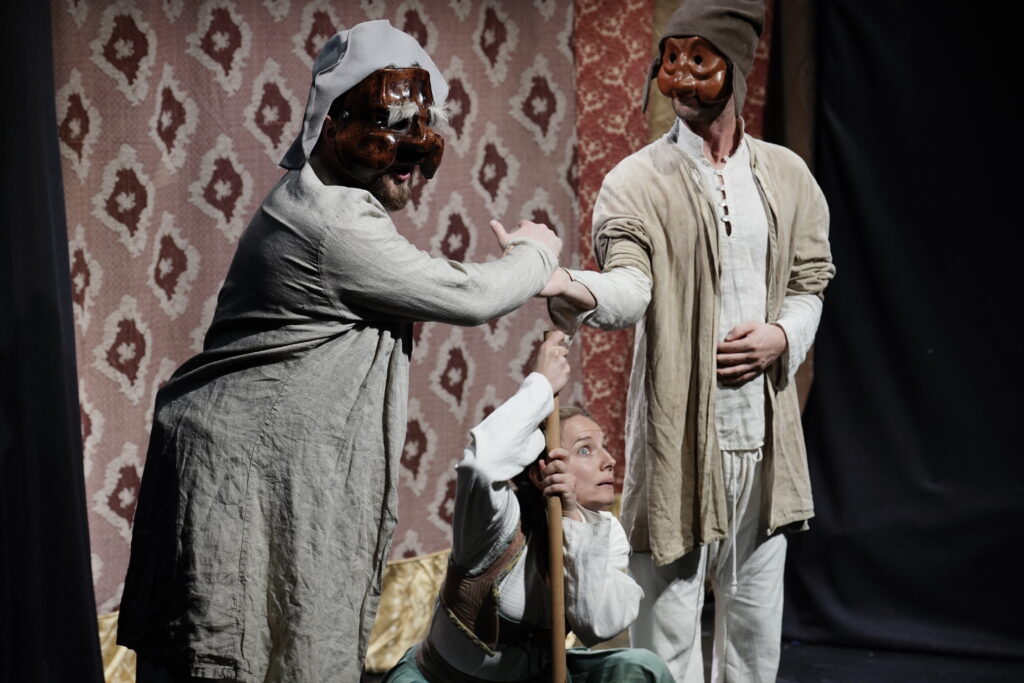
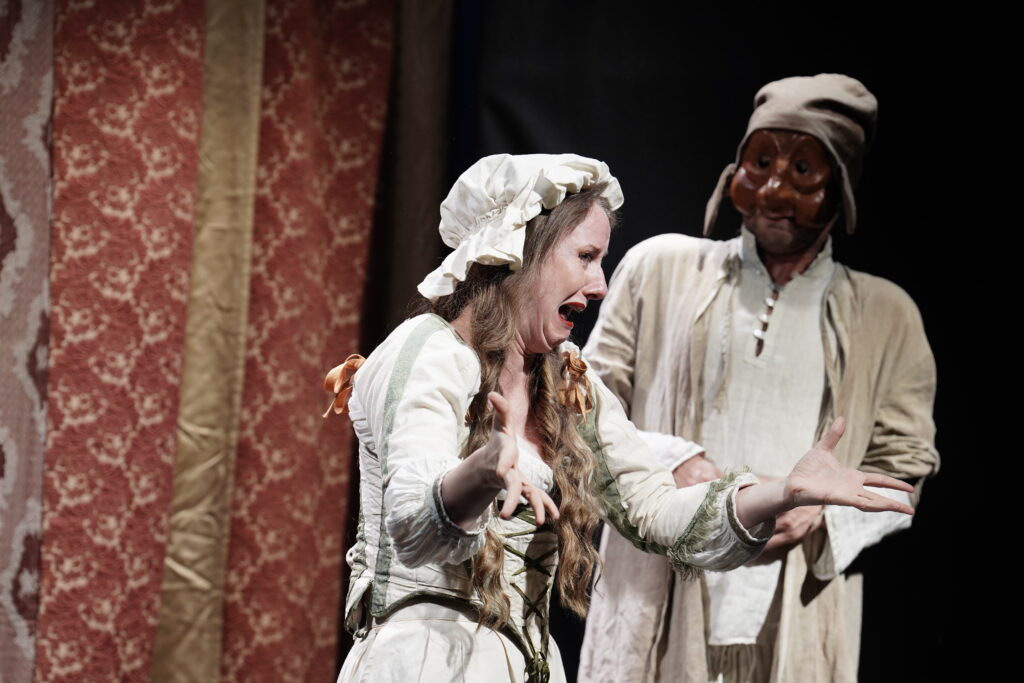
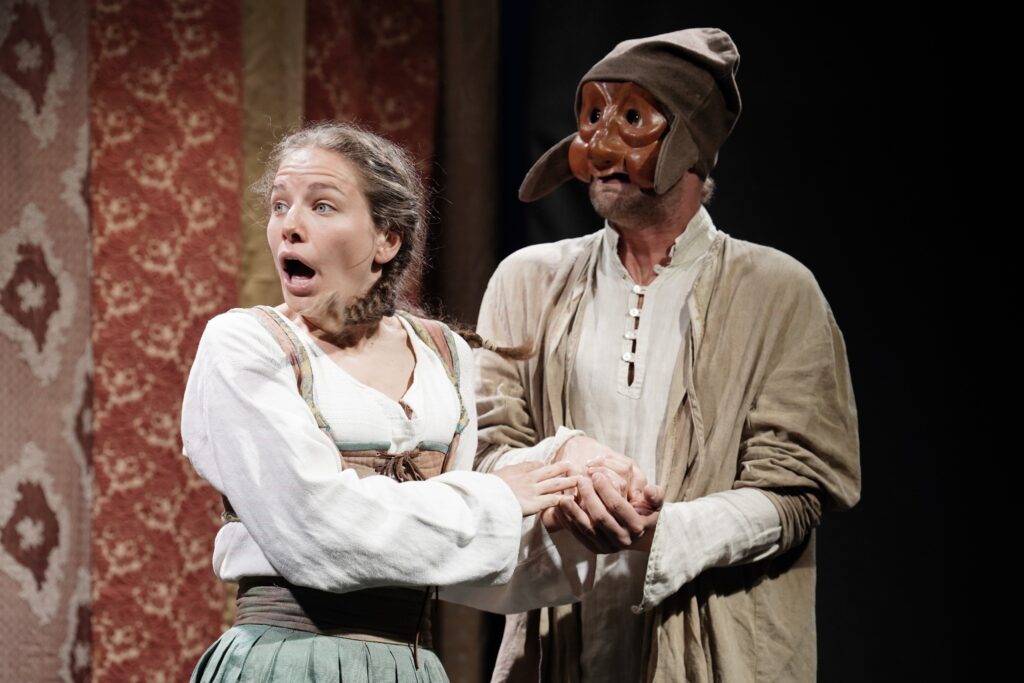
He was impressed by the physical skill of the actors. He hadn’t heard of many of the “maschere” (characters) in the show (Pasquella, Olivetta, Burattino, Pedrolino) and he was particularly curious about the leather mask of Pedrolino with its comic rolling lateral movements. It is a very funny mask based on a modern half-mask made by Michael Chase and then re-created in leather by Davide Belloni.
He asks me where the crazy plot came from. I explain that I very loosely based the play on “Il Vecchio Geloso” by Flaminio Scala.
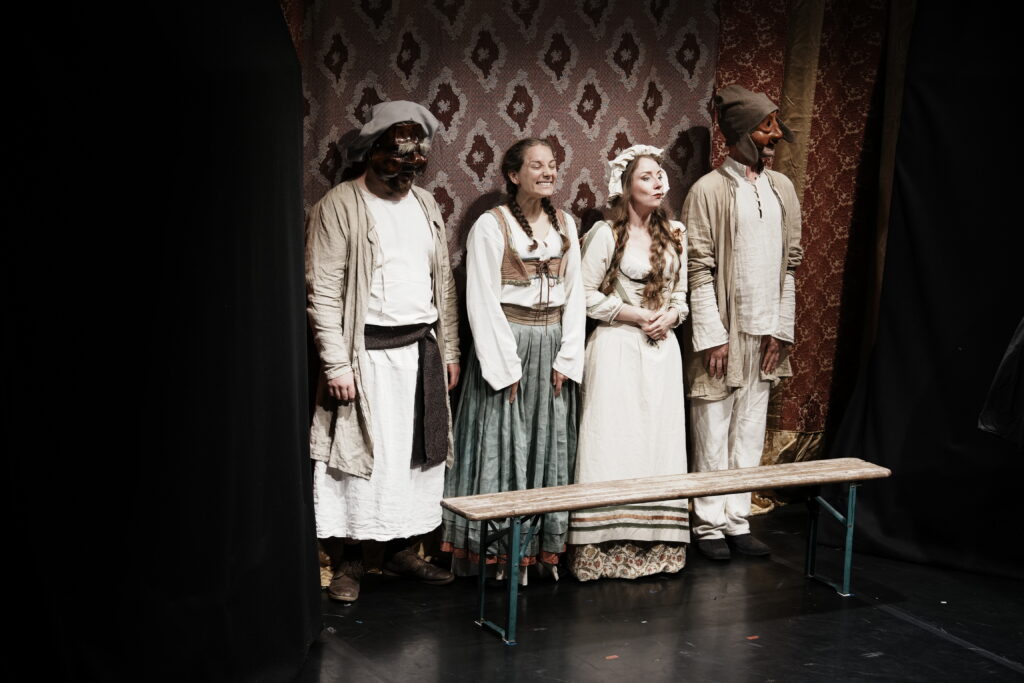
ART OF THE MASK 15: Discovering Early Commedia with Flaminio Scala
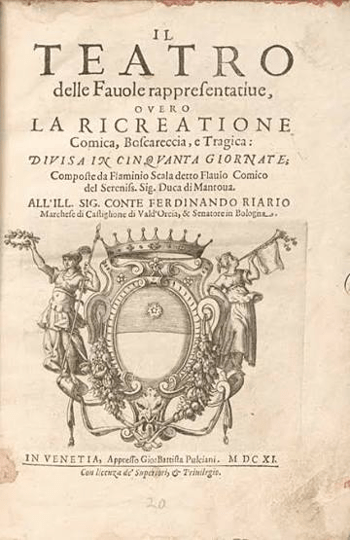
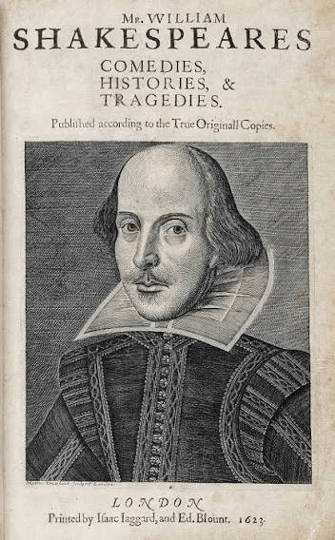
My goal is to explore the “golden age” of Commedia dell’Arte returning to its origins in the second half of the 16th Century as embodied in the work of Flaminio Scala: Il Teatro delle Favole Rappresentative published in 1611, just twelve years before Shakespeare’s First Folio.
This is a collection of 50 canovacci (or plots) which not only include the famous Italian masked comedies but also contain other plays in the actors’ repertoire including tragedies and court dramas with naval battles on a lake!
Scala’s collection of canovacci contains the stage names of the most famous actors from different companies of that period in an all-star cast. It is reasonable to suppose that some of these plots were performed by the most celebrated companies of the time.
The plays are extremely difficult to make sense of. The flowery language and the numerous dedications at the start of the book from various noble figures saying what great art this often scurrilous collection of canovacci is, make some theatre historians believe that the collection was published more for the censor than for the actor. There was no attempt to make it comprehensible to a theatre company who might want to use this material.
There is little if no dialogue and only the bare skeleton of what happens on stage is described. The motivation for a character’s actions is largely absent. Characters enter and leave the stage frequently and it is often hard to ascertain exactly what is going on.
There is a surprising complexity to most of the plots, closer to the world of Feydeau than to that of street theatre or simple clowning.
However this was where my research started and I chose one play: Il Vecchio Geloso (The Jealous Old Man) as my first attempt at recreating the “spirit” of 16th Century Commedia.
DAY 16: Tuesday 11th of August
Today we have two very good houses. It is the second half-price day.
Denis and Edo are beginning to involve the audience more in Democrazy which is fun to see. It takes a few performances to hit your stride with a new show.
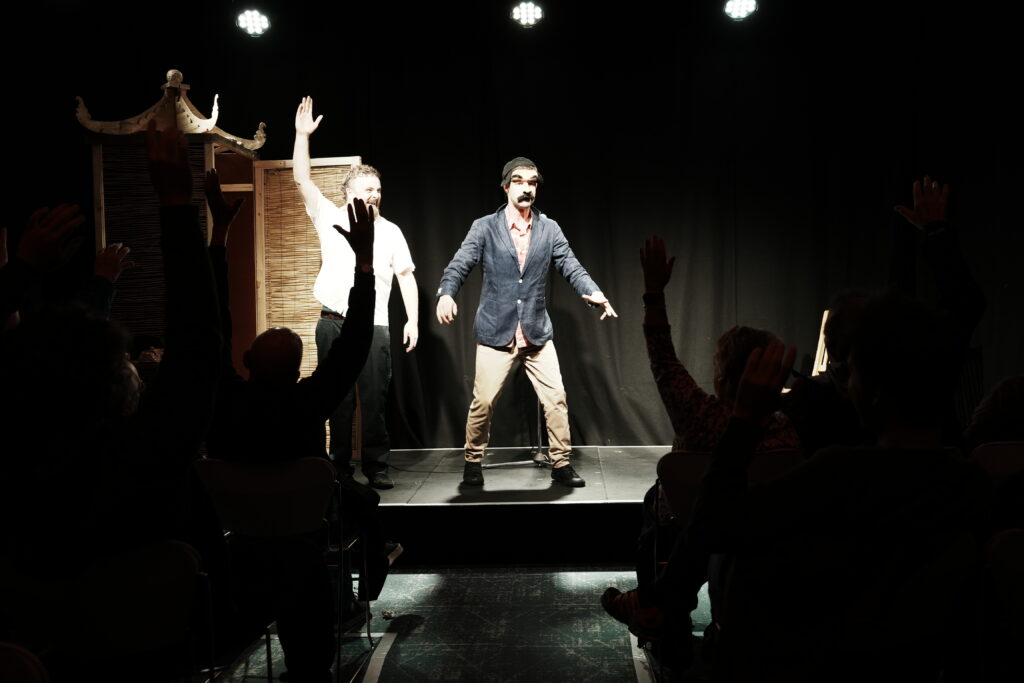
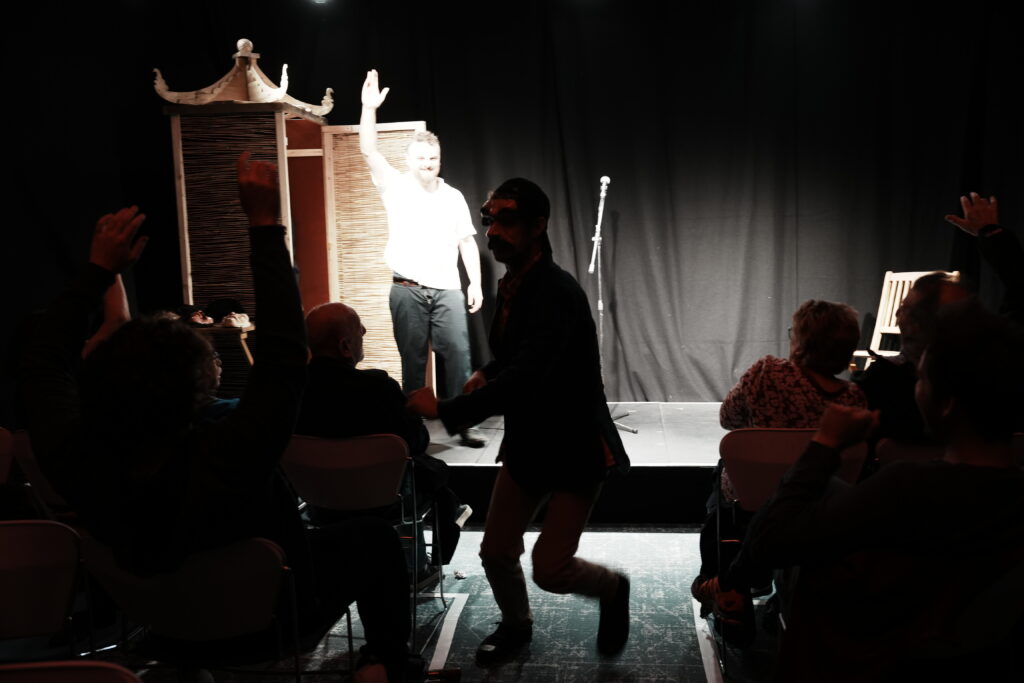
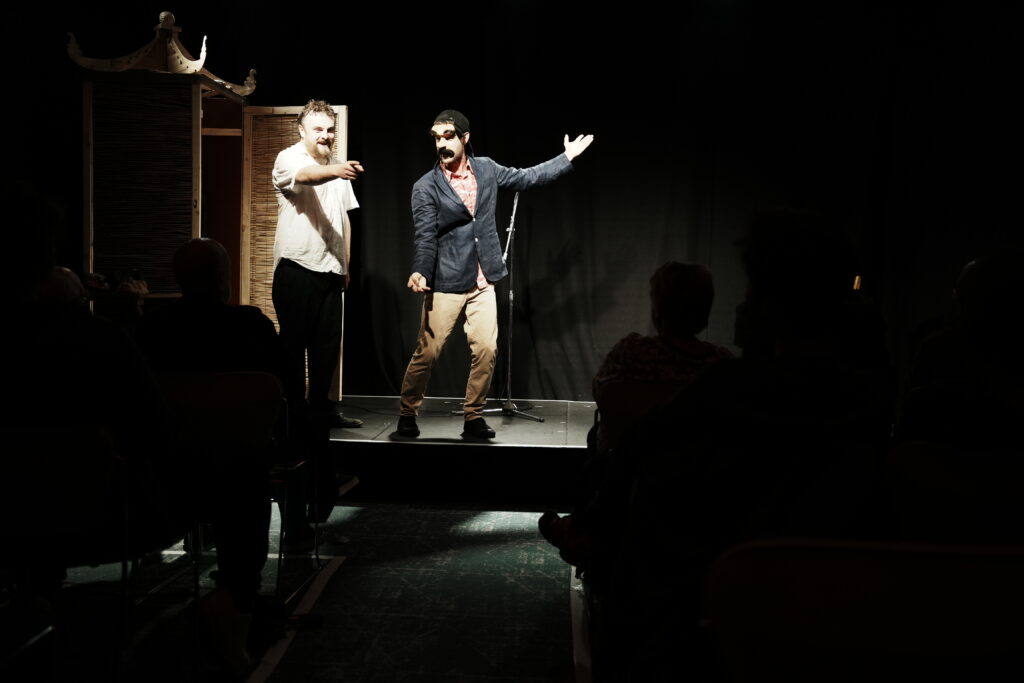
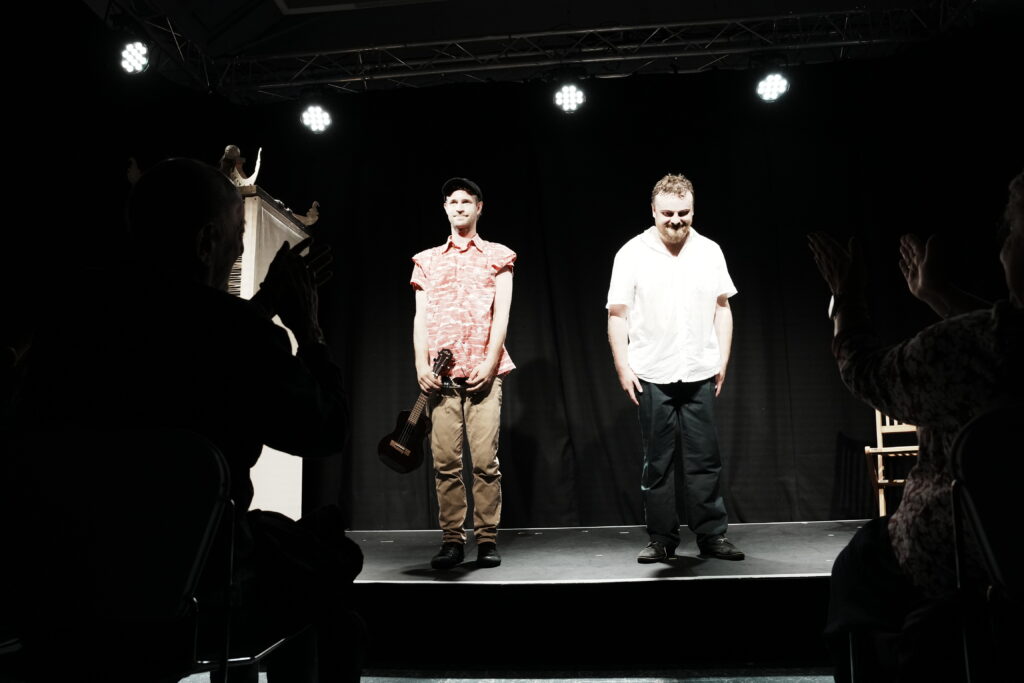
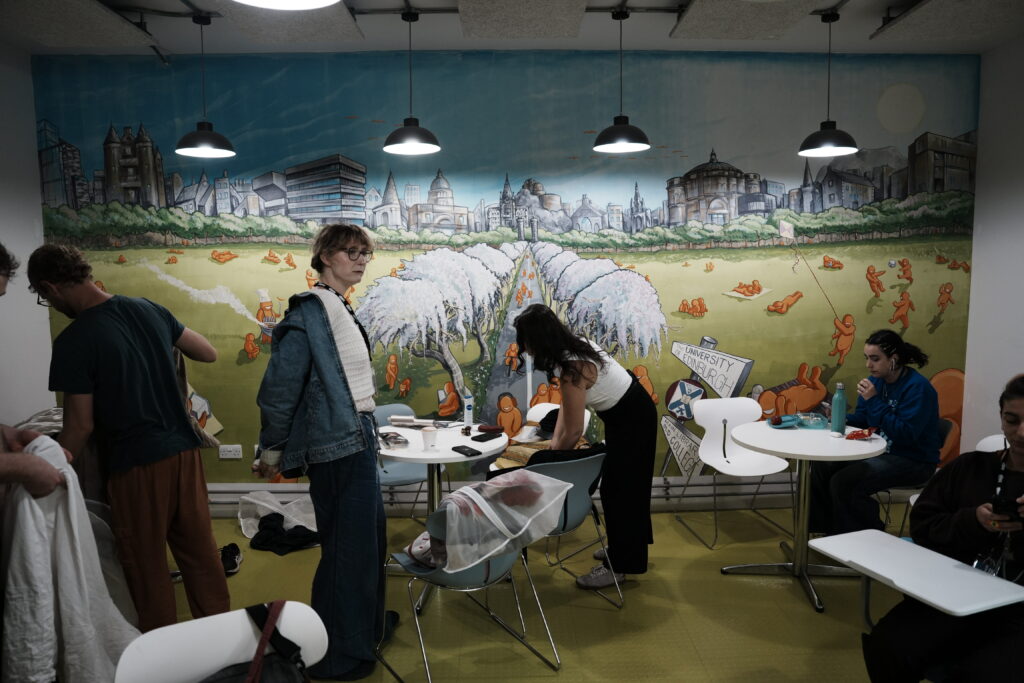
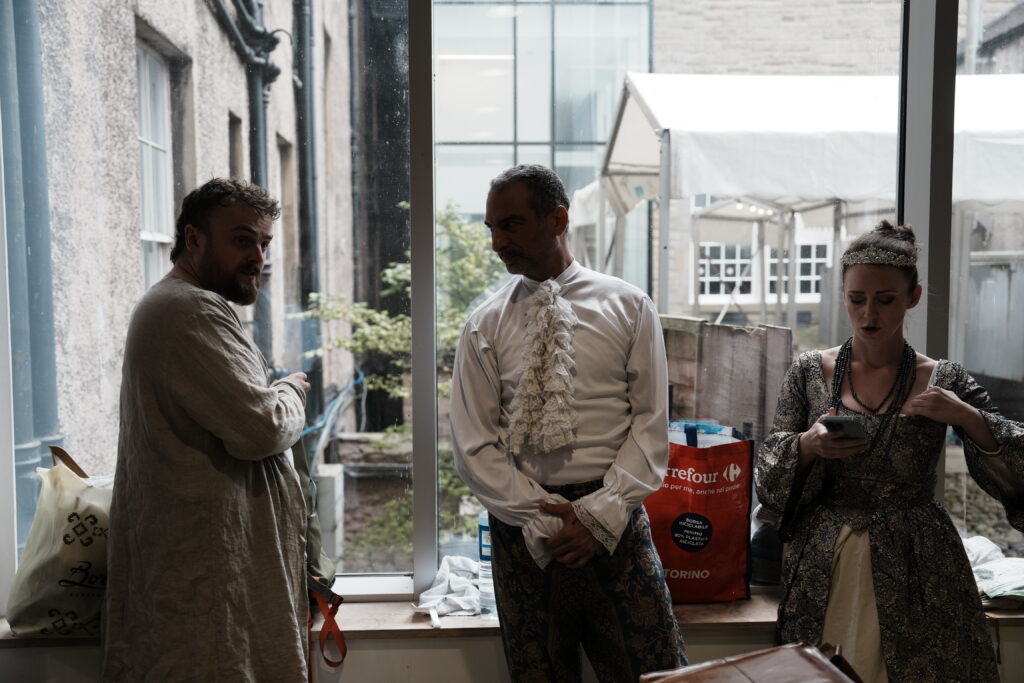
After our Commedia show one of the theatre staff point out to us that we are changing in full view of the audience who are queuing outside the windows.
In the afternoon we go off and see Police Cops: The Original. Wonderfully funny and very well-done. Brilliant physical theatre, clever original writing with a crazy well-constructed plot.
ART OF THE MASK 16: Adapting Il Vecchio Geloso (The Jealous Old Man) by Flaminio Scala
The Original Il Vecchio Geloso (The Jealous Old Man) is set in Pantalone’s Country Estate outside Venice in a bucolic setting with the characters spending their time eating, drinking, dancing and telling stories.
Pantalone is central to this plot and his miserliness is simply not present. His friend the Doctor is not an academic here but a storyteller, lover and bon viveur. They have a strong bond of friendship.
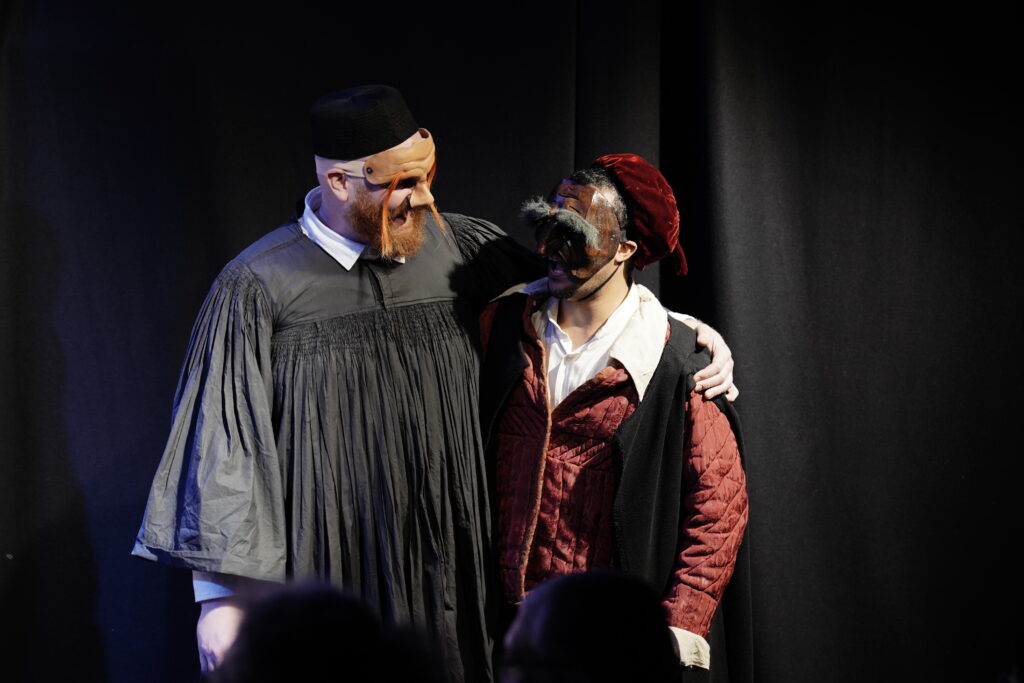

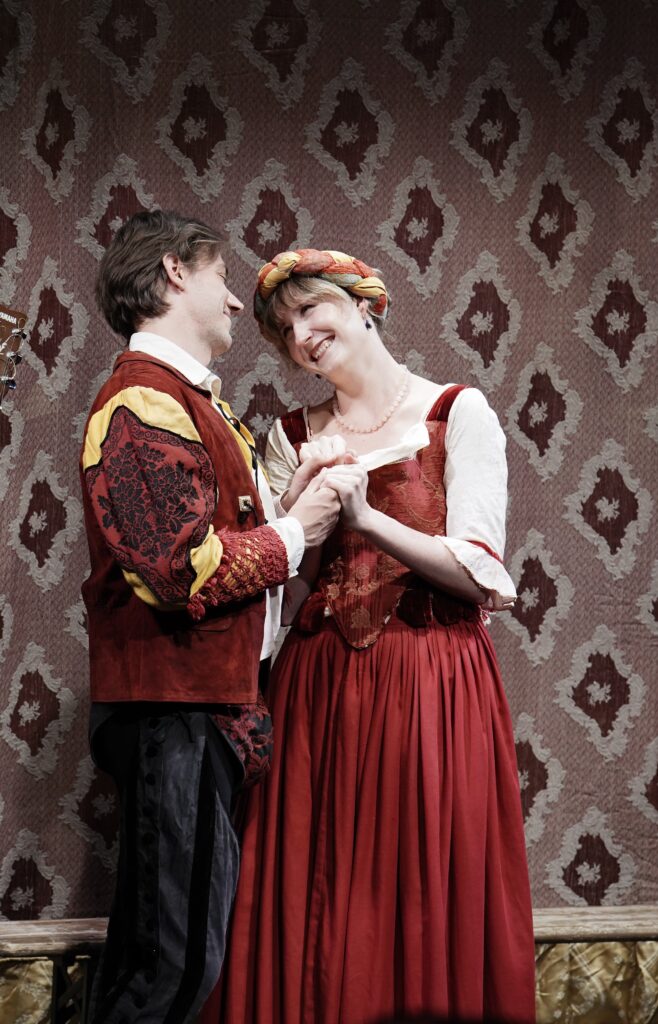
After the second act in which Orazio and Isabella consummate their love during a lunch party, the action fizzles out and becomes simply a vehicle for Pedrolino’s sometimes offensive practical jokes.
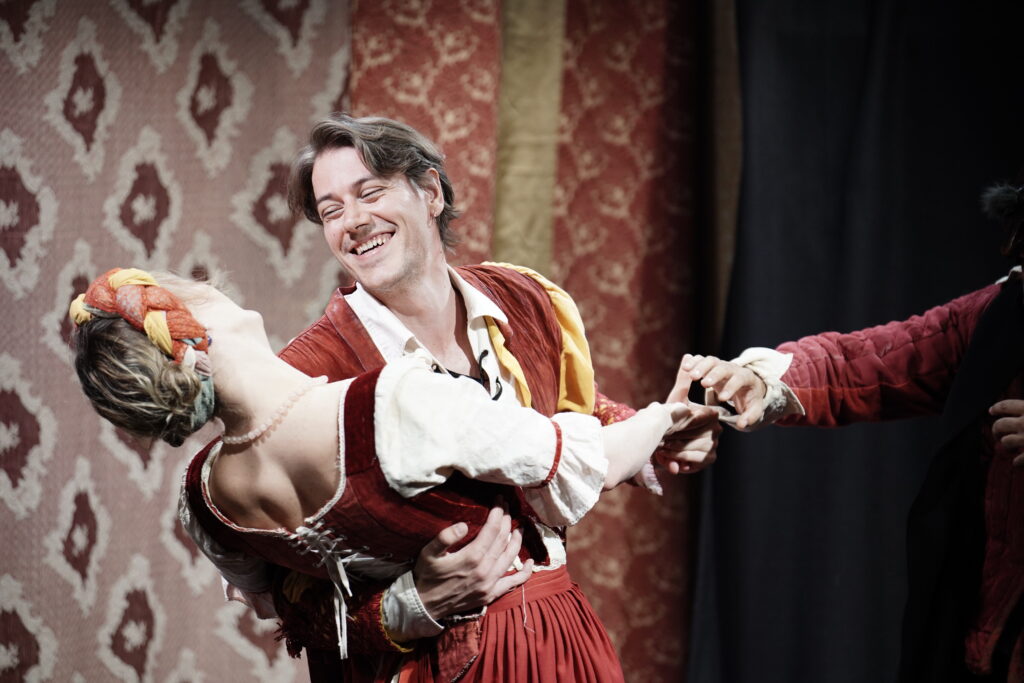
One of these jokes consists of the Doctor being tricked into raping Pasquella and when she comes out screaming from the dark bedroom where the Doctor has been waiting for her naked, all is forgiven and it is considered nothing more than an unfortunate prank that goes wrong. This is not an acceptable scene for a modern audience.
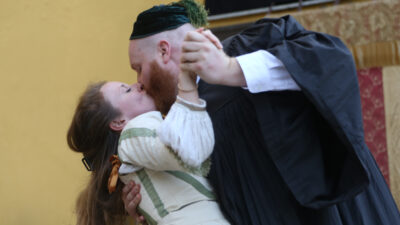
In addition to Scala’s bare canovaccio there are a few original lines of dialogue and where possible I have kept them.
With a talented cast of actors, most of whom have worked with me over the years, we have tried to capture the fun, excitement, and sheer craziness of the original play—even if, inevitably, our version is quite different from what the Italians would have performed all those years ago.
DAY 17: Wednesday 12th of August
After our last shows at the Fringe on Saturday we will be heading down to Stratford-upon-Avon for our final show of the tour. Juliet has prepared a 32-page programme for the 100 guests who will be attending.
We need to add another 40 minutes to our Edinburgh play and we head off to the park from Hermit’s Croft. Aimee and Sam take the actors through the harmonies and dance moves of the musical sequences set in Mantova.
We rehearse all afternoon below Arthur’s seat and then lie back and watch the solar eclipse. Unfortunately the sun is nearly always behind the clouds.
The sight of thousands of birds circling overhead and the light gradually fading though is truly magical in this beautiful setting.


ART OF THE MASK 17: Hurdles to Performing Commedia dell’Arte
Commedia is hard to perform well for the following reasons.
- You have to find masks that work
- You need to create the “maschera” of every character – their unique costume, mask (if they wear one) and role.
- You need to devise an interesting script that you can perform to a modern audience.
- You need actors that are trained in performing in mask.
- You need a 10-12 strong cast of talented singers, musicians, acrobats and comedians.
What made Commedia dell’Arte so special in its early period was the interplay between the sophistication and refinement of the court – with its singing, music, dance and poetry – and the exuberant physical comedy of the masked characters, whose origins lie in the tradition of street performance. The combination of these two worlds created something truly distinctive and remarkable.
DAY 18: Thursday 13th of August
We have problems with our masks today.
The bag which holds all the leather commedia masks is wet after a night in the flat. Leather masks are amongst the most durable masks but water can deform them.
Just as Democrazy finishes, the principal mask in the show, the Balinese Bondres comic half-mask of Richard Tator, splits in two. The mask has broken a few times before but this time it looks like a very difficult break to mend. We rush off and buy some Vinavil and Denis and Edoardo take it in turns to hold the mask in position while it dries.


The shows today are our best yet with good audiences. We chose a very good day to be filmed.
Because of the rain, we hold the final rehearsal of our 2 hour open-air show at Stratford-upon-Avon on Sunday in the living area of one of the student flats.
We belt out the new songs at the top of our voices. The apartment is very hot with twelve of us in it and you can’t leave the door open as it sets off the fire alarm.


Only three more days in the UK before the vans return to Turin.
ART OF THE MASK 18: Breaking and Making Masks
If you break a Balinese wooden mask it is practically impossible to find a replacement mask.
In an ideal world, just as we always have a second guitar at hand during shows, every mask for The Italians in England and Democrazy should have a spare.
At the moment, unfortunately, I don’t know any mask-maker in Italy who carves and decorates wooden theatrical masks.
If you want to perform mask theatre seriously you need to have an expert mask-maker at hand.
In Britain the late Ninian Kinnear Wilson was a pioneer in the field of Commedia leather masks whilst Michael Chase mikechasemasks.com is still active making wonderful masks in different styles including Commedia dell’Arte in papier maché. Strangeface masks strangefacemasks.com of Russell Dean offer a catalogue of Commedia half-masks in leather.
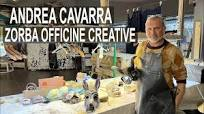
In Italy there are many valid leather mask-makers at work, especially in Venice. I like Ca’ Macana. One of the leading mask makers is Stefano Perrocco who also runs mask-making courses. Andrea Cavarra is a mask-maker from Milan. Antonio Fava runs Commedia courses and makes masks.
However I rarely, if ever, see a Commedia mask that I feel I could use in one of my shows. This is because I want a particular style. This does not mean, necessarily, that the masks don’t work. It just means they don’t work for me.
Here are some photos of well-known mask makers working today. Stefano Perrocco, Michael Chase, Russell Dean, Antonio Fava and Andrea Cavarra.
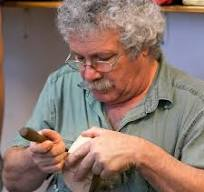
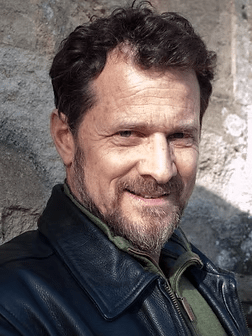
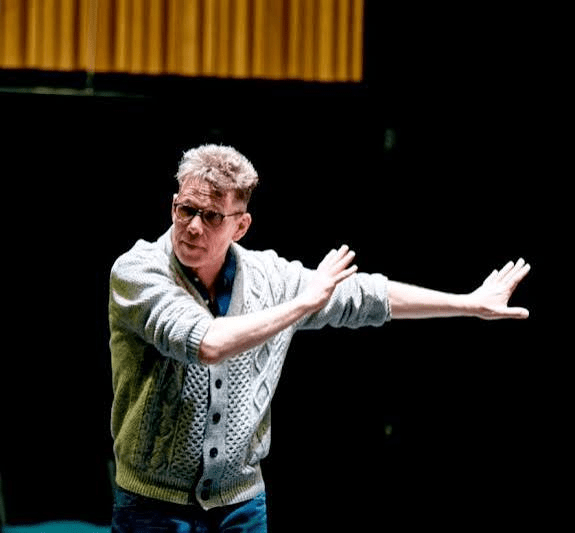
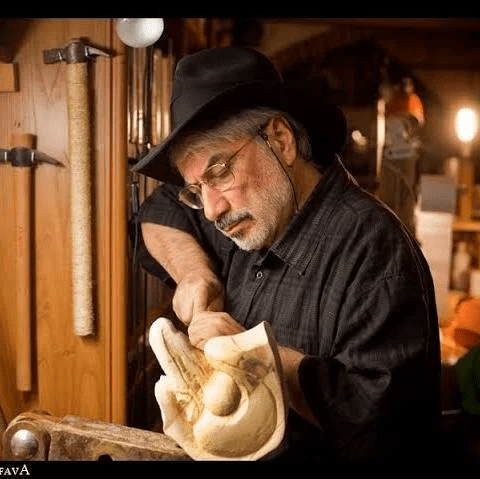
DAY 19: Friday 14th of August
The Democrazy team meet every morning in the Space Bar in Hill Square before heading up to the Haldane Theatre.
Edo and Denis have done very well. As Charles Pamment said they have received excellent four star reviews with three star judgements. Democrazy was initially a play for 14 year old Italian students and although it has been adapted for an adult Edinburgh audience and the play has been warmly received with fantastic acting and mask work, some of the content is lacking in sophistication.
Edoardo has managed to fix the Richard Tator mask with Vinavil. We are anxious that it will split during the show but all is fine, thank goodness.
After our shows, we meet to discuss the organisation of our departure on Saturday. We will be spending Saturday night in Birmingham before heading to Ettington Park near Stratford-upon-Avon for our 2 hour open-air show
Many of the audience in Ettington will have never seen Commedia dell’Arte performed before. And we perform a new first half lasting 40 minutes after just a few afternoons of rehearsal! This is completely in the spirit of Commedia.


ART OF THE MASK 19: Creating Commedia dell’Arte
There is much debate about how the Italians actually prepared their shows and to what extent they were improvised.
When Jacques Lecoq set up his school in Paris after his eight year stint in Italy Commedia dell’Arte had a huge influence on the structure of his classes. When I attended the school classes lasted only four hours and consisted of one hour of movement and an hour and a half both of improvisation and autocours in which the students in groups prepared a piece to show at the end of each week.
Out of a four hour day the teachers were absent for one hour and a half while the students created their own work on a theme which Jacques Lecoq would give them each week. And the students paid to teach themselves!
This was one of the keys to his teaching which may have been inspired by his understanding of Commedia dell’Arte. Every week the students would succeed or fail and we all waited with baited breath as Jacques Lecoq gave his judgement. The highest accolade was “pas mal” (not bad).
On the evidence of Flaminio Scala, there was a complicated plot to deliver. All the Commedia actors knew their roles within the company but they would be placed in different situations each time and the plotline was challenging.
In a few days with a strong cast who work well together you can create a surprisingly complicated show. The actors are encouraged to improvise. They can divide into groups and work on various scenes while the director works on set pieces and the overall structure. Every actor is responsible initially for their dialogue. On the day of the show if necessary they willl hang up a list behind the wings with their entrances and exits
This is similar to the autocours created in just a few short sessions. The one thing that is lacking and Lecoq would continually emphasise is that a theatre company needs an author and director. Improvisation can only go so far.
DAY 20: Saturday 15th of August
Our final shows at the Fringe. The Italians in England have a full house and get a standing ovation.
Sad to leave the magic of Edinburgh we head off in our two vans to Birmingham where we will be spending the night.
On Sunday we finish our tour with a two hour show in Ettington Park.
On the journey down we receive 4 star reviews for both shows. The show is in English but there is a smattering of Italian when it adds to the comedy. One of the reviewers said that they would have liked to have understood it! A case for supertitles perhaps…


ART OF THE MASK 20: The Language of Commedia
There is no agreement among scholars as to how, in the late sixteenth century, Italian actors toured Europe and managed to make themselves understood in so many different countries, each with its own language.
Some have suggested that the actors spoke in grammelot. But the plots of the plays on the evidence of the works of Flaminio Scala are often far too complicated for this to be possible.
Others have argued that the actors made themselves understood through gesture and physicality. Certainly, their highly physical style of comedy would have been amusing to watch, but gesture alone could hardly have conveyed the more complicated developments of the plot.
In my opinion, the answer is much simpler. Italian was one of the most important languages of European courts and culture.
The influence of the Italian Renaissance was enormous. Italian musicians, painters, architects, scholars and writers were present at many of the leading courts of Europe. The Italian states also provided spouses for a number of European royal families, further strengthening cultural and linguistic connections between Italy and the rest of Europe.
Italian was one of the languages known and studied by members of the European aristocracy. Elizabeth I, for example, was reputed to have had a considerable knowledge of Italian, alongside several other languages.
French would later become the dominant language of European diplomacy and the courts, but in the late sixteenth century Italian retained considerable prestige and cultural influence.
My own view is that much of the Italian spoken by actors on stage may have been a form of literary or widely intelligible Italian, drawing on the language associated with Dante, Petrarch and Boccaccio, rather than simply the local dialects of the individual performers.
In Italy today, considerable emphasis is placed on the idea that the actors of the commedia dell’arte performed in their local dialects. Yet this is not at all evident from the work of Flaminio Scala. On the rare occasions that written dialogue is transcribed word for word in a canovaccio there is no evidence of dialect.
DAY 21: Sunday 16th of August
The last day of the tour.
After our Birmingham stay in possibly the worst hotel in the UK, we move on to the woodland setting of Ettington Park where the owners run an annual Gilbert and Sullivan Festival. As the director is away this year we are filling in.
The setting is magnificent.
We quickly rehearse our new first half. My wife cooks pasta for the whole cast and at 2.15 we begin.
We have a wonderful audience and a generous one.
This is our last day together. We all sign each others’ programmes and straight after the show Aimee and Sam fly off to Copenhagen where tomorrow they will be performing Macbeth. The two vans will leave for Italy the next morning.
The international cast have been so supportive of each other. Everyone is so different but the love and affection we all show for each other is real. It has been an experience we will never forget.
We are pioneers for a new Commedia dell’Arte. What we are doing is actually far from traditional as we try to recreate the spirit of those early Italian actors and create many of the characters and masks from scratch. Our research will continue.
In July 2027 we will start on a new even more ambitious project. The foundation is laid.


ART OF THE MASK 21: Avoiding Stereotypes
In the scenari of Flaminio Scala, among the best surviving evidence for the repertoire and performance practices of professional commedia dell’arte companies in the late sixteenth century, the characters are not merely stereotypes. They may be recognisable types, but those types are not fixed personalities.
Pantalone, for example, is not simply a miserly old man, nor is Il Dottore merely a bombastic intellectual. Instead, both are placed in a wide variety of circumstances, relationships and situations, giving them considerably more humanity — and considerably greater comic scope — than the idea of a “stock character” might suggest. Indeed, I would argue that if we emphasise only Pantalone’s miserliness or the Doctor’s ridiculous learnedness, we actually diminish significantly their comic potential and reduce them to stereotypes.
What is particularly significant is that, although professional actors were often strongly associated with a particular maschera, that role could exist within many different dramatic contexts. Flaminia, for instance, might be a widow, an unmarried lover, a sister or a mother. Pantalone might be unmarried, married, the slave of a Turk, or one of a pair of twin brothers, depending on the scenario being performed. The actor therefore retained a recognisable performance identity while continually adapting that identity to new circumstances.
These variations greatly expanded the possibilities available to the actor. By changing the relationships between the maschere, each scenario created new opportunities for interaction, misunderstanding, conflict and comic invention. The familiar character type gave the audience something recognisable, while the particular circumstances of the scenario provided the actor with new material through which to interpret, develop and transform the role.
This is fundamental to understanding what maschera means. As I said earlier, the term refers not simply to a literal mask, but to a character or performance identity, whether or not an actual mask was worn. Each actor developed their own way of inhabiting that identity, making the role recognisably their own while remaining within the conventions associated with it.
To describe commedia dell’arte characters simply as “stereotypes” therefore risks confusing a recognisable theatrical type with a fixed personality. The existence of a type does not mean that every performance of that type was the same. It is rather like saying that all Whiteface or Auguste clowns are the same. The conventions may be recognisable, but individual performers can develop those conventions into distinctive, highly personal characters to discover its full comic potential.
For a director working with masked roles, the task is therefore to discover the character through the mask: its costume and physical features, how it moves, how it breathes, how it listens and how it sounds. The mask gives the actor a recognisable physical and vocal identity — but it is the actor who brings that identity to life.
Many of the characters in Flaminio Scala’s scenarios must have carried the unique personalities of the actors who played them. My aim is to recreate these maschere (characters playedn with or without physical masks) in a new and exciting way: to rediscover their individuality and to reveal the power, fun, beauty and sheer craziness of this unique theatrical genre.
Perhaps one day soon, London will once again see actors, both masked and unmasked, performing commedia dell’arte on stage — not merely its descendants or familiar characters, but the extraordinary theatrical form itself, with its musicality, physicality, hilarious mask work and exhilarating ensemble playing.
This is my last blog. I would like to thank Paul Levy of FringeReview for giving me this opportunity. Paul is a source of wisdom and does so much for up-and-coming theatre, not always with the recognition he deserves. Thank you, Paul, for everything you do!