








Edinburgh Fringe 2026
Crying At My Podiatrist
Julia Atkin
Genre: American Theater, Dark Comedy, Solo Performance
Venue: Snug at Paradise in Augustines
Festival: Edinburgh Fringe
Low Down
Coming straight from New York to make their Edinburgh Fringe debut, Crying At My Podiatrist takes us through Julia Atkin’s emotional journey of losing her big toenail, her relationship with an unlikely spiritual guide and her whimsical juggling of grief and loss. There is a mountain within the molehill under her big toenail. Directed by Britt Berke, with associate direction by Osh Noam, the show is written and performed wonderfully by Julia Atkin.
Review
Julia barges into the room as the light snaps into theatre-light. That sets the pace of the show. It’s quick, snappy and whimsical. You’re not just witnessing the show, you’re being asked to enter Julia’s mind which is filled with a thousand thoughts at any given point. Set in an intimate room, Julia befriends a stool with wheels to take her around the space, much like an impatient colleague who can’t stay still in their office cubicle. A little wound in her toe ends up becoming the gateway to many emotions she probably buried within herself. And her Jewish Ukrainian doctor becomes her unlikely spiritual guide. He taps her shoulder every now and then, to awaken Julia to new realms she’s yet to discover.
Crying At My Podiatrist is an honest account of a young person’s navigation of grief. For a young person whose mind is constantly running, there’s barely any time to experience the grief that’s stuck in the body. Julia’s toenail opens up that world and she gives a masterfully vulnerable performance to take us on a journey of emotions. She’s skilful with her physicality, her command over text and her ability to seamlessly switch between accents. She also possesses a presence most performers would be envious of. She makes a gentle connection with the audience, and listens closely to adjust her presence as per the audience’s needs. She feeds off of the audience and we realise that if we give her something, she returns it tenfold.
A show that is largely dependent on the spoken word and quick lighting changes, really comes together towards the end when Julia gives us a slight peek into her heart. That moment was an entire show by itself and it rescues the show which had begun to flatten out under the weight of its text. At some point in the show, Julia says “the Greek tragedies did not show violence explicitly because whatever the audience can imagine would be much worse than what they could show”. I wonder if the show can adapt this ancient theatre rule to tell less, show more. To be more. Can it pause more, allowing us to feel the moments it offers? Can it use silences more and allow us to listen beyond words? Can it stop more so that we can go further into the worlds created in the black box? Can it do less, so that we can feel more?
The show also manages to touch the boundaries of getting too private at times. Can it stay personal and open up worlds for the audience to experience their own grief, hence becoming transpersonal? Can it get out of the writer’s specific experience to create a broader human experience? Julia’s honest presence definitely has the capacity to turn the room into a melting pot of our collective grief around loss.
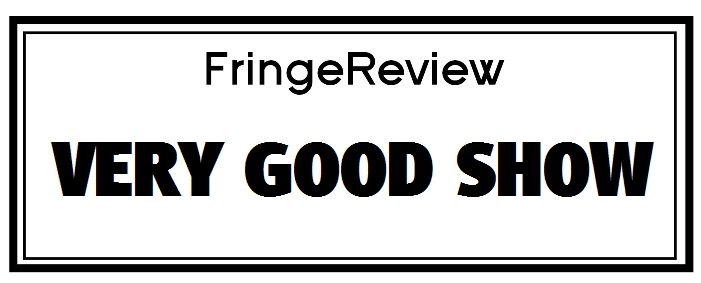
This highly spirited young performance offers a glimpse of what it can really be. A script that has the potential to leave you devastated with a surge of emotions currently manages to leave you only teary-eyed. Julia Atkin plays this show till the end of the fringe and it will be very exciting to see how she evolves it in the coming days.