









Edinburgh Fringe 2026
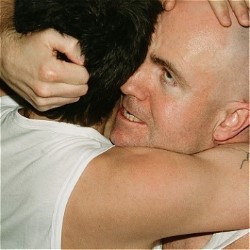
Buggers
Patrick Bone Productions in association with The Pleasance

Genre: Theatre
Venue: Pleasance Courtyard
Festival: Edinburgh Fringe
Low Down
Buggers charts in a triptych, like Francis Bacon’s art, the relationship between petty criminal George Dyer and international art phenomenon Francis Bacon. Over three moments in their relationship from their meeting to George’s death due to an overdose of barbiturates and alcohol in Paris, this takes us through the 1960s and how gay men had to hide who they were. The effect society has on their relationship, which becomes increasingly destructive.
Review
Granted rare access by the Bacon estate to private letters and diaries, this is an incredibly open and honest account of what must have been such a pressured relationship that for both of them. Bacon descends into himself with the pressure of being internationally famous, whilst Dyer, attracted and enthralled by the life he was now living thanks to his rich lover, descended through the hedonistic excesses into a place where even he struggled to recognise himself. At one point Dyer declares that he had suddenly become the person that Bacon painted – not a flattering description. Dyer was a subject that Bacon painted more than anybody. At his death in 1971 in a hotel room in Paris, Bacon was on the cusp of even greater fame at the opening of his Grand Palais retrospective. Publicly he was unable to show his grief, whilst privately he was completely and utterly devastated.
Given the access to the archive, Alistair Hall has written an incredibly sensitive but at the same time excoriatingly brutal triptych that expose more than it hints. As Bacon, Hall is everything. He has insight and understanding of Bacon’s clear psychological trauma whilst as Dyer Peter Clements manages to be just exactly what Dyer was – a confused bit of rough but with an edge within him that constantly sought to ask questions for which he felt he was unworthy of getting the truth.
Bacon’s relationship with Dyer is eulogized and fantasized by so many but here the true reality of it is given its appropriate platform and stage. It is directed beautifully. There is sensitivity sitting alongside their brutality at work which allows both actors to give us the core and being of each of these famous gay men. Alice Wordsworth has helmed a triumph.
It also has the pressures of the secrecy, the power imbalances and the shame of being gay that really does remind us how far we have come but more importantly how far we still have to go – I speak as the father of three LGBT people.
Technically, the use of water with the bath and drinking out of it, the Perspex used as a canvas at one point, but also to keep the water in, is really inventive. It frames it. Although I did balk at them drinking out of the bathtub more than once. It works like hints: there’s a toilet in one corner hinting at many aspects of the secrecy around homosexuality in the 60s, but also the final resting place of George Dyer. The row of glasses up at the back, many empty, sometimes full, suggest the excesses that both clearly enjoyed in terms of the alcohol that they engaged with as Rosie Elnile’s set is as mess and regulated as they are.
Costume was very much functional but as a whole with the lights and the costumes, particularly where the strobe lighting happened was really effective in such a small space. You felt that the whole enterprise had been designed for theatrical intimacy. The upstairs at the Pleasance worked beautifully.
This is more than the sum of its parts. It is more than a warning. It is a beautiful piece of theatre, acted to such an excellent level that you cannot feel anything but sympathy, not for the characters, but for the circumstances in which they found themselves. Unable to be open and honest and be the relationship where with openness perhaps the power dynamic would have been different. I say perhaps, because once you go one step beyond your pale, it is very difficult to pull yourself back. You should not pull yourself back from this but open our arms to diversity and the power of it.