










Edinburgh Fringe 2026
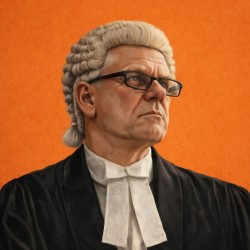
The Unsolvable Case of Keir Starmer
Chasing Rainbows

Genre: Theatre
Venue: Space at Triple X
Festival: Edinburgh Fringe
Low Down
Chasing Rainbows presents Keir Starmer in therapy. We are privy to four sessions; the first in 2012 when he was the head of the Crown Prosecution Service and Director of Public Prosecutions, the second when he became the leader of the Labour Party, the third upon becoming Prime Minister, and finally in May 2026 when it looked as though it was all going horribly wrong.
Review
A two-hander, this has Sir Keir Starmer on stage with a therapist attempting to unravel the man who has proven to be an enigma to us all. having previously been at the Edinburgh Fringe with Via Dolorosa by David Hare in 2024, Chasing Rainbows with Gary Hay are back in a similar format. Via Dolorosa is based on interviews that Hare conducted whilst traveling through the Middle East. Here we have a more static and less movable set of circumstances.
As a piece of theatre, it works with two comfortable seats centre stage as a therapist’s room with a podium at Downstage Left, allowing either to pontificate and give us the state of the individual rather than the nation address directly to us.
The Unsolvable Case asks questions of a character who has been in the public eye for decades, managed to get to the highest level of political power within the United Kingdom of Great Britain and Northern Ireland which brings two elements which are interesting to us.
The first is himself and the second is the political. For the latter we get Jimmy Saville, the Lawrence inquiry in his first session which scratches the surface of a man who finds it difficult to explain himself. He firmly seems to believe that everything he does requires little by way of explanation.
When the leader of the Labour Party, he struggled to understand how the lack of management that he inherited was not so obvious to everybody and so therefore the changes that he made, which he did, confused him because they were not being admired.
The first two sections do deliver a form of rehabilitation as it reminds us of his work in antisemitism and spending time in the Caribbean looking at the death penalty.
When Prime Minister and in the midst of his honeymoon period, this is a man determined to make changes in the way that he had been determined to ensure that the Labour Party understood that without being elected, a la Tony Blair, they were never going to be able to change anything. Finally at the end of it all he is on the cusp of leaving office and the King of the North Andy Burnham comes in for a rather scathing rant at one point. This is a passionate riposte and perhaps the only time that the mask slips a little to find the man beneath it. Of course, we have Mandelson, Olly Robbins and Trump – how could we not?
And so, we get the political, but what I hoped therapy might bring is more of the personal. The burden of power, the limits which should have been placed upon expectation. Starmer as a topic is worthy of focus as a politician and as a human, but we don’t get enough of his human side – maybe that is the problem of Starmer himself – to really understand him and his legacy. He becomes more impenetrable.
I did like looking at what he achieved. We get the politicians we deserve and often we place the blame on them for our own failings and any form of analysis theatrically is for me well worthy of a theatrical run.
The other issue was the role of the therapist. There was no real depth to her meaning that her role became more cipher than analyst. Even between sessions it was more information giving than insight heavy.
The acting tended to be quite surface as a result. I was not expecting mimicry but at least the mannerisms more effectively used by one, and insight delivered by the other as clear challenges to the man.
It was entertaining enough and got genuine belly laughs – maybe I shall use that to the toolmakers’ son quip, a highlight.
I don’t know if I left knowing more about Keir Starmer than when I came in. It was directed well. The set provided the idea of the therapist’s room and I liked the podium being a nod to the fact that Starmer did have a tendency to stand and use an autocue, but felt when the therapist used it, that perhaps the convention that it was Starmer’s crutch should have been held to.
The Unsolvable Case of Keir Starmer is still unsolvable. His was an honest attempt to open up the box not labelled Pandora but remind us that history may treat him better as time progresses.