There’s a fizz and pop to this play: Miguel the electrician has electrocuted himself. He’s done more than that though. Philip Ayckbourn should be feeling just a little proud of the professionalism of the cast, crew and his own script.
It’s a stunning indictment of everything outside this little space of waste ground that in so many real places has had these tragedies, abuses and enforced slaveries thrust upon them. Anything Upton writes now will excite the keenest interest.
We need more Calderon and more of the Court’s excellent International Playwrights programme. ‘Those who are still laughing’, Brecht claimed grimly, ‘have not heard the terrible news.’ Yet he always laughed and Calderon, in William Gregory’s idiomatic translation ensures this piece is memorable because we laugh, scratch our heads, perhaps look furtively at our bags.
On a moored barge Natasha Langridge re-enacts her own In Memory of Leaves updated from a run last year to include this year’s tumultuous events. This is a fine, necessary work inevitably in progress. Let it settle in the water a bit more, and glitter.
It’s good to welcome the return of this cage. Franco-Uruguayan Sergio Blanco’s Thebes Land drops back into Arcola’s Studio 1 after its acclaimed run in 2016. It’s where this will go, what both prisoner Martin and writer T are left with, that begins to shine out of this extraordinary, ground-breaking work.
Do see this, a magnificent and largely successful attempt to revive History plays, with an energy and on occasion subtlety that with justice should bring us more large-scale Tristan Bernays.
Oslo is the kind of recent-history thriller to place with Michael Frayn’s Democracy, the riven vagaries of Copenhagen, or more distantly, of a scope not so far removed from Rona Munro’s James Plays trilogy. You’ll soon see why it won a Tony.
Starring Ben Whishaw as rocket-billionaire-turned-visionary Luke, Christopher Shinn’s Against furnishes a brave sad update to Simon and Garfunkel’s 1960s refrain: They’ve All Come to Look for America. Luke looks for answers in the heart of violence. The ballad of Luke and helpmeet Sheila though haunts its refrain.
Cast and crew are beyond praise. It’s quite possibly the finest production of this huge, skirling ride of a play that’s ever been mounted. Outstanding.
Dramatist Sam Chittenden asks a profound question: just what we can choose to experience of our experiences? It’s a small gem of inward acrobatics, and makes one eager to see even more ambitious work from this rising dramatist.
If Rob Drummond’s /Bullet Catch/ charmed and alarmed at NT’s The Shed and Brighton Festival in 2013, here Drummond starts his odyssey of political immersion in a prison cell; for throwing a punch at a neo-Nazi. Opening three days after the Charlottesville murder, the timing’s eerily prescient and more charged than even Drummond might have imagined.
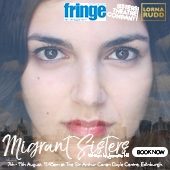
A largely one woman show that manages to effectively tell the tale of how the Ugandan Asians, thrown out of their country ended up in the UK through the eyes of one of the children who came across and ended up in Dundee, like…
A black comedic dramatic trip back to the 60’s where films were made and sex was cheap with a couple of gangsters who are just a pony short of the full shilling.
A highly effective retelling of the loss of arguably China’s greatest 20th Century writer thanks to the persecution he suffered at the hands of his own government.
This edgy new development, faithful to one incident, marks a more than worthwhile variation on such larger works as London Road. It’s more illuminating than the history it sheds music on.
A silly boo, boo, a social media storm and all told via the internet as sexism goes from the locker room to the slutty University lecture theatre told by way of a verbatim piece in a seated universe.
A stark look at the values of empathy deficit dramatically told with the fleeing child from one form of oppression into the world of another before she escapes to where? We can but imagine.
Franzmann’s intellectual clarity and tropes in this production are crystalline: just like the circular window as a womb showing the surrogate’s womb and embryo. For clarity and suggestive obliquity – language as mis-communicator – it’s an exemplary play ranging beyond the scope of most surrogacy dramas into the dark heart of desires becoming nearly ruthless, and those on both side of the exploitative border of becoming human.
Mosquitoes is as ever with Kirkwood hugely ambitious, says far more about emotion than its dazzling light-lectures, and humanizes a whole scientific race in depth. Colman and Williams provide a mesmerising sister act that others might wish to follow after a suitable interval, and Colman it’s hoped will return to the stage more often now.. Anything Kirkwood does now must be awaited with the same breathlessness that switching on CERN’s collider provides.
It’s what you’d not expect that thrusts this version before anything else you’ll imagine before hurrying back to the novel. An extraordinary exhausting ultimately incandescent in all senses version of this classic.
This puts New Venture Theatre onto a new footing. Six new plays – two by actors taking part - and six directors, all developed by NVT’s nurturing over the past year culminates in this short festival. There’s If it was an annual, even bi-annual event, it would change things in the south east.
It’s perhaps no coincidence both Queen Anne and the Almeida’s Mary Stuart should be revived simultaneously. You have to go back to Schiller to find such a historic power struggle between two women on stage. This small miracle of historic compression and power-play reaches a dramatic conclusion worthy of someone fatter than the maligned Anne. Her voice is her journey, worthy of attendance.
D C Moore’s Common set in 1809 twists language in a collision of cultures as landed land-grabbers of Enclosure expel the last gleaners from common land. Comedy radiates from Anne-Marie Duff’s downright siren Mary. A sexier Mother Courage crossed with Churchill’s protean fairy Skriker, she’s plausible without magic. Common will continue to gnarl and root beyond its run. It’ll be well worth seeing how it ages.
Felicity Clements has paced this production with alacrity and probing clarity. She also brings out, with a superb ensemble, the truth of Goldsmith’s characters, several like Marlow and Lumpkin emerging as minted as their fortunes. You’ll not see a more joyous, clear or truthful production of this perennial for years.
Carol Harrison’s written the band proud and plangent; her split hero strategies work to make this one of the best possible storylines of a British band, given hell-bent Marriott burning his talent at both ends, just like the decade.
Here’s a great divider of critical heads. Yael Farber who made a great impact last year directing Lorraine Hanbury’s Les Blancs returns with her own Salomé at the Olivier. Anyone who saw the Hanbury will recognize the ritualistic use Farber makes of the Olivier, though Susan Hilferty’s set is stripped for swoops of spectacle.
James Graham’s Ink persuades us of the combustion following a challenge to a cornered editor with everything to lose; and the irony of the most ruthless media operator in living memory given a desperate, humbling masterclass. In their friction it’s not only the Sun that bonfires every liberal vanity, but our naked selves.
Sand in the Sandwiches is a haunting study, given stature by Edward Fox’s conjuration of an erotically disturbed gentility mocking itself. It reminds us, now Betjeman’s faded from aural as well as visual memory, what he was, what he might yet become.
Is there a suicide gene? Alice Birch’s simultaneous triptych of three generations of women traumatised and depressed is so formally novel that its psychological heft gets subsumed in the sheer force of three narratives jarring for our attention. You must see this play; its dark releases a shaft of terrible light.
A necessary piece of theatre, the band are superb; a couple of numbers will take residence in your ear. Theatrically it’s almost achieved too, and if it feels slightly clunky it’s that the brilliant conceit of political trickery can’t be sustained over the sombre facts the second act introduces us to. The end’s overwhelming. Two audience members sat quietly weeping together and could not move for minutes after. Others sat stunned.
Gary Owen’s known for snagging at those twists fathers transmit to sons: more screw-up than helix. In this raw three-hander Killology’s a virtual game where you score points for creatively torturing those you’re about to kill. The snag: you suffer moral consequences. Sean Gleeson’s lean hungry voice saws into hurt with a rasp of desolation. Richard Mylan exudes the sociopathic svelte of privilege. Dave’s narrative which bifurcates in Sion Daniel Young’s consummate yawp.
Of Branden Jacobs-Jenkins’ brilliance there’s no doubt whatsoever. With such a wonderful cast led by the stunning Nwosu this makes the most persuasive and certainly comical case for a re-fashioning that’s now (almost) the only way we can look at the Boucicault original of this play.
A superb way to get to know a superb play. It’s difficult to conclude anything but a kind of dopamine’s got into BLT recently; perhaps we absorb it there too. Everything they touch is enhanced, there’s a uniform excellence of cast and production here that’d look perfectly in situ in any off-West End theatre.
The ingredients are there: it’s a magical idea, and just needs a quieter rationale and – to make it a great show - a few more memorable numbers. But if you care for musicals, see it for an outstanding clutch of performers and a dream of something perennial.
This is the most affecting bittersweet piece of theatre seen at the Fringe for a while and a masterly play. That Hall and Lacey invest it with such pathos humour and delicacy whilst working to pinpoint direction is equally winning, equally devastating and makes you dream sequels. It’s a must-see.
The Apple and Gabriel sequences are outstanding. Nelson stands apart. Seven plays in seven years seems of a piece, resonating now more movingly and terribly than they did when premiering in the exact moment. Despite himself Nelson has prophesied in The Gabriel Trilogy things he didn’t want to pass. It’s an extraordinary achievement.
When an author entitles her experiences in How to Walk Through Hell as based on her own, you might wonder if we’re close to stories of abuse and terror. Yes, the abuse is a virus. Lyme disease. The acting of both Sam Wright and Kizzie Kay is exemplary, some of the finest naturalistic acting seen on the Fringe this year, indeed consummately professional.
It’s history, so believe it. For over a century an all-woman gang marauded London from Elephant and Castle. Margo MacDonald’s explosive one-woman play which she both wrote and acts in, asks what you might expect in a series of evenings with Maggie Hale, an amalgam of two Maggie Hs, in 1937. MacDonald’s riveting throughout, rasping her laments, lusts and long views to the dogged interlocutor. A superb performance of a remarkable play and subject, whatever its provenance.
It’s all in the maths obsession. Think Nick Payne’s Constellations with a tighter focus on one event and its outfall and rewind. It’s a clever but also heartening play, which also asks what time does to two individuals who dream of the one direction but wake up without interpreting each others’ dreams, or finding when they do they’re different. And what to do.
Paul Macauley’s garnered outstanding praise and Bug Camp adds to his reputation. All four cast give exemplary performances though Douetil and Spencer hit a top register of something teetering on tragedy, laughing over an abyss.
It’s as if Billie Piper’s Yerma does stand-up. Caroline Byrne’s Blocked reveals a writer whose images stamp a scream-out-loud theatre drawn into an arc of devastation. Curnick inhabits a performer’s meltdown from a technique and emotional agency as strong as… a recording black box. Why? Find out. Superb theatre.
It’s not a sequel to Patrick Sanford’s award-winning Groomed. Blooming’s an outstanding work still developing, but judging by Sandford’s original deployment of images and the interaction between performers, it’s becoming a definitive statement. There’s much to discover, especially for many at the Q&A. If you care for the human condition, you must see this.
The Cocktail Pianist is ultimately radiant with self-knowledge. Hatchard is a phenomenally gifted pianist even on an electric keyboard. His touch, mercurial dispatch are not of the medley kind. A first rate show with enduring things to say, it’s also a comment on how we treat our gifts and they us.
Could this be the pilot to a melancholically-observed sitcom like Vicious? One audience member suggested it. Whilst The Romance of the Century is beautifully observed and deftly revivifies a much-fictioned historical turning-point, The Weatherman is outstanding comedy, as are the performances.
This is an outstanding distillation of an exceptionally prolix if often brilliant early Shakespeare history drama. It could not really be executed more compellingly.
Donkin’s artistry as writer isn’t in doubt, and Newton-Mountney’s performance is compelling. This is eminently worth seeing especially if you like dystopian narratives of the possible near-present. The story’s complete, but this journey’s just begun.
Maxwell’s script of Babette's Feast helps conjure Buckhurst’s cast into conjurers. They’re both dream-inducing and hyper-alert, their timing and balletic movements spellbinding and unforgettable. It’s one of the finest recent productions from a theatre raising the most consistent magic in London.
Butterworth’s masterpiece The Ferryman rightly draws comparison with Sean O’Casey, for one, Conor McPherson and Brendan Behan’s The Hostage. It’s a homage taken boldly by a mainland British dramatist who stands in this play worthy of comparison with any of them.
What’s Left must be right. But the country’s voted, Right. Do catch this! Left-wing activist Adele is just the dominant voice when Morag Sims puts on the best single act of a whole cast I’ve seen in a long time.
Not so much another First War narrative but a parallel rediscovery of singalong music, song and dance, stars and tears in their eyes. Tightness of video, the engagement of audience and extremely well-counterpointed denouement makes this a memorable show. And did I mention the Childs can sing?
Imagine it’s three minutes to midnight before a nuclear winter. And that’s slipped on January 26th this year to two-and-a-half. Jonathan Williamson’s created a laconic take on the old 1970s-80s nuclear holocaust warnings.
Four actors led by writer/director Sofia Stavrakaki enact what’s clearly a prison of a circus, people forced to perform a ritual of trouping for the delectation of a whip-cracking elite. A summary hardly does justice to the atmosphere this production evokes or the meta-language burning through the glares of hallucinated prey. You’ll know whether it’s for you if you like Beckett or European theatre
What’s in this name? Eglantyne means a prickly rose and smells by any name bittersweet. Founder of Save the Children who burned herself out in its service. This is enlightening and moving in equal measure, not only rendering a great service, but asking after Eglantyne Jebb’s breath-taking leaps of empathy, how far we’ve come since.
It’s not been done like this before. This play fully deserves its accolades. Though we associate the First War Pals Battalions with the north (the Accrington for instance) this show localises it to every community it tours.
‘It’s about this nurse.’ Angelica, former nurse to the Capulets sets out her moonlight vegetables quite literally. The essential point is that’s it a fascinating take, and a compelling story.
A finely-balanced play, not on the issues, which Beaton takes as open-and-closed. But in shading the opposition to Anne Reid’s reluctant campaigner Beaton shows warmth, humour and touches of compassion. Anne Reid comprises dignity and resolute panache in equal measure. James Bolam, apparently a beat behind, charms and rivets attention by turns. Harry Hadden-Paton’s PR Joe is a magnificent, unrepentant performance of sheer nastiness and Michael Simkins’ hapless oilman surprisingly sympathetic. A play that sharpens our tools for thinking and falling about with blunt laughter.